Farming and Family: How Union Square Greenmarket Thrives in NYC
When people think of New York’s landscape, they often imagine a concrete jungle filled with traffic jams and the creaking of the subway. It would seem difficult, amidst the towering skyscrapers, to picture a farmers’ market where vendors gather to sell their farm-grown produce. Yet that is exactly what the Union Square Greenmarket offers. Located in Union Square West and 17th Street, the market allows shoppers to purchase organic products grown without pesticides. Visitors can find traditional groceries such as meats and vegetables, while also discovering unique items like honeycomb and edible grass.
For my Methods in Media Studies class, I was assigned a group project in which students were asked to research a specific community in New York. Our group decided to conduct interviews with farmers from Union Square Greenmarket, as we were interested in how organic crops could be produced and sold in a dense metropolitan environment. After speaking with farmers such as Andrew Coté and Tim Gorzynski, we discovered that most products were grown in rural areas upstate and brought to stalls in Union Square. Despite being located in the heart of New York, Greenmarket is a primary hub that connects rural farms to city consumers.
As our group walked through the busy stalls, we awkwardly looked around to see if any vendors seemed available to answer some quick questions. After a couple of minutes, a man selling honey called out to us and beckoned our group over to his shop. When we arrived at his stall, he introduced himself as Andrew Coté and asked if we were looking for someone to interview. Andrew was used to seeing college students conducting research in this area, and he was more than happy to answer our questions about his business. As it turned out, Andrew became one of our key benefactors for our project. He not only provided valuable information but also recommended other vendors who were willing to take part in our interviews.
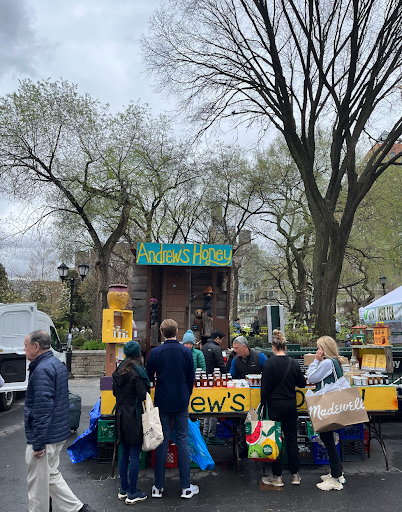
Andrew Coté is the owner of Andrew’s Honey, and his iconic stall is quite easy to notice due to its colorful decorations. While he does have a flagship store near Central Park, he still regularly runs his stall with his wife in Union Square. Andrew told us he had made many personal connections within the market, most notably his wife, who used to be a regular customer. His family had been operating in the honey business since the 1800s, making him part of a long lineage of honey farmers. The stall sells different flavors of honey, such as buckwheat and wildflower, as well as other bee-grown products, such as royal jelly and honeycomb. He also sells copies of his book, Honey and Venom, which details his experiences and adventures as a bee farmer.
Andrew has multiple bee farms located in upstate New York, and he makes the daily journey back and forth between the farms and his shops. After years of running his stall, he learned how to interact with customers and make them feel welcome. Andrew had also built strong friendships with fellow vendors, several of whom he recommended for further interviews. When we asked if he would continue the family tradition of handing the business to his children, he replied, “I do want my son to start learning the business and the invaluable lessons that come with it. After that, he can choose whichever career path he wants.”
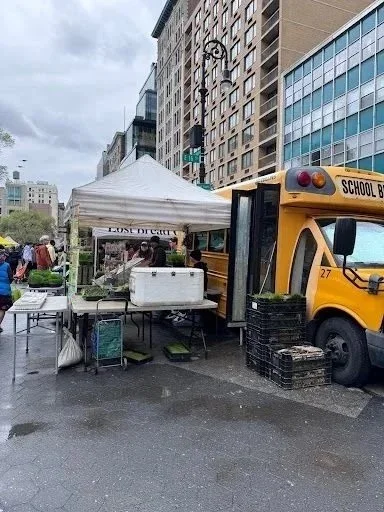
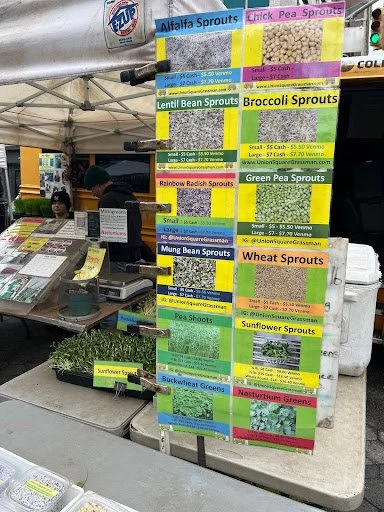
One of the most unique products we found at the marketplace came from one of Andrew’s best friends, Stewart Borowsky. Stewart, also known as the Union Square Grassman, sells wheatgrass and microgreens from a small yellow bus. One of his signature products is wheatgrass shots, which he freshly grounds into a liquid and serves in small cups. According to Stuart, this organic drink contains antioxidants beneficial for heart health. He also sells a separate batch of wheatgrass for cats, labeled ‘The Pet Patch.’ When provided in moderate amounts, wheatgrass can help cats with digestion and pass hairballs that can otherwise get stuck in their throat.
Stuart told us that although he started his stall at Greenmarket in 1994, it took him a long time to make his business profitable. Every crop he produces is around 7-14 days old, which gives a short window of 2-3 days to sell to his customers. Stuart was very thankful for having regular customers, since it helped him predict specific periods of time to grow his crops. As he continued grinding wheatgrass into shots, Stuart appeared familiar with his customers, asking them about their daily lives or their families. These brief conversations made it clear that he had built deep, personal connections with them through his business. Stuart valued the marketplace’s location, as it was a place easily accessible to most New Yorkers. He also expressed his gratitude to his fellow vendors, since working with people he loved made his job an absolute joy.
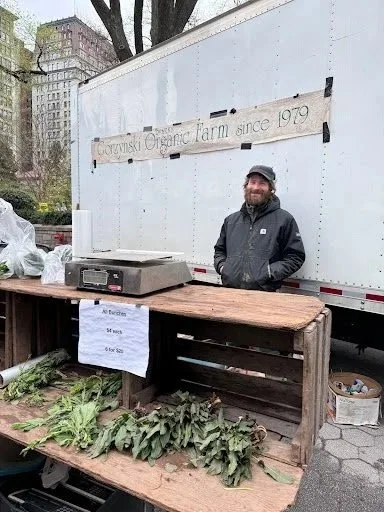
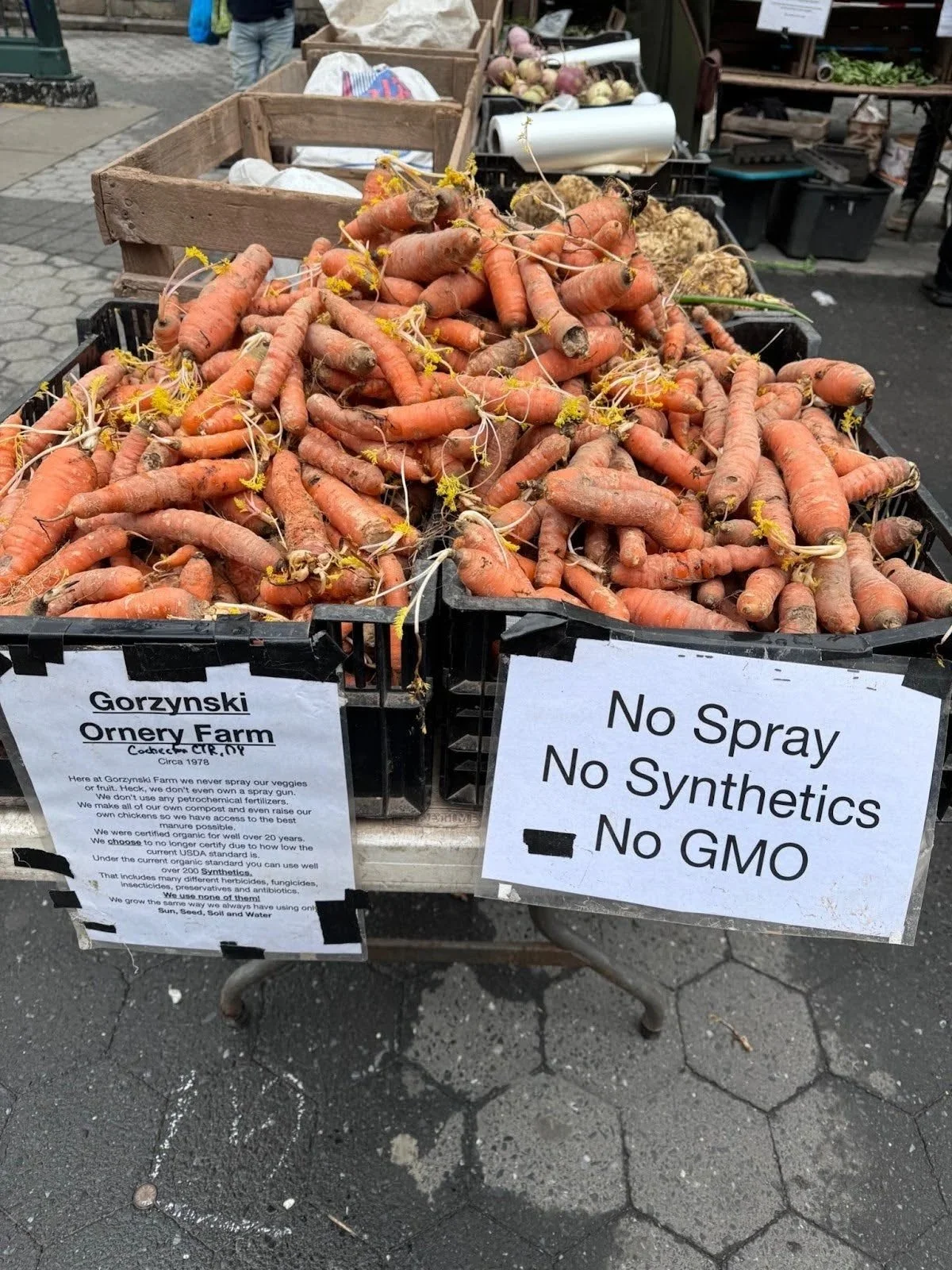
As we continued to search for vendors to interview, we were drawn to a large tent displaying a wide variety of products. There, we met Tim Gorzynski of Gorzynski Ornery Farms, who offers fresh fruits, vegetables, and eggs. Tim had been working for his shop ever since he was a child, helping his father at the shop’s counter. Tim’s father was originally a chemical sprayer for a tree company, but after witnessing many of his colleagues falling ill, he decided to quit and start a farm dedicated to chemical-free agriculture. Tim continues this legacy, carrying forward his father’s commitment to sustainable farming practices.
As we observed how Tom operated his shop, it was clear that he, like Stuart and Andrew, loved to interact with his customers. Asking short questions about a customer’s pets or their work lives was one of many ways Tim made small talk. When I asked Tim about this, he replied that 90~95% of his customers were repeat shoppers who visited his stall multiple times a week. Just then, an old man named George chimed in that he had known Tim since he was 5 years old, and had regularly shopped at the stall ever since. From these interactions, it was clear to us that Gorzynsky Ornery Farms is a deeply rooted presence within the marketplace.
Although the farmers at Greenmarket come from different backgrounds and sell different products, they all share a similar sense of community. Many vendors have known each other for years, forming friendships that extend beyond simple business relationships. Farmers such as Stuart and Tim often interact with returning customers who visit the market weekly, creating a familiar and welcoming atmosphere. Through these interactions, the Union Square Greenmarket becomes more than just a grocery shopping area. It is a social space where relationships between farmers and consumers are continuously built. The market functions much like a family, connecting vendors and busy city residents through trust, tradition, and everyday conversation.