An Antidote to Loudness
I’ve always wondered why one’s face lights up when they’re described as extroverted, as if it's a compliment. And I've wondered, too, why being shy isn’t commended in the same way. Although I used to feel a small sense of doubt whenever someone described me as a shy person, I no longer want to feel ashamed of my personality. On the contrary, my friendships are meaningful and genuine precisely because I am shy—introverted people connect with one another not solely based on mutual interest, but also emotionally. What we feel isn’t just concern; our hearts are sponges absorbing the emotions of those we care for, by seeing the emotions of our friends as ours. Trust me: it gets tiring, even though it is in our nature. Our shoulders are often hunched from leaning in and listening to people closely and attentively—and perhaps from carrying the weight of our own thoughts, filled with the struggles of others.

In my homeland of Bangkok, Thailand, people would never describe me as shy. I don’t act much differently than I do while studying abroad in the United States—maybe I hold eye contact a little longer back home. But somehow, everything feels in harmony, because my attunement to the emotions of others is both expected and reciprocated. While that trait of mine can feel out of place at times in The United States, I find myself unsure of what the person across from me expects, whether they want depth, entertainment, or insights about where I come from and what I study. This contrast made me realize that shyness isn’t interpreted the same everywhere; where it is cherished in eastern countries like Thailand as a way to express humility, it is underestimated in western countries like the United States.

One aspect of shyness originates from restraining oneself from free physical expression, whether that be bodily or verbally. However, traditional Confucian philosophy argues that shyness is a strength. Because shyness requires self-restraint, such restraint teaches one not only to be considerate of others, but also to cultivate social maturity during one's youth. A young person who knows when it is appropriate to speak, understands when to hold back, and doesn't act impulsively from their emotions is perceived as mature and responsible. I wonder whether American culture finds this boring, as acting calm and reserved most of the time requires patience from the other person to recognize. While the American definition of individuality may materialize through the colors one wears or their cultural upbringing, individuality can manifest in less obvious ways, like when one compliments their waitress when ordering food.
In my sophomore year of college, I remember being surprised when a friend pointed out that I had never mentioned my art to him. Painting has always been my favorite hobby throughout adolescence, an activity that quiets my mind, yet it didn’t even cross my mind to talk about it. I didn’t realize that the band that we like, that one language we are currently trying to learn and practice, are also as important as fostering emotional connection in friendship through mutual understanding.
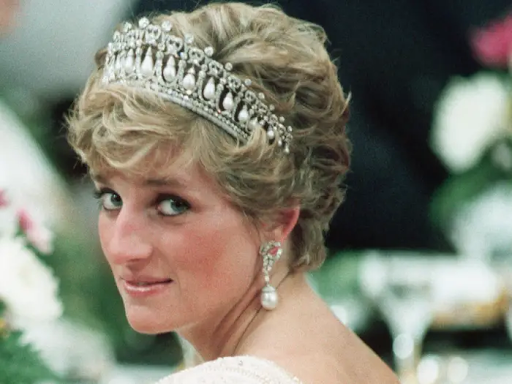
And even within the West, shyness can be cherished. Diana, Princess of Wales, was nicknamed ‘Shy Di’ and beloved for her habit of keeping her head down when speaking, meeting people at their height despite being 5 '10. Diana disliked being the center of attention, and her body language wasn’t the most open when encountering the paparazzi.
She later dismantled the myth of “Shy Di”, noting in an interview:
“I’m not someone who likes being controlled, I’m Diana. Before the marriage, I always had short hair, it was just my style. I tried growing it out, just a bit, and the response was overwhelming.”
This was in response to the Queen having sent someone to cut her hair without asking—the moment when she realized that she didn’t even have the right to choose her own hairstyle. For liberation, she cut her hair even shorter after Prince Charles' affair was exposed. Diana said that this was done “not out of submission but defiance. I wanted them to know: you can control my appearance, but you will never taint my spirit."
Shyness isn’t the absence of confidence. It is a type of confidence expressed together with compassion, at the right time and at the right moment. Princess Diana has shown us how it is done. She sparked that part of me, the part that always knew that it was never my duty to intentionally entertain others. Quietness was never a threat to anyone’s individuality, but enforcing loudness to prove them is.