It’s Time to Move Beyond Superficial Representation.
The sudden success of The Summer I Turned Pretty would’ve even surprised those who expected it to do well. Seemingly overnight, the show became a cultural phenomenon, built on pastel color palettes, semi-painfully awkward dialogue, preppy beach nostalgia, and a teenage girl confidently placed at the center of desire. It felt like a moment Asian American viewers never imagined they would see. Yet beneath the sparkle of the series, something felt incomplete.
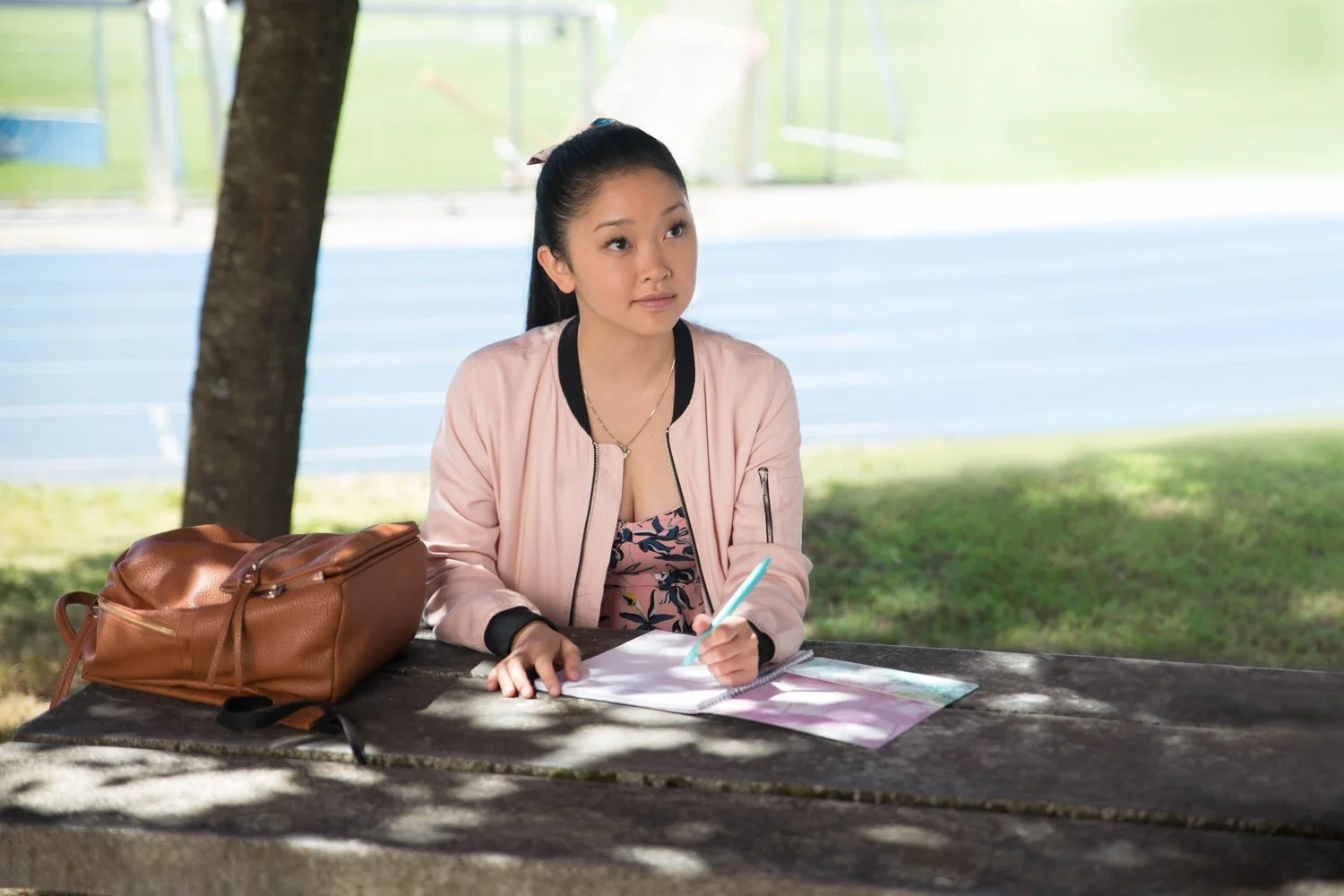
Although Belly is written as half Korean, the series almost entirely avoids engaging with her Asian American identity. In The Summer I Turned Pretty book series, Belly was initially a white character, whom author and show-runner Jenny Han changed to be half-Korean and half-white. This was branded as a way to modernize and display diverse stories, but the show included little to no nods to her Korean culture. Han’s previous To All the Boys films attempted gestures toward Lara Jean’s similarly half-Korean heritage by including Lunar New Year traditions and a trip to Seoul in the third installment. Still, they ultimately never reached the same level of visibility and obsessive fandom as The Summer I Turned Pretty. Although there is no direct correlation, it’s worth noting that the project with a richer cultural presence wasn't the one that skyrocketed into the cultural zeitgeist.
The Waisian Fantasy
Both Belly and Lara Jean are meant to be half Korean, leaving many wondering why they had to be half rather than fully Korean, especially given that the author is fully Korean herself. This choice positions them closer to whiteness. And they can now bring in white relatives, place them in predominantly white neighborhoods, and display white culture as a norm, making it more palatable to a white audience. Belly moves through the narrative untouched by racial consciousness. If anything, it’s a missed opportunity to intentionally rewrite her as Korean in the show and then fail to explore how that shapes her identity.
The issue also lies with Belly’s love interests. Some insist that we’ve moved beyond a point where race should matter, that we live in a world where all human beings are treated the same. But it’s that same mindset that underlies the belief that writers don’t need to engage with Asian culture. Or that because Belly was white in the book, none of her love interests should be Asian. The reality is that racial disparities continue to shape our lives, and despite the progress many like to point to, we are still far from a place where casting can afford to be colorblind.

This contradiction reflects an unsettling pattern in contemporary Asian American representation. Belly can be Asian as long as she never dissects it, and Asian identity becomes something ornamental, not foundational.
The Limits of Representation
Research aligns with this observation: a study conducted by USC’s Norman Lear Center in partnership with Gold House found that 82% of major Asian characters in top streaming titles were written in race-agnostic storylines, meaning their race was either irrelevant or mentioned briefly. The same report found that two in three Asian characters never spoke to another Asian character on screen, despite multiple appearing in the same project, and just 24% were tied to specific heritage or national origin.
Many of these new portrayals position Asian-American girls as objects of desire, often for the first time on such a mainstream stage. But desire is extended only when racial identity is softened. According to the study, Asian women depicted in romantic relationships were most often paired with white men, reinforcing whiteness as the primary site of desirability and emotional legitimacy. As Asian visibility increases, cultural specificity remains withheld.
Although media representation has expanded dramatically, it often remains confined within boundaries that shape how Asian characters are allowed to appear. Even as Asian American teens are finally spotlighted in coming-of-age narratives, the range of how they can exist is narrowed and simplified. Asian actors also rarely achieve careers that extend beyond a brief moment of visibility before slipping back into obscurity. And even the most celebrated examples form a list small enough to count on one hand.
Hughes and the Racial Mountain
Nearly a century ago, Langston Hughes wrote about a young Black poet who wished to be seen only as a “poet,” not a “Black poet.” Hughes argues that such a desire is not neutral, and wanting to be seen as a “poet” means subconsciously wanting to be a “white poet,” which then means “I would like to be white.” His desire is shaped by a society that treats whiteness as the measure of universality and legitimacy. When artists try to remove themselves from their own cultural identity, they unconsciously begin aspiring toward whiteness as the standard. They not only reject their own culture but, more importantly, devalue and decenter it by seeing themselves as the “other.”
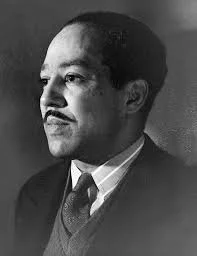
It’s difficult not to see echoes of that in how Asian American characters are written today. Hollywood is eager to place Asian faces in narratives, but less keen to give those characters real cultural experiences, conflicts, grief, humor, history, or perspective rooted in their racial and ethnic background. On the other side of this are those who view this absence of culture as an aspect of diversity in itself. That it should be praised when media with Asian characters aren’t entirely centered around racial identity. Through Hughes’ lens, this version of representation remains incomplete. For him, meaningful art emerges when communities embrace the fullness of their own identity and don’t aspire to another. We can’t simply ignore history, and that means realizing neutrality is often just whiteness in disguise.
Behind the Curtain
This pattern also reflects who is absent behind the camera. Authentic representation is difficult when few Asian Americans hold positions as show-runners, head writers, or creative decision-makers. Increased representation on screen will only go so far if the people shaping the stories don’t share the lived experiences those stories claim to represent. The study stressed the need for investment in casting, as well as in pipelines for Asian creatives and leaders in development and production roles.
If Asian American representation today feels both groundbreaking and strangely hollow, it’s because visibility has outpaced depth. Belly’s presence marks a milestone, yet the silence surrounding her identity reveals how far the industry still has to go. Hughes reminds us that meaningful art demands artists who are grounded in, not distanced from, their cultures. Representation cannot end at the surface. To move forward, it must look inward through stories that dare to embrace those complexities. Then the responsibility now falls on the industry to give Asian American characters more than screen time, but to give them depth.