Sent Home: Chris Paul, Legacy, and the Quiet Brutality of the Modern NBA
Chris Paul was never just a point guard. He was the point guard, the blueprint. Twelve-time All-Star. All-Defensive stalwart. One of the greatest floor generals in NBA history. In Los Angeles, on the Los Angeles Clippers, Paul became more than decorated. He became an identity. Between 2011 and 2017, he transformed the franchise, giving fans “Lob City,” real competitive hope, and a sense of legitimacy. He didn’t just resurrect the Clippers, he redefined them. That’s who Chris Paul was: someone who transforms franchises, someone whose impact extends far beyond the court.
In July 2025, Paul signed a one-year, veteran-minimum deal to return to the Clippers for what was intended to be his final season. There was a sense of poetry in that choice, the prodigal pass-master coming home to retire where he helped build something real. Fans expected a farewell tour. Teammates expected veteran leadership, the organization expected stability. But those expectations hinged on more than goodwill: they hinged on results.
The Clippers were not supposed to be here, drifting near the bottom of the Western Conference, 14th to be exact, staring at the wrong side of the play-in line andscrambling for answers. This was a team built for contention, not collapse. A team assembled with the expectation that this was the year the franchise finally broke its championship curse. Their summer was aggressive. Calculated. Loud. They signed Brook Lopez, a floor-stretching champion whose shooting was supposed to unlock their offense. They traded Norman Powell, a borderline All-Star last season, to bring in John Collins for frontcourt athleticism. They landed Bradley Beal in free agency, a move meant to give the Clippers a third star who could finally take pressure off Kawhi Leonard and James Harden. On paper, it looked like a contender. On 2K, it looked like a dynasty. In reality, it looked old. Injured. Slow. Beal went down early. Lopez showed his age. The roster felt more like a museum of past All-Stars than a living, functioning team. And the pressure, the kind that creeps into losing locker rooms and front offices, began to crack everything open.
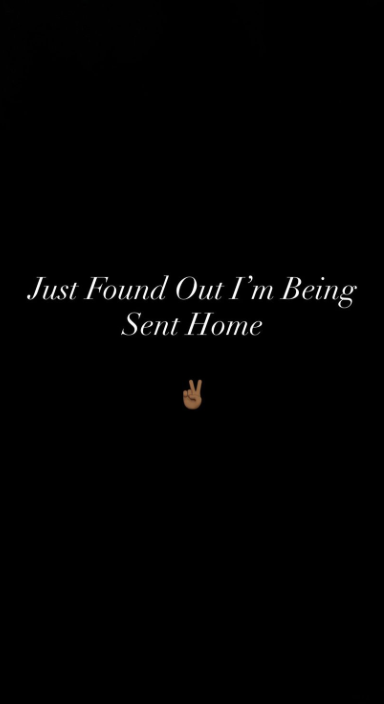
So what did the Clippers do to respond to the pressure? They made the late-night decision to send Chris Paul home, the shock was instant, but the message was clear: someone had to absorb the consequences of a failing season. And that someone became the franchise’s most decorated point guard. At 3 a.m., Paul posted an Instagram story from the team hotel in Atlanta: “Just found out I’m being sent home.” It wasn’t just news. It was a gut punch–symbolic, humiliating, and surreal. Who gets fired at 3 a.m. before a game? And who fires Chris Paul at 3 a.m. before a game? What was supposed to be a poetic final chapter in Los Angeles became an extraction. A quiet removal. A retirement tour turned into a roster purge.
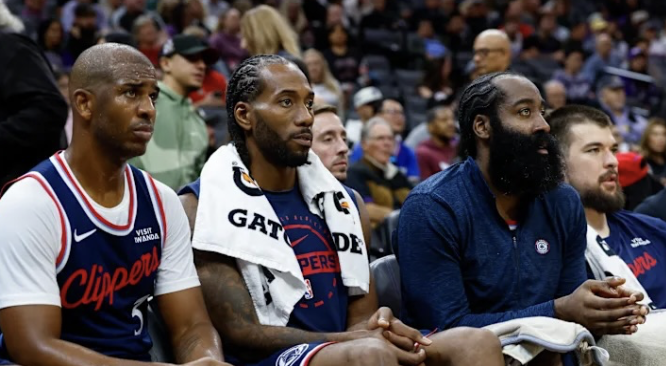
Lawrence Frank, the Clippers’ president of operations released a statement: “Chris is a legendary Clipper who has had a historic career. I want to make one thing very clear. No one is blaming Chris for our underperformance. I accept responsibility for the record we have right now. There are a lot of reasons why we've struggled. We're grateful for the impact Chris has made on the franchise.” Reuters However, the damage was done. The internet exploded. The league reacted immediately. James Harden, stunned, told reporters he was “just as confused and shocked as you guys, the world.” ESPN.com Even Kawhi Leonard, not known for emotional commentary, added: “It was shocking to me.” ESPN.com For two of the core stars to publicly say they're confused was a horrible look for the organization. And when head coach Ty Lue was tasked with navigating the fallout, he admitted the move didn’t actually help the team.
For teammates who shared locker rooms with Paul, the move felt like the organization yanked the rug from under a man many still regard as “The Point God.” Blake Griffin, a cornerstone of the Lob City era, didn’t mince words. He decried the Clippers’ choice as a failure to honor a legend: calling Paul’s abrupt exit “a sour way to go out,” and saying that dismissing Paul mid-season robbed him of the respectful send-off he earned. New York Post Media voices, too, reacted with disbelief. On national TV, pundits described the move as “bush-league,” a low blow to a player of Paul’s stature. New York Post+1
Clippers management, via president of basketball operations Lawrence Frank, insisted the split wasn’t about one incident and that Paul wasn’t being scapegoated for the team’s underperformance. But league insiders suggested otherwise: sources told reporters that Paul’s outspoken leadership, his habit of holding teammates, coaches, and even front-office accountable, had grown unwelcome in a pressure-cooker locker room. ESPN.com, which is ironic, because this was exactly why the Clippers brought him back. It is no surprise for them to find out why he functions as a productive voice in the locker room.
Chris Paul spent two decades orchestrating basketball like a symphony. But in the final movement of his career, there was no crescendo, only an abrupt cutoff. He got packing instructions. A flight. A social media post. A statement that read more like an obituary for a career than a tribute. And yes, if we're being honest, Paul was struggling. He was averaging career-worst numbers: 2.9 points and 3.3 assists in 14.3 minutes per game. He’s 40 years old, playing his 21st NBA season, and sources confirmed he planned to retire at the end of the year. All of that is true. But it doesn’t excuse how this ended. You don’t treat a Hall-of-Famer like a rookie on a 10-day contract. You don’t fire a franchise legend at 3 a.m. like he’s an inconvenience.
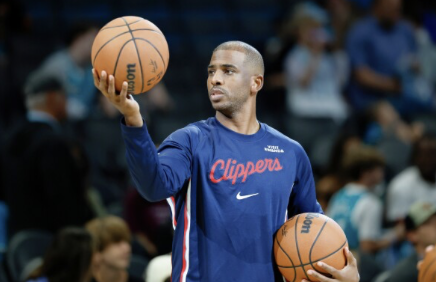
You don’t bring Chris Paul home for a farewell season and then send him home because the organization couldn’t live up to its own expectations.
The Clippers may insist this wasn’t personal. But the optics say otherwise. To fans, it felt disrespectful. To teammates, it felt like betrayal. To Paul, it may have felt like being erased from his own story. And the implications stretch far beyond this season. If you are a current star or future free agent, how do you look at this franchise and trust them with your legacy? How do you believe Clippers leadership will honor your contributions when they couldn’t honor the man who rebuilt the house they’re still living in?
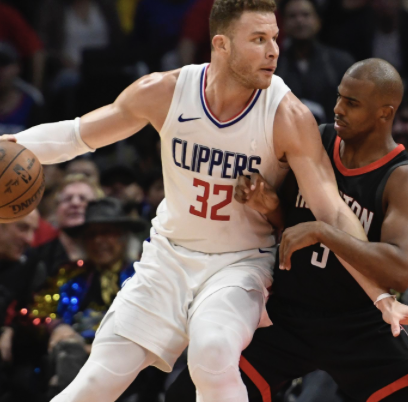
And the truth is, this isn’t new for the Clippers. This franchise has a long, uncomfortable history of mishandling star exits, a pattern that makes Paul’s late-night dismissal feel less like an anomaly and more like a continuation. Blake Griffin experienced it firsthand. In 2017, the Clippers held an elaborate “franchise for life” pitch meeting, complete with a mock jersey-retirement ceremony and a superhero cartoon of Griffin, then traded him to Detroit six months later. He later admitted he found out about the trade from Twitter before the Clippers contacted him.
They acquired Tobias Harris in the trade for Griffin, but was shipped out at the 2019 trade deadline after telling reporters days earlier he hoped to build long-term in L.A., calling the trade “unexpected” and “disappointing.” Another culturally important player was Lou Williams said he was “hurt” and even contemplated retirement after being traded to Atlanta in 2021, saying, the Clippers blindsided him after years of loyalty. “It shook me,” he told reporters. John Wall said the Clippers pitched him a starting role in free agency but then benched him, later admitting on the Run Your Race podcast that the team “lied” to him about his role and direction.
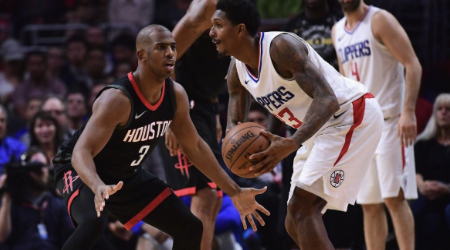
The Clippers made another messy pivot when they signed Russell Westbrook after Wall’s stint imploded. Westbrook revitalized the team instantly, he gave them pace, identity, and energy, and he was the only Clippers star who stayed healthy in the 2023 playoffs. In Game 1 against Phoenix, he carried them on both ends, sealing the win with elite defense and relentless effort while Kawhi Leonard and Paul George were sidelined. The Clippers lost that series not because of Westbrook, but because their stars once again weren’t available. Russ did everything right, and the franchise still managed to fumble the relationship.The following season, Westbrook embraced a starting role and the Clippers opened strong. Then the team made another dramatic, identity-shifting move: they traded for James Harden, instantly tanking the bench depth and forcing Westbrook back into a reserve role he never signed up for. His minutes shrank, his responsibilities shrank, and his future with the team shrank. By the end of that season, despite his loyalty and the spark he had provided, Westbrook walked in free agency, another Clippers exit clouded by confusion, mixed messaging, and questionable organizational planning.
Norman Powell, despite being one of their most efficient scorers, was traded this past offseason as part of a retooling he was reportedly not warned about. Powell later liked tweets insinuating he was underutilized and undervalued during his tenure. And then there was the infamous DeAndre Jordan saga in 2015–the “emoji war.” While fans remembered it as comedy, the underlying truth was messier: the front office panicked after losing verbal control of their starting center, rushing players into Jordan’s house to prevent him from signing with Dallas. It was organizational chaos masquerading as drama.
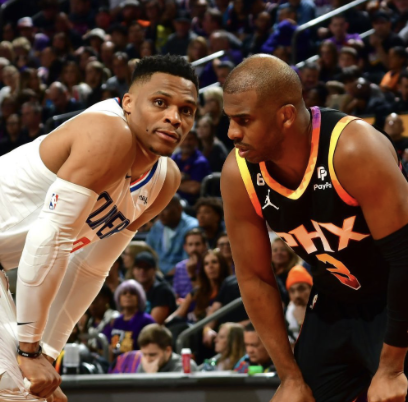
The Clippers have cycled through eras, owners, and front-office staff, but one thing has remained consistent: stars leave confused, blindsided, or questioning the franchise’s direction. Patterns matter.
Players notice. Agents notice. The league notices.
Because in the modern NBA, where loyalty is marketed but rarely practiced, teams reveal who they really are not in how they welcome stars, but in how they let them go. Maybe Chris Paul retires tomorrow. Maybe another team will give him a final home. Maybe history will be kinder to him than this franchise was. But one truth remains: the Clippers didn’t just lose a veteran, they damaged their reputation. And in a league built on perception, that may cost them far more than Chris Paul ever did.