Enough With the Labubus: How Consumerist Micro-Trends Threaten the Quintessential Childhood Experience
If I see another Labubu, I think I might go insane. You can’t go anywhere in New York City without coming across the devilish bag charm—and I, for one, am over it, but not for the reasons you may think. Yes, I think they’re ugly, scary, and totally overhyped, but what really terrifies me is their hold over the children of today, and what this says about the financial expectations of Gen Alpha. Trust me, coming across a child small enough to be guided by their parent’s hand, fashioning a clear purse containing two wide-eyed Labubus like a window display, really puts things into perspective.
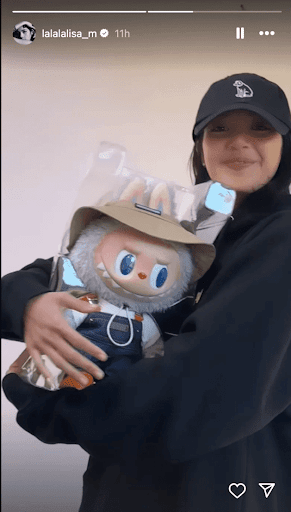
Professor Caroline Jack traces the origin of the global Labubu craze back to April 2024, when K-pop sensation Lisa of BLACKPINK posted a photo hugging one on Instagram. This frenzy was only further amplified by brand partnerships between prominent social media content creators and the distributor of Labubus, Pop Mart, effectively creating a “brand community” where individuals could connect based on their shared love for this product. Unlike the fan cultures of the pre-social media era, these sorts of communities increase in scale instantly, rapidly becoming “mainstream” and therefore known by the average layperson.
This popularity has led to the increased demand for an “authentic” Labubu product, with the cheapest original Labubu keychain retailing for $27.99 on the Pop Mart website, and resellers charging upwards of thousands of dollars for rare editions—not even accounting for the fact that these products come in blind boxes with several “characters” or “editions,” influencing buyers to purchase more than one box to increase their chances of snagging their desired doll. Extreme prices have prompted a market of “counterfeit” Labubus, colloquially termed “Lafufus,” with a similar look but far cheaper prices. However, Lafufus aren’t a perfect alternative, as the Consumer Product Safety Commission has warned parents of their breakability and extreme choking hazard for small children.

I don’t know about you, but in this economy, there is no way that I am going to spend thirty or more dollars on a glorified stuffed animal (and nor do I think my mom would have when I was a child). But the key difference between my childhood and that of children today is the fact that social media has popularized highly expensive and sought-after products, making it so that a child’s popularity and social acceptance depend on their accumulation of the “authentic” versions of those products. Whether it be a Labubu over a Lafufu or a Stanley Cup over a generic water bottle from Target or Walmart, children are conditioned by brands and social media influencers to believe that their worth is tied to their participation in the newest trends. This is only further exacerbated by the amount of time these kids spend online, with 58% of Gen Alpha children having a tablet by age 4, and about 64% of these children aged 8-12 using YouTube and TikTok daily.
Inevitably, this transfers over to everyday life in school. Parents on TikTok have shared that their child’s highly expensive Labubu was stolen right off their backpack at school, with one parent even supergluing the chain of their child’s Labubu closed to prevent robbery. This greed is depicted in the viral TikTok shown above, where a child believes that she is receiving a Labubu, only to falsely assume that it is a Lafufu, prompting her to throw the product across the room and pout with her arms crossed. Her mother responds to this tantrum by laughing behind the camera. The fact that her mother is encouraging this behavior suggests that parents are enabling the consumerist behavior of children today. Meanwhile, such behaviors only further isolate children with less financial means, exacerbating the social divisions in schools today.
Don’t get me wrong: privileged kids span generations. Plenty of my elementary school peers were given any product or toy they desired. However, the highly sought-after products in my childhood were far less expensive, sensationalized, and weren’t the main indicator of social status. Communities based around a shared interest weren’t created on social media, but rather among your closest friends—or, on the largest scale, in a self-made school club—usually stemming from the newest toy commercial on Disney Channel or Nickelodeon. What made someone “cool” was their ability to make a complex Rainbow Loom bracelet, or how long they could spin a fidget spinner, which were accomplishments that emphasized our physical ability, rather than our parents’ financial means. The cool kids won Kickball tournaments in gym class and had the highest reading level, while today’s children are being taught by social media that their popularity is defined by what they own—emphasizing the shift from physical/educational success to monetary success. I never felt this pressure to bring certain toys or products to school to establish my belonging among my peers. Yes, I was extremely jealous of my friend who had a Barbie Dreamhouse, but even at 10 years old I understood that I didn’t need a Barbie Dreamhouse to be happy, and that my worth wasn’t dependent on my possession of a toy. This is partly because my mother raised me to appreciate anything and everything I received, but it was also because the only social media trend anybody was worried about was the newest trending dance or song on Musical.ly.
Gen Alpha is the first generation to have been raised with a pre-established social media network, and I truly believe that this poses a real threat to their social and financial development. I still remember when Musical.ly first came out, and how excited we all were to discover the lengths of this evolutionary platform. Now, it feels like this naive excitement for the future of social media is completely overshadowed by the consumerist mentalities that are setting kids up for failure.