Where Did All the Boy Bands Go?
More than a year ago, I wrote about Charli xcx’s iconic rebrand from “industry sellout” to authentic artistry, having carved out her own genre in pop. History was rewritten in real time, and Charli unleashed a raw, feral side of pop stardom we hadn’t really seen from a mainstream female artist at that scale before. She was, indeed, our favorite reference (and still is). BRAT was not just an album, it was a movement—one that still lives on today.
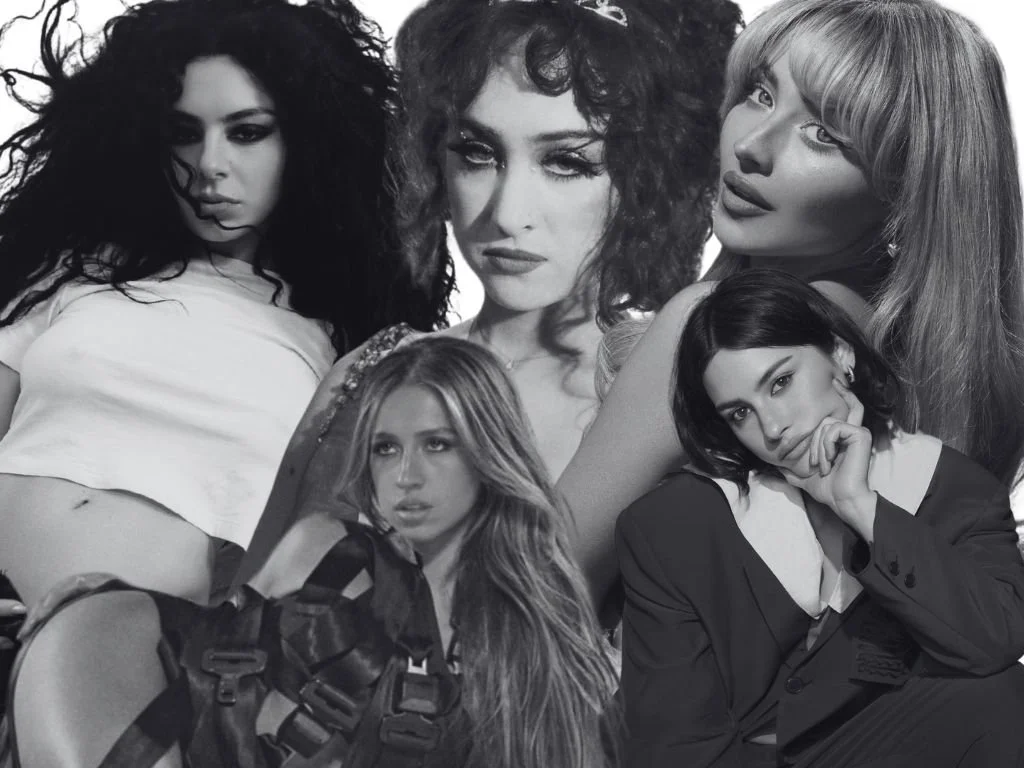
Charli is not alone. Sabrina Carpenter just closed the final chapter of her endless Short n’ Sweet era, with another album already streaming (and most likely prepping for a Man’s Best Friend tour now). Her tour began in September of 2024… even though it feels like she’s been touring forever. Tate McRae quietly slid a deluxe version of So Close to What, and her fans are obsessed. Chappell Roan is selling out arenas in drag makeup and six-inch platforms. Taylor Swift, Olivia Rodrigo, Billie Eilish, Gracie Abrams, and now KATSEYE—everywhere you look, the main characters of the pop industry are women.
All of this commotion, all these flowers being rightfully handed out, and almost none of them are for men. Pop music is more alive than ever—the market seems to be flourishing, but one corner has gone strangely quiet. While we have Charli’s Angels and Sabrina’s Carpenters, there doesn’t seem to be a modern equivalent of Directioners screaming over five boys in coordinated outfits. Somewhere along the way, the era of the Western boy band slipped out of the spotlight and into the depths of obscurity and indie record labels.
I say Western very intentionally, as I am acutely aware of the looming K-pop machine. This distinction acknowledges their presence. I won’t be diving into K-pop boy bands here; I want to narrow down the focus to what’s happening in the U.S. pop landscape. We could unpack the globalization of K-pop and the “BTS effect,” but that’s another story for another day.
And yet still, we are faced with the big question: where did all the boy bands go?
For a long time, the boy band wasn’t just a music act; it was a whole infrastructure for how teenage desire was supposed to look.
In NPR’s series All Things to Consider, they defined the boy band as an “all male vocal group, usually in their teens or their twenties who can be a trio, quintet or anything as such and they generally perform cross-over pop material to a largely teen or preteen demographic.” Boy bands are generally marketed towards girls and young women, and most of their songs often revolve around love.
It is hard to trace the origins of the term “boy band” and when exactly the first one was established. Several critics believe the crown rightfully belongs to The Beatles, the iconic English rock band formed in 1960. Described as “the first” or the “original” boy band before the term had even been adopted in our vocabulary, The Beatles certainly fit into many traits pertaining to what constitutes a boy band. That being said, others have argued that these categories were too confining for such a gold mine of talent. Instead, many historians point to other early predecessors, like the Jackson 5 and the Osmonds, the true pioneers behind the boy band “format.”
By the late 1980s and 1990s, that format hardened into something almost scientific. Groups like New Kids on the Block, Backstreet Boys, and *NSYNC turned the boy band into a full-blown industry product: five guys, coordinated outfits, synchronized choreography, and picture-perfect cardboard cutouts, digestible for teen girls and young women. MTV and glossy teen magazines did the rest: plastering posters on bedroom walls, assigning each member a role (the “bad boy,” the “shy one,” etc.), and teaching fans not to just like the group, but to pick a favorite.
These groups didn’t just sing. They provided a script for navigating the adolescent confusion of teenage love. The songs were simple and direct, and the narrative was equally straightforward: girl meets boy, boy is head over heels and promises devotion, maybe a key change. For tween and teen girls growing up in this era, boy bands became kind of a parasocial, emotional training ground. You learned how to scream for someone you’d never meet, how to defend him in arguments, the list goes on.

The year 2010 gifted the boy band formula a massive reboot with One Direction and the second coming of the Jonas Brothers. Tumblr was spanking new, brimming with excited users and fresh prospects. Stan twitter was born, and Wattpad became the new Bible. Fans didn’t just consume the music, they built communities around it. This came in multiple forms: fanfiction, ship edits, stan accounts, and conspiracy threads. Being a Directioner wasn’t just about liking “What Makes You Beautiful”; it was a full-time identity, a friend group, a language.
Boy bands weren’t just background noise on the radio. For multiple generations, they were the default structure through which young girls learned how to desire, how to obsess, and how to organize their lives around pop music. Which makes their near-total absence from today’s Western charts feel less like a minor trend shift, and more like a genuine missing piece.
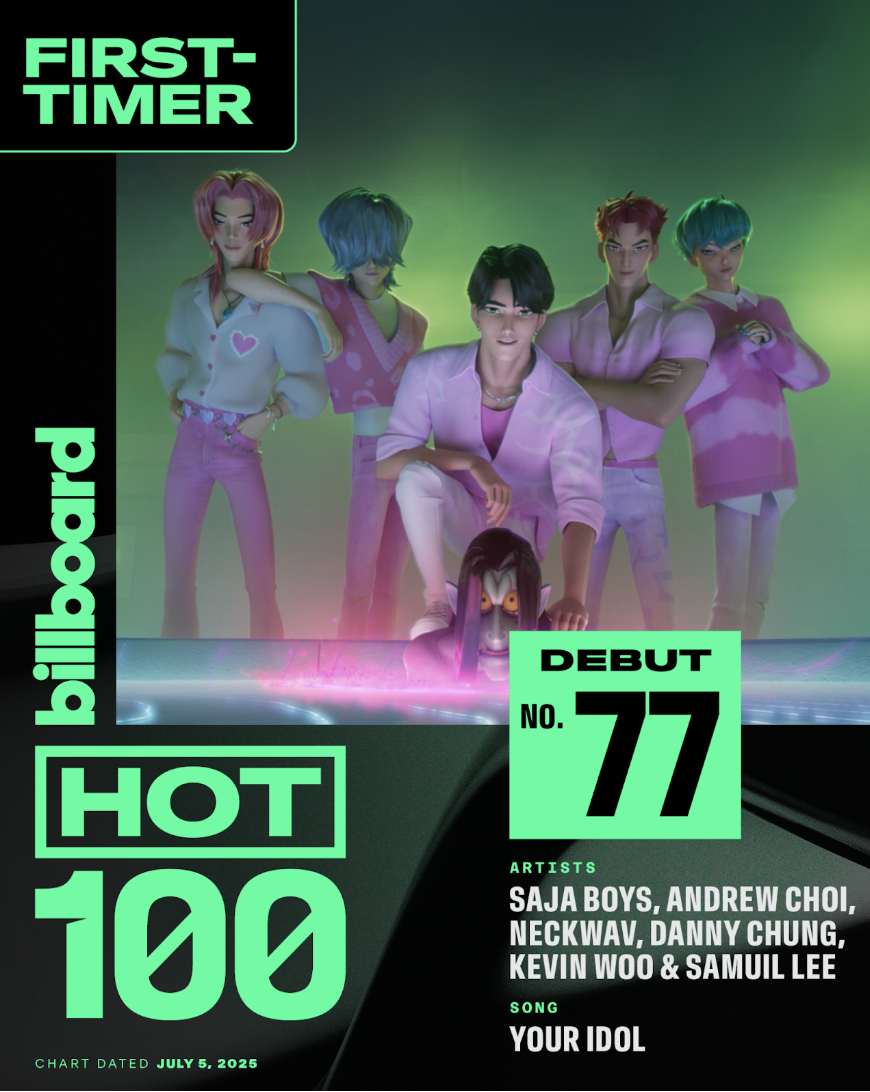
When I say near-total absence, please see the image above. I can only imagine what was running through that Billboard employee’s mind when they were putting together this graphic. For a fictional boy band to be on the Billboard Hot 100? Let alone dethrone the reigning king of boy bands, BTS?! When K-Pop Demon Hunters was gaining traction, I liked the music—I didn’t actually expect the crossover to chart this hard, at least.
In a way, it’s the perfect glitch to the matrix. The only boy band who can touch BTS doesn’t even exist in real life. Perhaps this is the green light for the music industry. We know what the people want, and the demand clearly exists; the only question is whether Western labels are willing, or even able, to build a real-world group that can actually meet it.