The Art of Whimsy
On Thursday, February 19, twenty-year-old Alysa Liu won gold in women’s figure skating on Olympic ice. The same day two years ago, she wasn’t even wearing skates. Liu retired from figure skating shortly after the 2022 Beijing Olympics. When she returned to competitive skating at 18, she made it clear that the comeback would be entirely on her own terms– she’d choose the music for her program, make creative decisions about the choreography, pick her own costumes, and decide what she wanted to eat. In interviews, Liu said that the difference between this Olympics and the last is that this time it didn’t feel like her life was on the line.
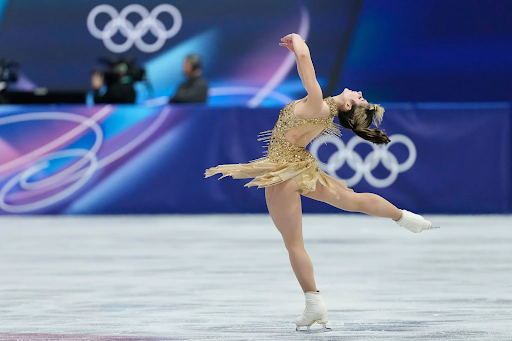
Alysa Liu's women’s figure skating free program at the 2026 Winter Olympics in Milan, Italy. (Photo credit: AP Photo/Natacha Pisarenko)
As someone who’s been closely following the Winter Olympics figure skating competition this year (and now feels like a qualified judge), the best way I can describe Alysa Liu’s skating is effortless. There is magic in her skating that you can’t take your eyes off of; she skates with pure, unadulterated joy.
The spirit of Alysa’s ice-skating feels reminiscent of the “whimsy” trend that took over my TikTok For You Page in late December. The posts forecasted 2026 to be “year of the whimsy”. And what is whimsy, you might ask? I’m not entirely sure, but I can put my finger on it. Whimsy is polka dots and stripes, buttons and snail mail, Sheryl Crow and baking. It’s jumping in puddles, outfit-repeating, and picking up an old hobby just because.
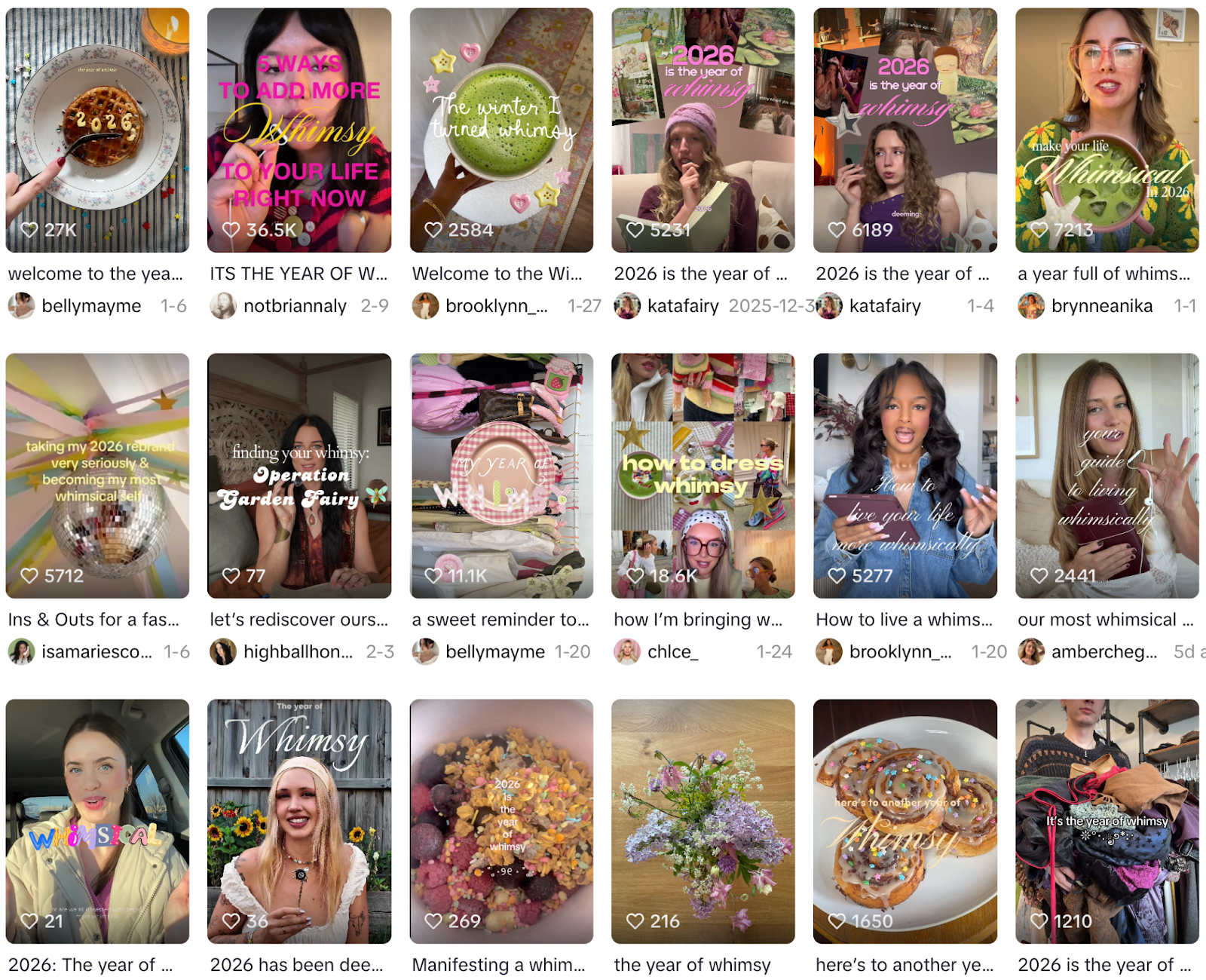
TikToks associated with the whimsy trend Photo credit: TikTok
While whimsy feels like a callback to the online virality of identity-centered ‘-cores,’ vibes, and aesthetics on social media a few years ago, there is something about this particular trend that carries more substance. For one, whimsy is harder to define than more cookie-cutter microtrends with fixed aesthetic markers, like the VSCO girl or the e-boy. There’s a strong anti-consumerism sentiment within this trend. Whimsy encourages you to rediscover parts of yourself you forgot you loved– wearing the clothes in the back of your closet and revisiting half-finished pastimes you can continue without buying anything new. Whimsy is less about adopting a new personality and more about chasing this feeling of something that excites you. The trend encapsulates the idea of re-unlocking the childlike wonder, curiosity, and bravery we had when we were younger. The unpinpointable nature of whimsy is part of its appeal: what’s whimsy to me may not be whimsy to you, but it is whimsy nonetheless.
This state of mind grants us legroom for differences, permission to experiment, and courage to mess up. Whimsy embraces imperfection at a moment when so many aspects of our lives are pressured toward perfection. In many ways, the trend is a resistance to the algorithmic smoothness that standardizes diversity and prioritizes quick fixes over complexity and nuance. Products, services, and information are pushed at us with empty promises that we will be ‘well’ and happy once we consume them. Maybe over the counter GLP-1s and iPad kids do leave a bad taste in our mouth. In a world with Liv Schmidt, AI therapy chatbots, and MAHA seed oil propaganda, whimsy feels like grasping for a lifeline to something grounded in reality. Whether you call it a subconscious rebellion, a wellness movement, or a cry for help, whimsy revels in practices that are not merely a means to an end. The art of whimsy is rooted in doing things that bring you joy for the sake of fulfilling yourself. It’s a rare resource that’s being drowned out in our modern landscape today.
The pressing question now is: how do we reclaim whimsy when so many forces seem to be against it, pressuring us to spend money, stay online, and remain productive? The answer might be nothing. American artist and writer Jenny Odell examines the importance of “doing nothing” in a world of constant activity and noise. She clarifies that "doing nothing" is achieved by reserving periods of space and time for us to think, reflect, heal, and sustain ourselves. Doing nothing oftentimes is a precursor to meaningful action. Nothing can look like investing in public spaces like parks and libraries, dedicating time to relax, and spending quality time with people instead of devices. Odell exclaims, “I’m lumpy, I’m an animal, I hurt sometimes, and I’m different one day to the next. I hear, I see, and I smell things that hear, see, and smell me.” American capitalist society conditions us to be constantly connected, readily accessible, and continuously productive. As humans, we’re expected to always be on, well, and happy. We’re not machines, though. We are real, we are true, we are animals, we are nature. We require time to rest, play, and sometimes just be.
In the time between Alysa Liu’s retirement and return, she hung out with friends back home, traveled to Nepal, dyed her hair, enrolled in college, trekked to Everest Base Camp, and got her driver’s license. At the Women’s Olympic Team press conference, Alysa made it clear that she wasn’t there to win a medal, but to showcase her art. “I don’t think anything is going to be hard,” she said candidly. “What is there to lose? Every second you’re there, you are gaining something. There’s nothing to be lost.” Liu’s skating journey and the popularization of whimsy teaches us that being yourself should be lightwork. Doing things you want to do shouldn’t be hard. Ditching the exhausting pursuit for self-optimization for the pursuit of the journey, growth, and of course joy is the ultimate form of wellness. Chase what feels true to you. That’s the lightning in a bottle, the magic, the real gold.