Notes of a Dreamer
When did we stop caring about our dreams? Fine, I admit it: I’m the kind of person who goes on a long-winded rant about my dream before realizing halfway through that I actually don’t even remember it and nobody even cares. But I can’t be the only one who loves a good dream. My nightly dream journal can speak to this nocturnal obsession.
Feb 6 — I had a dream a mouse in my house died and I performed mouse CPR on it.
Feb 24 — Last night I had a dream where I was on trial for something, murder maybe, and my roommate stole my desk. I started crashing out and crying because my murder trial was scheduled for three and my desk was missing.
Thirteenth-century theologian Bonaventure classified the causes of dreams into five categories: disposition of the body, anxiety of the mind, diabolic illusion, angelic revelation, and divine visitation. Some nights I dream of running into friends I haven’t spoken to in months. Some mornings I send them a text: you were in my dream last night. Other nights I dream I’ve done something really bad, unforgivable even, like murder or forgetting an exam. I wake up like a film protagonist who springs up in their bed with a start, dripping with sweat after an unnerving dream oddly relevant to their current situation. Thank god that wasn’t real! Other times I dream that I’ve thrifted the most perfect pair of shoes or that I hit it off with that one unattainable class crush. God, I wish that was real! Most times I wake up half-dazed, confused why last night's dream characters consisted of someone from my 11th-grade AP Calculus class, my friend's mom, and Morrissey. How’s that for divine visitation? Maybe more like diabolic illusion.
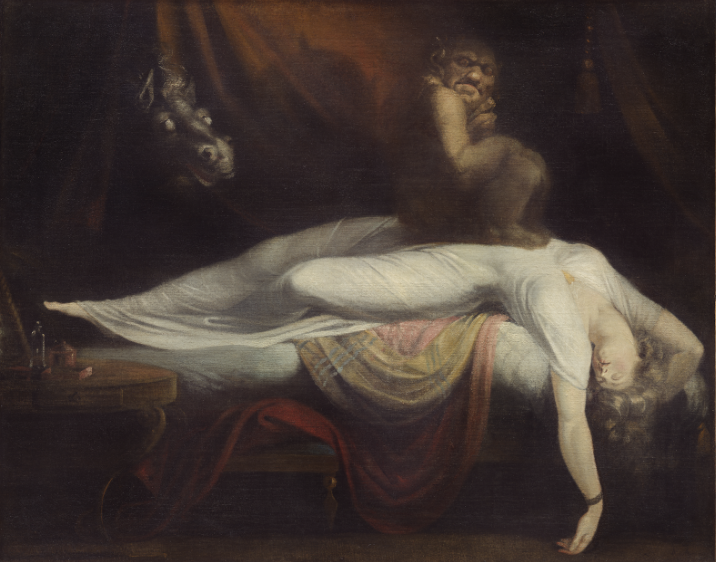
Henry Fuseli, The Nightmare, 1781. Honestly, girl, I get it.
Do my dreams have any special meaning in the deep recesses of my unconscious mind? What does sleep-paralysis Morrissey or my resuscitated mouse say about my repressed wishes? In his 1900 book The Interpretation of Dreams, Sigmund Freudargues that dreams serve as a gateway to unconscious desires. Besides association, symbols are a key component of dream interpretation. When consulting an agoraphobic woman who dreams of wearing a straw hat, Freud simply responds, “The hat is really a male genital organ, with its raised middle piece and the two downward-hanging side pieces.” How could she possibly be unsatisfied by such an explanation? Freud suggests that animals which traditionally serve as mythological genital symbols play the same role in dreams, including critters such as the fish, the snail, the cat, and … the mouse. Uh-oh. I’m in trouble then.
Alright, so his work is a little outdated for my personal purposes. Disgraced, Freud is left to sulk with his psychoanalytic musings and Oedipus complexes. At the very least, he was a dreamer like me.
Then how do we go about interpreting our dreams? Luckily for us, Gustavus Hindman Miller has the answers, ten thousand of them in fact, in his 1901 guide, 10,000 Dreams Interpreted. From submarines to sorcerers, there’s an answer out there for you. Mouse: “For a woman to dream of a mouse, denotes that she will have an enemy who will annoy her by artfulness and treachery.” Not to say I don’t trust Mr. Miller’s expertise, but I’m beginning to think this dream stuff is a load of phooey.
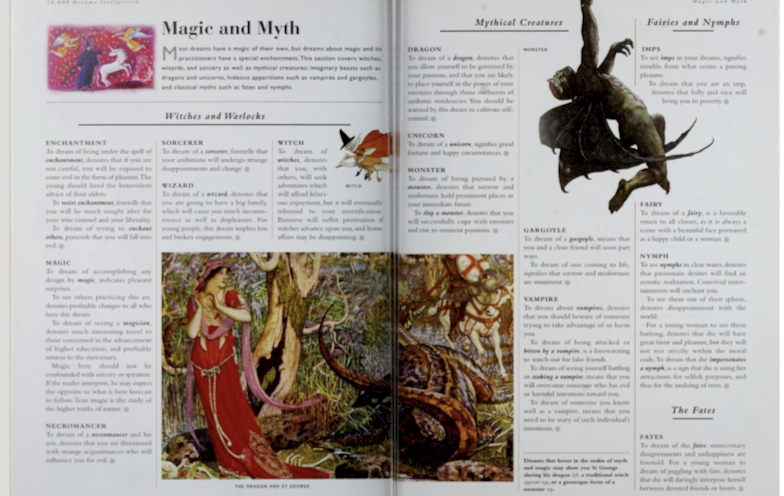
This 1996 edition is nothing short of magical
It doesn’t take psychoanalytic probing to see the relevance of some dreams, whether they reveal desires or anxieties. To conjure an estranged friend, vintage shoes, or a lecture love affair is to wish for its existence. And, like most people, I would not be too thrilled to find myself before a court of law. These insights can be meaningful on their own. Sometimes the underlying message is “I should reach out to them” or “I need to chill out.” But most of the fun lies in the absurdity of dreams.
The best filmmakers and artists intimately understand the power of dreams, both in their realities and their absurdities. What are dreams if not personal film reels? In Meshes of the Afternoon, a 14-minute silent film akin to my typical midday nap, directors Maya Deren and Alexandr Hammid create images that rest somewhere between reality and dream. They follow the spiraling fragments of a woman’s recurring dream, played by Deren herself, who later describes the film as depicting “the inner realities of an individual.”
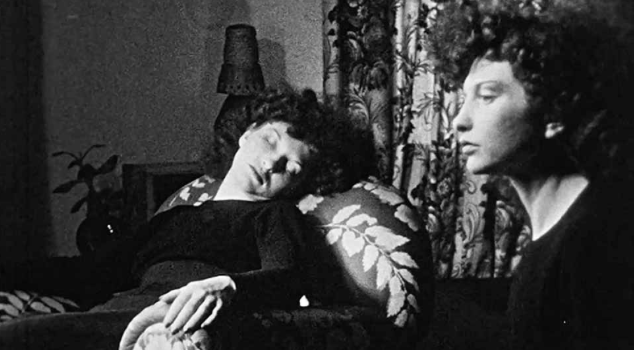
Maya Deren, Meshes of the Afternoon (1943).
Likewise, Surrealism as an art movement embraces the uncanny and the unconscious. Gazing at Leonora Carrington’s works feels like peering into someone else’s dream. Yet, her art is often imbued with deeply personal symbolism. In And Then We Saw the Daughter of the Minotaur, a translucent cloaked figure serves as her surrogate, accompanied by her two children a liminal dreamland inhabited by fantastical creatures.
These works are resonant not because they can be explained away through 10,000-term dictionaries or YouTube explanation videos, but because, like dreams, they resist easy interpretation. As Carrington would argue, art is not meant to be rigidly over-interpreted but felt instead. The same applies to dreams. The surrealism of dreams, and the ways we connect them to our realities and emotions on a personal level, can be more impactful than straightforward explanation.
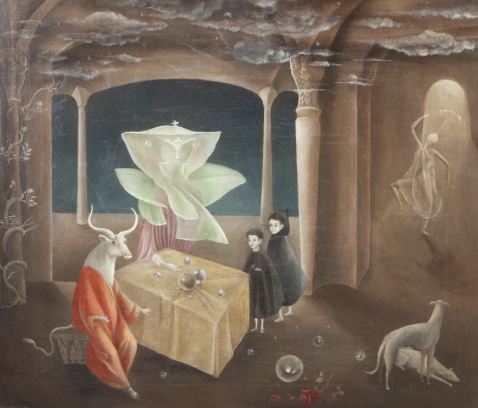
Leonora Carrington, And Then We Saw the Daughter of the Minotaur, 1953.
When I relay my dream to others the morning after, it never sounds quite as thrilling or coherent as I remember it. Imagine this: I’m reclining on a chaise lounge in Freud’s office, recounting my unsettling dream involving mouse CPR. He would probably nod his head, yawn, and tell me all about my unconscious desires, or something or other. That’s usually how my real-life conversations about dreams go. Though, my favorite people are the ones who understand the enjoyment you can find in dreams, whether they cut too close to home or seem like something out of this world.
The next step for me, it seems, is to learn how to lucid dream.