
Are We the Capitol?
I may be a little late to the game, but the newest edition to The Hunger Games saga was published in March of last year, and last week I finally sat down to read it. Four hundred pages later, finished in a single snowstorm day, I turned the last page with tears in my eyes. And, of course, I immediately went to TikTok to listen to other people’s opinions and watch the fan edits.
Afterward, I found myself wondering why I continue to do this to myself, why I willingly tear myself apart over a fictional series. Why do I love these books so much, and why do I want fifty more installments if each one leaves me more broken than the last? I grieve these characters as if they are real people. I mourn them. And then I ask for more.
So how is it that this series continues to grow eighteen years later? Part of it is the strength of its fanbase. But part of it feels more complicated than that.
The first Hunger Games book was published on September 14, 2008. The second and third followed in 2009 and 2010, and the film starring Jennifer Lawrence and Josh Hutcherson premiered in March 2012, launching the series into something massive. Nearly two decades later, the story continues to expand. A new book was released on March 18, 2025, with another film scheduled for release in November 2026. The newer releases dive into backstories of characters we already know.
As I began reflecting on the series as a whole, I started thinking about the paradox of continually asking for more. More backstory means more suffering. More context means more death. More pages to cry through before forcing yourself to turn to the next one. Why do we enjoy reading and watching this suffering? And if that enjoyment feels different, is it really so separate from the way the Capitol consumes violence in this series?
The Hunger Games was written as a dystopian critique. Yet at times, it feels less like a distant future and more like a reflection of the world we already inhabit.
We claim The Hunger Games is a critique of spectacle and suffering. But the reason it continues to thrive may be because we are still entertained by spectacle and suffering. If the Capitol finds pleasure in watching violence packaged as entertainment, and we binge stories about children forced into arenas for suspense, where exactly is the line between critique and participation? We condemn the fictional Capitol for cheering from the sidelines; yet when a new installment is released, we rush to read it, to watch it, to want more. At what point have we become the audience we claim to despise?
History suggests this impulse is not new. In ancient Rome, crowds filled the Colosseum to watch gladiators fight to the death, violence staged and funded by those in power. In early modern Europe and colonial America, public executions were communal gatherings. During the Salem witch trials, neighbors assembled to witness the accused hanged. Under Henry VIII, figures like Anne Boleyn and Catherine Howard were executed publicly.
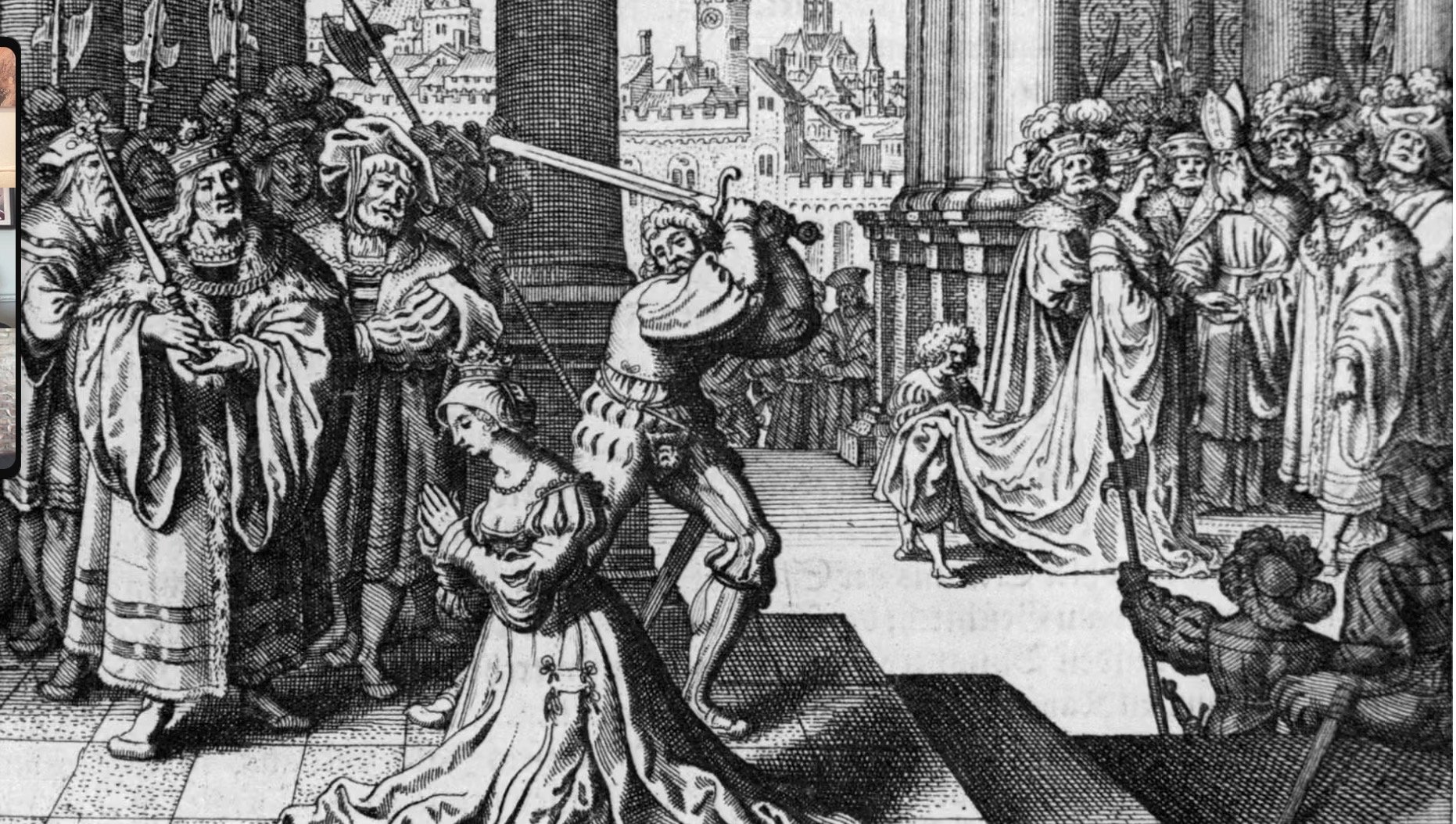
Today, we no longer gather in town squares for executions. But we still gather. We gather in movie theaters to watch horror films. We gather in arenas for boxing and wrestling matches; consensual and regulated, yet still built around controlled aggression. We gather in our homes to binge dystopian franchises. Even the fascination with true crime today transforms real tragedy into consumable content.
From the Roman Colosseum to the Salem witch trials, from Tudor executions to modern horror films and The Hunger Games, public suffering has repeatedly been reshaped for collective consumption.
The question I keep coming back to is why?
When thinking about this in psychoanalytic terms, Sigmund Freud’s concept of the death drive comes to mind. Freud argued that humans repress socially unacceptable desires to function within society, and that not all of our impulses are polite or socially acceptable. In Beyond the Pleasure Principle (1920), Freud introduced the“death drive,” suggesting that alongside our instinct to preserve life (Eros), there may also be a counter-drive oriented toward repetition, aggression, and destruction.
This does not mean we secretly want to murder people. But it may suggest that we carry these aggressive impulses that are usually suppressed. If that’s true, then violent entertainment might act as a kind of safe outlet. We are not doing the killing ourselves, but we are witnessing it in a controlled environment. The destruction is contained inside the narrative.
Horror works this way. It allows us to experience fear in a controlled setting. It activates adrenaline without real danger. We feel intensity without actual threat.
The Hunger Games does something similarly. It allows us to experience oppression, rebellion, and survival from the comfort of our couch. We feel the rush of the arena without being in it. The suffering is real inside the story, but for us, it is contained.
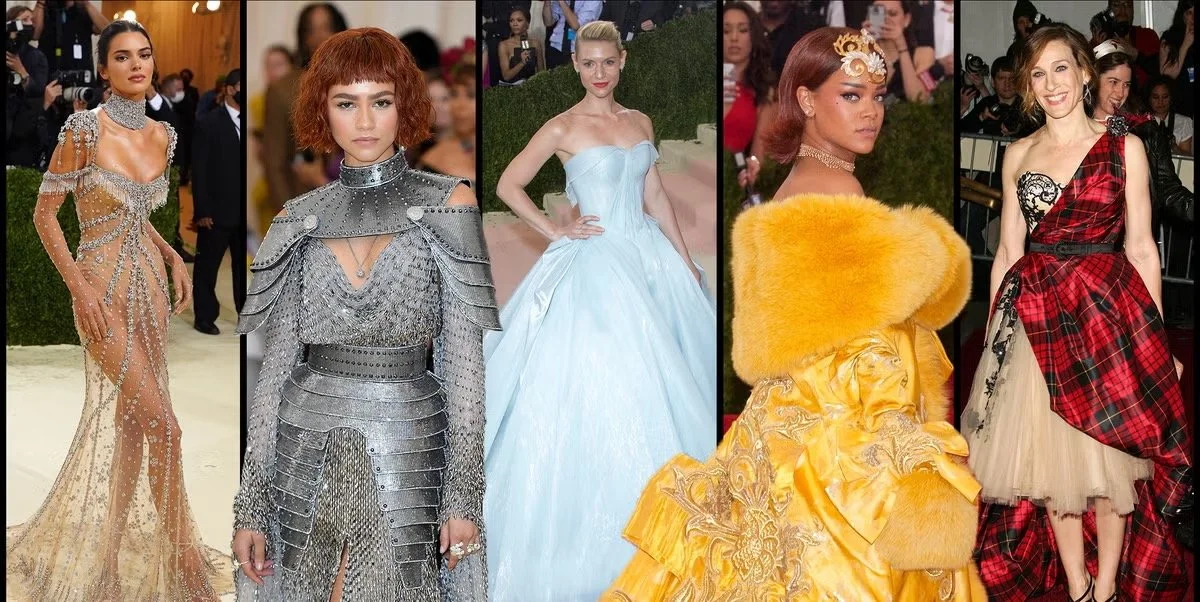
And yet, The Hunger Games does not feel that far removed from our current reality. The series revolves around leaders who make extreme decisions while ordinary people suffer the consequences, and that dynamic does not feel fictional in 2026. When I watch something like the Met Gala, a glittering ball where only the richest and most powerful are invited to attend, I cannot help but think of the Capitol. The extravagant fashion, the spectacle, the commentary; it mirrors the way Panem’s elite distract themselves while districts struggle to survive. And yet, I watch it. Millions of us do. We analyze the looks. We repost the outfits. We actively participate in the spectacle.
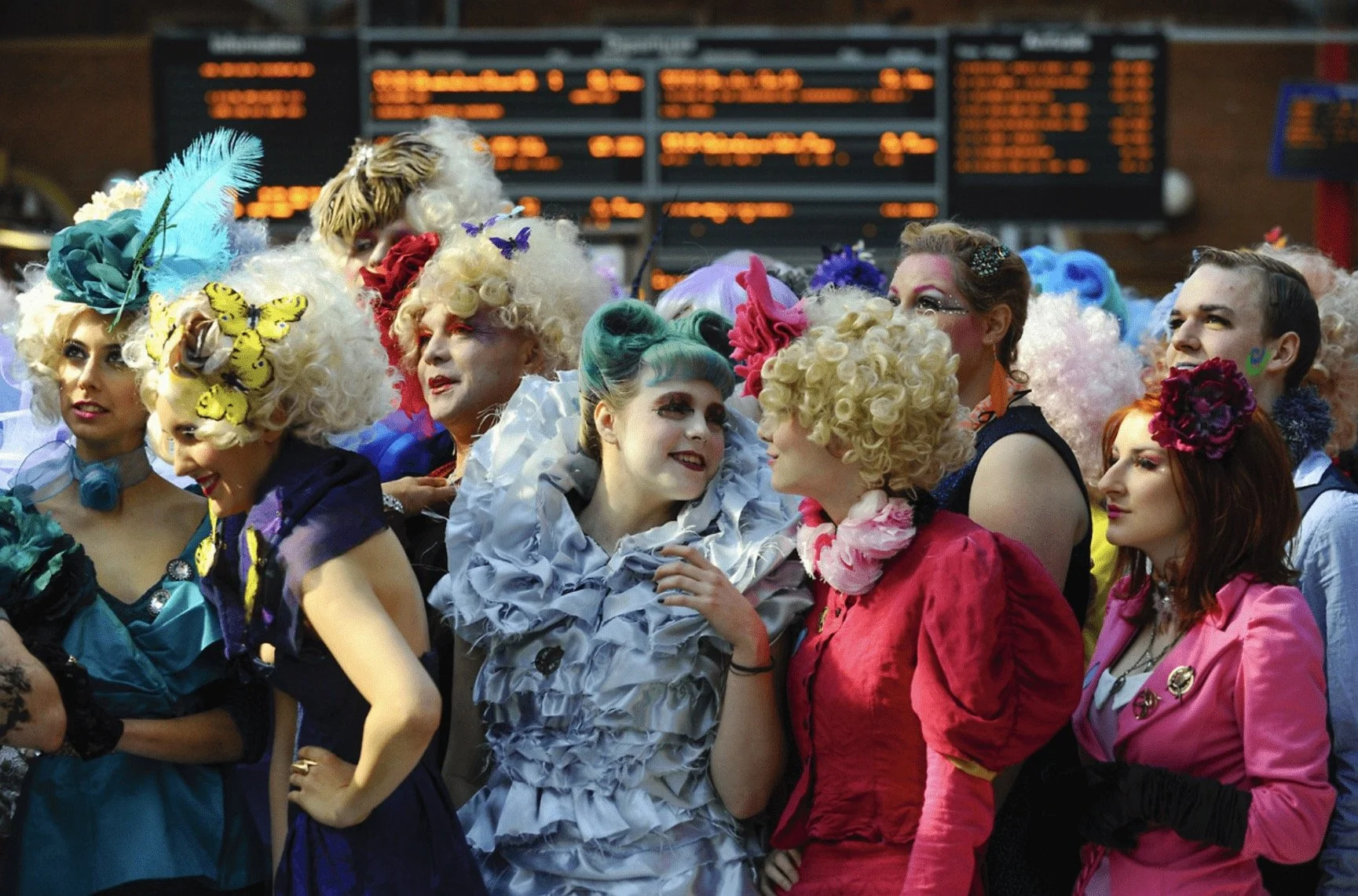
That is what makes The Hunger Games uncomfortable. It was never meant to be simple entertainment. Donald Sutherland, who played President Snow, once wrote in an open letter to Lionsgate that “Power perpetrates war and oppression to maintain itself until it finally topples over with the bureaucratic weight of itself and sinks into the pages of history.” He even added that he hoped the series would “stir up a revolution.” The story was designed as a warning about power, but instead of overturning systems, it became a franchise.
Maybe what keeps The Hunger Games alive isn’t just its politics or its characters. Maybe it survives because it understands something about its viewers. It critiques a society that turns suffering into spectacle, while simultaneously becoming a spectacle itself.
We condemn the Capitol for watching the arena. But we watch it too. Safely. From our couches. With popcorn and fan edits. The series doesn’t just expose dystopia; it exposes the thin line between witnessing and participating. And maybe that uncomfortable recognition is the exact reason why we keep wanting more.
