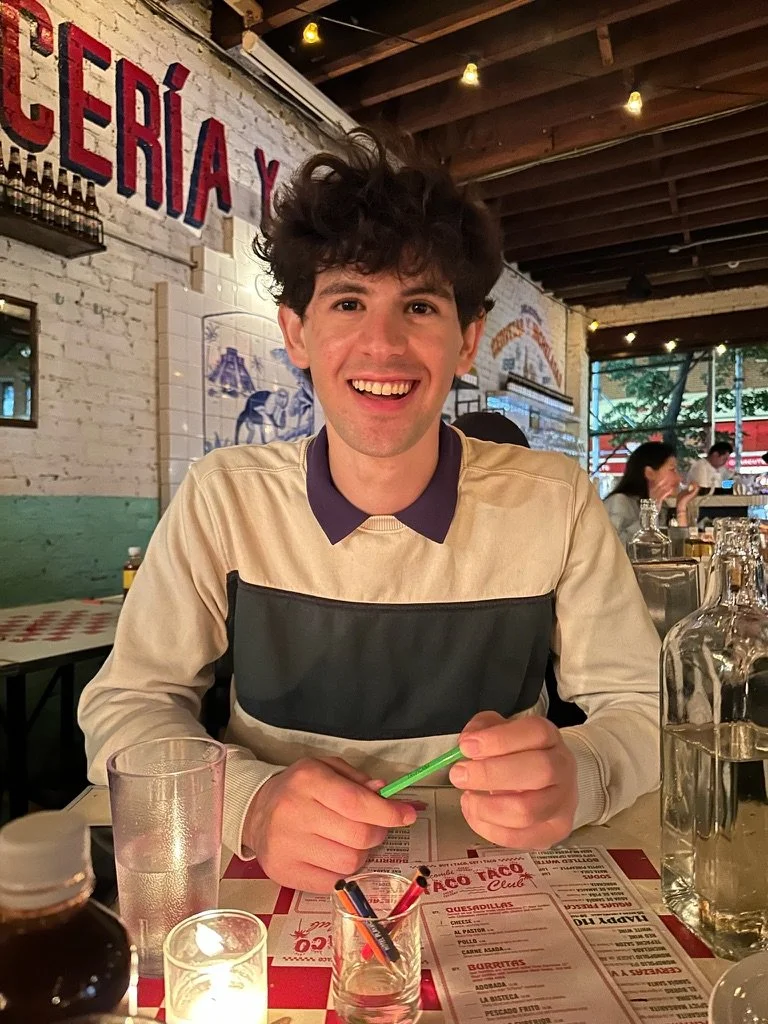
The Many Sides of George Miller
TW: Early Filthy Frank/Pink Guy content was typically NSFW, be aware of your surroundings when clicking links!
Did you know that Joji created the Harlem Shake? Yes, George Miller, the real name behind the now-world-famous Alternative R&B artist, the man who had you crying alone in bed to songs such as Glimpse of Us and Slow Dancing in the Dark, also had you flopping on the floor in 2013.
There really is no artist with a rebrand as incredible as George Miller. In his early years, Miller dominated YouTube with hits such as HUMAN RAMEN, a video in which he bathes himself in 38 packets of ramen, and RAT CHEF, in which he cosplays Guy Fieri cooking with dead rats. However, as time passed, audiences would find Miller taking a completely different direction, one that would make them cry instead of laugh.
With Filthy Frank also came his in-channel character ‘Pink Guy’, which, simply put, was Miller in a pink morph suit with a separate, more chaotic personality. Through ‘Pink Guy’, Miller released a set of character-focused videos, giving him a full backstory and personality, while also releasing several songs, eventually leading to a full album entitled Pink Season.
Yet as time went on, audiences would witness a major change in Miller’s content, turning from one of YouTube’s most controversial stars to one of the nation’s top artists. With the release of his latest album, Piss in the Wind, let’s talk about how George Miller changed international minds and tuned in audiences nobody would’ve expected.
Early Years
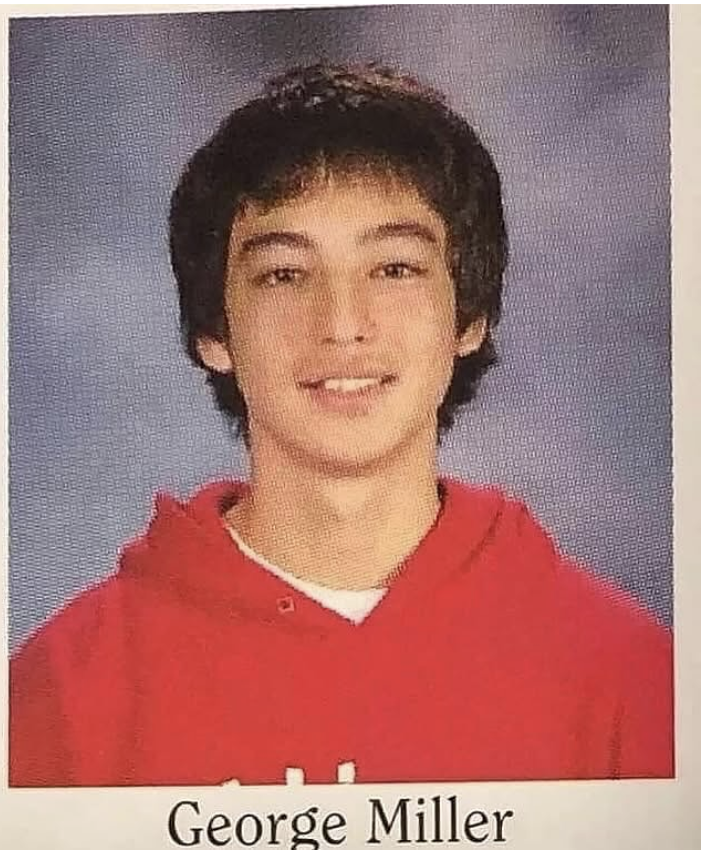
A Young Miller
George Miller was born in Osaka, Japan, to an Australian father and a Japanese mother. After attending an international school in Hyōgo, Japan, Miller moved to New York, where he attended the New York Institute of Technology and received a BFA in 2016.
From an early age, Miller always tracked an online presence. His first channel, titled 2cool4u92, currently only displays one 11-second video showing a 14-year-old Miller breakdancing. Around two years later, Miller would create another channel, DizastaMusic, where he began posting much more regularly. Throughout the channel's growth, Miller’s edgy, audience-facing humor would shine, despite the channel’s description stating otherwise:
“These videos are not an accurate representation of my comedy whatsoever. This style of comedy limits me from what I can actually do. I have real material which I would like to share with the world eventually. Until then, I welcome you to a terrible place on the internet.”
DizastaMusic’s videos, many of which appear to be filmed in his college dorm room, were typically sketch-comedy based and often correlated to popular culture of the time, such as a video of him erratically dancing to “Gangnam Style” (without once actually doing the Gangnam Style dance, fyi).
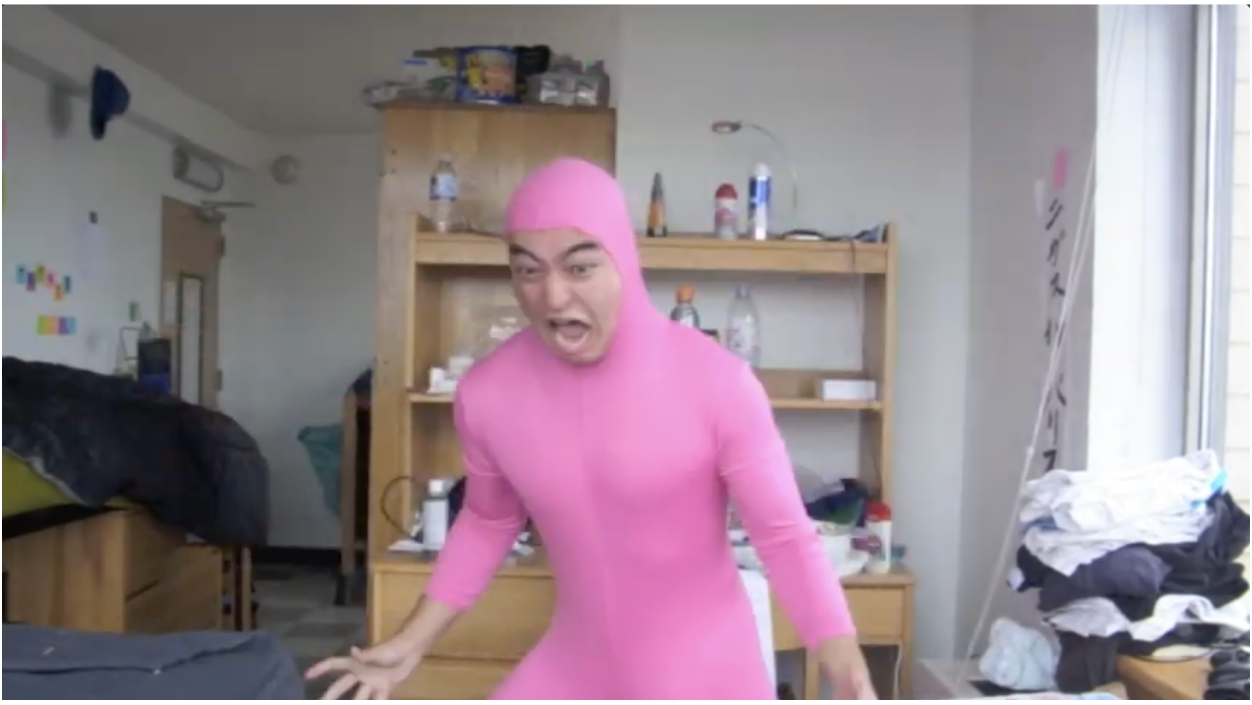
An actual frame from Miller’s “Gangnam Style” video
On this channel, Miller would also release a video called ‘DO THE HARLEM SHAKE’, which sparked one of the internet’s first worldwide viral trends, the ‘Harlem Shake’. Years later, during an interview on Hot Ones, Miller expressed confusion with the trend taking off, particularly in its star-studded participation:
“I kinda looked down on them for that. I was like, ‘you guys are stupid, why?’ I mean, I’m not bitter about it, I think it was a great thing, but I didn’t- I still don’t understand why people got so hooked on it. ”
After seven years of posting on the channel, Miller shifted his attention to a new channel, one where his erratic nature only grew.
‘Filthy Frank’
Joji very clearly defines who the character of ‘Filthy Frank’ is in the description of the now-unactive YouTube channel of the same name:
“Filthy Frank is the embodiment of everything a person should not be. He is anti-PC, anti-social, and anti-couth. He behaves and reacts excessively to everything expressly to highlight the ridiculousness of racism, misogyny, legalism, injustice, ignorance and other social blights. He also sets an example to show how easy it is in the social media for any zany material to gain traction/followings by simply sharing unsavoury opinions and joking about topics many find offensive. There is no denying that the show is terribly offensive, but this terrible offensiveness is a deliberate and unapologetic parody of the whole social media machine and a reflection of the human microcosm that that social media is. OR MAYBE IM JUST [CENSORED] [CENSORED].”
Another definition, by Sean Evans of Hot Ones, describes Filthy Frank as a “self-loathing psychopath in a blue-button-up”. Both of which I’d say are equally accurate.
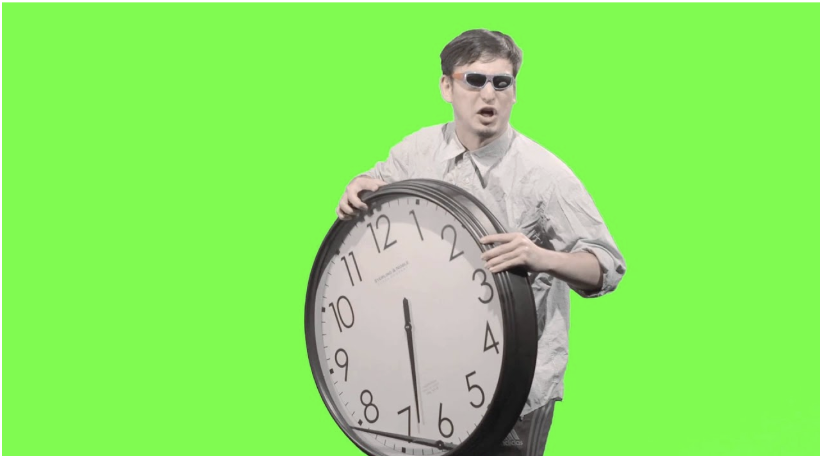
Miller in his viral video ‘it’s time to stop’
Filthy Frank was, at one point, the internet’s biggest troll, especially in an era where YouTube counterculture dominated the platform. His content was often disgusting, vile, and outwardly repulsive, and yet, as much as some would hate to say it, incredibly entertaining.
However, this was the point of Filthy Frank. Similar to how Sacha Baron Cohen’s ‘Borat’ character exhumed intense amounts of bigotry as a satirical tool designed to expose and mock real-world prejudice, Filthy Frank did the same. His content was so incredibly wacky and crazy, often mainly anti-PC, in order to highlight the ridiculous nature of it all.
Still, not all of his content was overt satire. Sometimes, in collaboration with fellow Youtube creator’s Maxmoefoe and Idubbz, Miller would participate in chaotic challenges. One of the most notable is Deadly Twister, a crazed, self-explanatory challenge that went so viral, it even spawned a sequel.
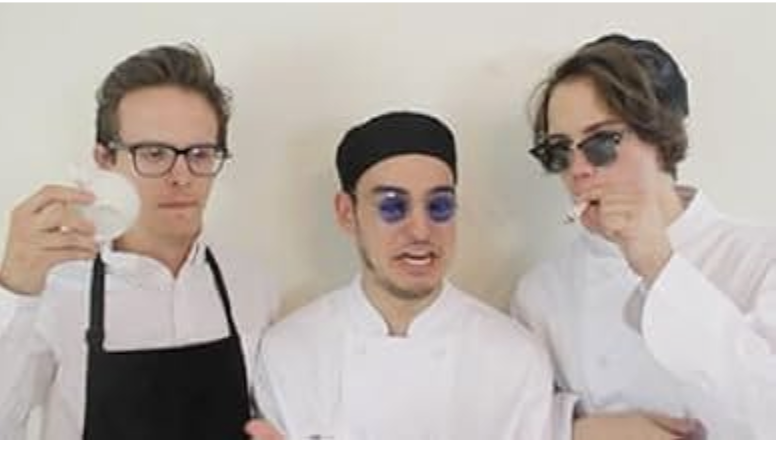
From left to right: Idubbz, Filthy Frank, and Maxmoefoe
‘Pink Guy’
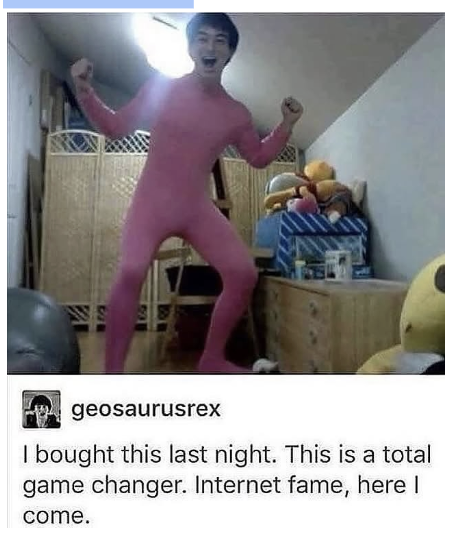
Miller in the early days of Pink Guy
Originally introduced on DizastaMusic channel, Miller’s use of his pink morph suit began as just a new funny costume into a fully fleshed-out, story-driven character with an entire backstory (which would need an entire separate article to unpack).
Pink Guy was a surreal and chaotic version of Miller, which also served as an outlet for his musical talents. Despite being comedic, the character acted as an antagonist to Filthy Frank, despite both being played by Miller. Eventually, Pink Guy released his own album ‘Pink Season’, which would gain massive attention, particularly for its vulgar nature.
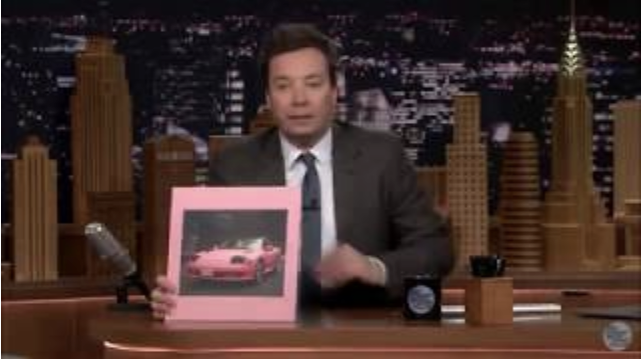
Pink Season shown on The Tonight Show with Jimmy Fallon
A Choice to Change
Behind the scenes, Miller had been suffering from a brain condition that caused intense stress-induced seizures, placing a major weight on his ability to continue the channel.
This, along with his overall dislike for producing the content and desire to pursue other creative avenues, led Miller to step away from Filthy Frank/Pink Guy. This decision shocked fans and caused widespread discussion across the internet, questioning what comes next for Miller.
“I believe an official statement as to why I am now done with comedy is owed to my former fanbase… Unfortunately, I no longer enjoy producing that content… It was a humor that I started when I was in high school. So naturally, as I got older, I got tired of that humor. People’s taste change. People’s humor change.”
‘Joji’
Early days
Growing up in Japan, Miller produced music as a hobby, initially finding his early success through his ‘Pink Guy’ persona. He eventually announced he would be releasing a separate, more serious album alongside a ‘Pink Guy’ release on May 3rd, 2014, but ultimately cancelled the project. He would come back to music with two releases under the alias ‘PinkOmega’, which were both re-released on the Pink Guy album Pink Season.
“I was doing music hand in hand with the comedy stuff. The pink guy music started at the same time as Filthy Frank. But I just didn’t know if people would embrace the serious stuff. I wish I had the confidence, the self-confidence, to switch earlier.”
Miller initially kept his ‘Joji’ alias secret, releasing two singles titled "Thom" and "You Suck Charlie" in late 2015. Once the account was leaked as his, he publicly announced his first full-length project titled ‘Chloe Burbank: Volume 1’ on Instagram, linking to his Soundcloud.
Recognition with 88Rising
In late 2017, Joji signed with popular Asian music collective 88Rising, later releasing three major studio albums and a debut EP under the label. He performed live as Joji for the first time on May 18, 2017, further cementing his presence in the music industry.
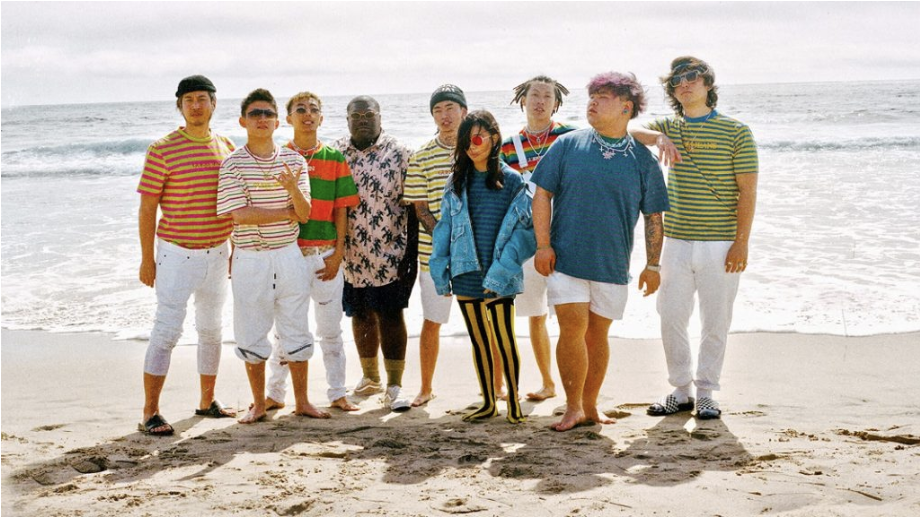
Miller, pictured right-most, with other 88Rising artists
In Tongues, Joji’s debut EP would be released on November 3, 2017, with the single ‘Will He’ topping Spotify's Global Viral 50. On October 16th, 2018, Joji’s debut album Ballads 1, charted at #1 on Billboard’s Top R&B/Hip-Hop Albums chart, launching him into international success.
“The first release and album went so well that I just knew it was necessary to keep moving and working. The only reservations I ever have are when I’m choosing between many songs for the album, which is good news really because it only means more and better music for everybody.”
A Turn to Independence
Following the grand success of Ballads 1, particularly the album’s second single, ‘Slow Dancing in the Dark’, Joji embarked on his first of four tours titled ‘Ballads 1 Tour’.

A poster for Joji’s Ballads 1 tour
However, while 88rising provided global musical legitimacy, the creative constraints became apparent, especially after the mixed reception of his third album, Smithereens. After eight years with the label, Joji left, later starting his own independent label, Palace Creek, with which he would release his first project in three years, Piss in the Wind, on February 6, 2026.
Moving Forward
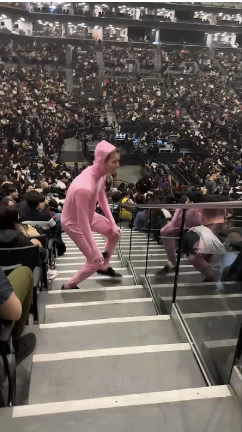
A man dressed as Pink Guy at a recent Joji concert
Despite the distance from his past, Joji hasn’t fully lost the ‘Filthy Frank’ spark. While his music is rarely, if at all, comedic, Joji is still notorious for his wacky, fun-loving concerts, where he regularly changes his sadder lyrics into jokes, acknowledges fans dressed as his early characters, and has even paused a show to play a full game of Super Smash Bros. for the audience.
Most importantly, while Joji doesn’t defend many of his past actions, he doesn’t forget about them either. Although he recognizes his beginnings, he keeps his focus on bigger, more important things, always moving forward.
His past now acts as the foundation for his work today. Without Filthy Frank, there would be no Joji. But most importantly, without George Miller, there would be nothing at all.