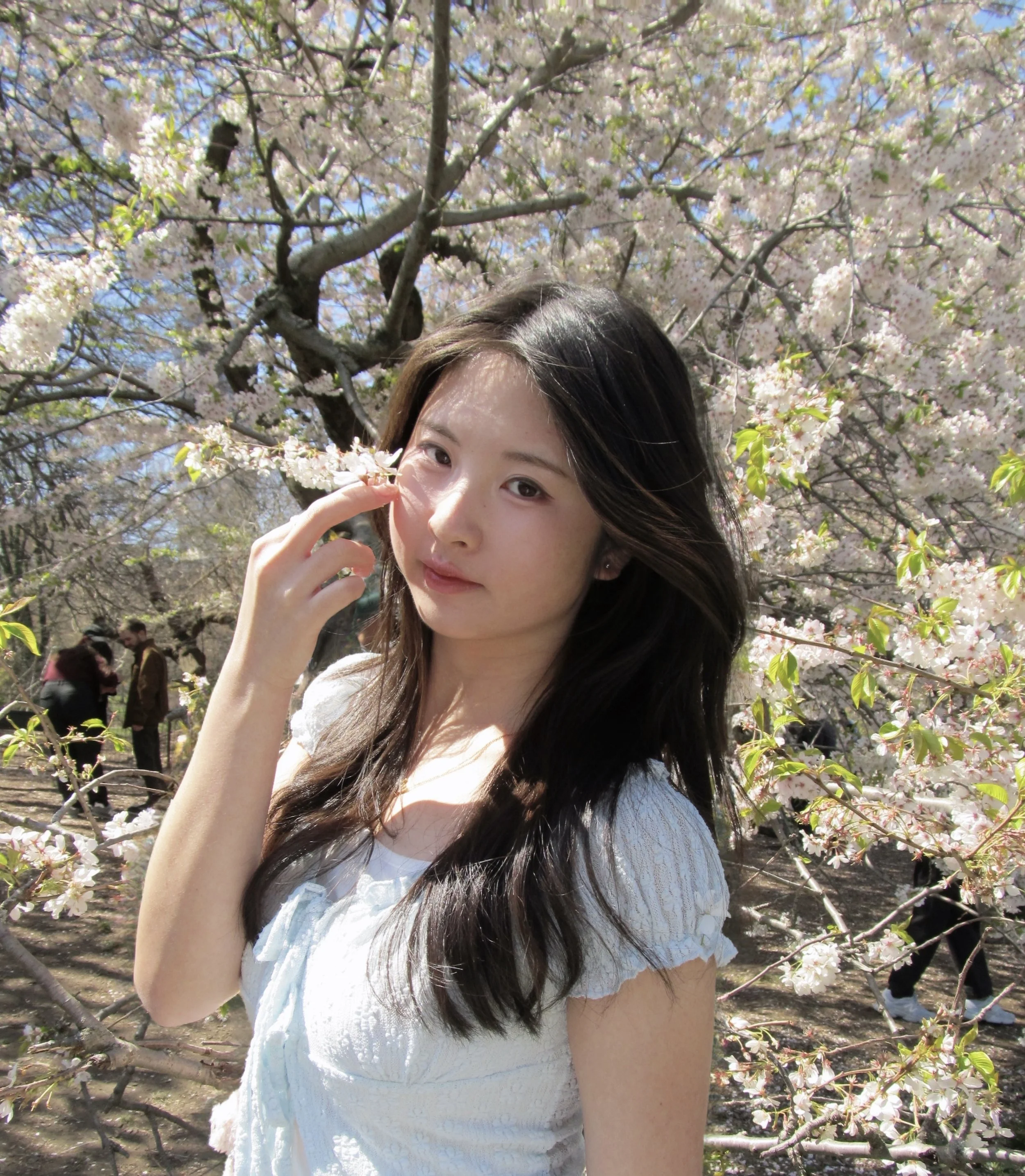
With the dream of a fashion designer when I was little, the Victoria's Secret Fashion Show was my favorite time of the entire year. I would sit cross-legged on the floor, obliviously so close to the television that the runway filled my whole field of vision. Observing intently how the light caught on the models’ glittering wings and how their hair swept over their shoulders at every turn, I remember thinking it was the most spectacular thing ever.
At that age, I did not have the vocabulary to explain what I was looking for. I knew that people gasped and admired when the models stepped on stage. I knew that the women on screen were beautiful. What I could not understand was why my features reflected in the mirror so rarely seemed to belong in the same picture. Why didn’t I see girls who looked like me walk the show?
Growing up, beauty felt like a formula I missed, one that needed the right face shape, nose, skin, and body figure to fit in. Even when nobody directly told me that my features were wrong, the images around me gave me plenty of opportunities to compare. A face I saw over and over again in trending media started to feel like the standard.
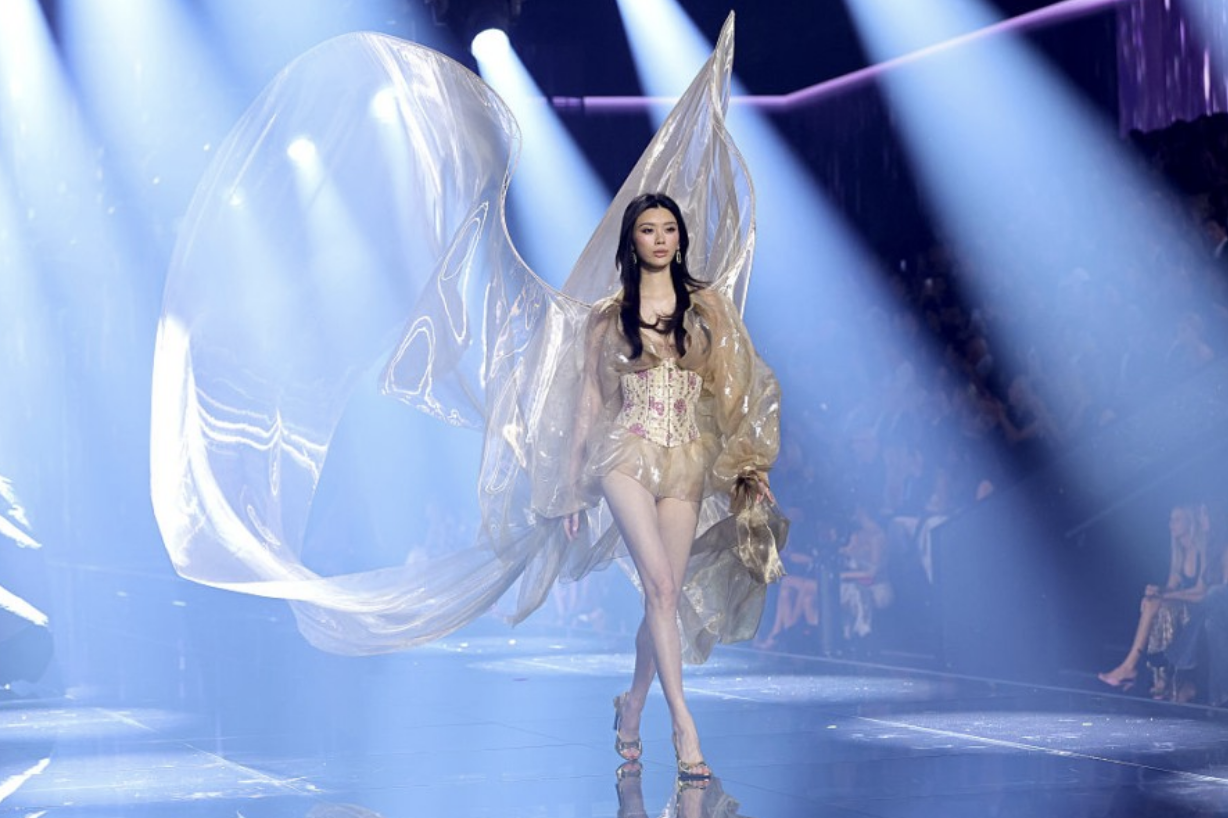
Fast forward to this October. I was doing what I do, chronically online, scrolling through Instagram, when clips from the 2026 Victoria’s Secret Fashion Show took over my feed. One video kept coming back around: Chinese supermodel Ming Xi, walking out in one of the biggest sets of wings of the night. Many might know her from her fall on stage during the 2017 Victoria’s Secret Fashion Show in Shanghai, which became a trending moment on social media. In 2018, she took a hiatus from modeling to focus on raising her family and pursuing an Executive MBA from the University of Hong Kong. Making a triumphant return after an eight-year absence from the brand, she stepped onto the runway wearing a floral corset framed by cascading, sheer sleeves and an enormous pair of gold wings that stretched across the stage. In the reel’s comments, the feedback was overwhelmingly celebratory, filled with people praising the epic comeback of a queen who refused to let an old runway fall define her career.
In order to understand why that matters, it helps to know how far the show has come. The Victoria’s Secret Fashion Show began in 1995 and grew into a massive television event built on spectacle: glittering wings, famous performers, and the million-dollar Fantasy Bra, a diamond- and gemstone-covered piece that became the brand’s signature tradition. But behind the glamour was a narrow ideal. The strict pre-show workout regimens, extreme diets, and casting requirements sparked backlash from viewers over the toxic beauty standards set for women. In 2019, the brand announced the show was canceled amid declining ratings and sales, as well as mounting criticism that its idea of “sexy” was thin and primarily white.
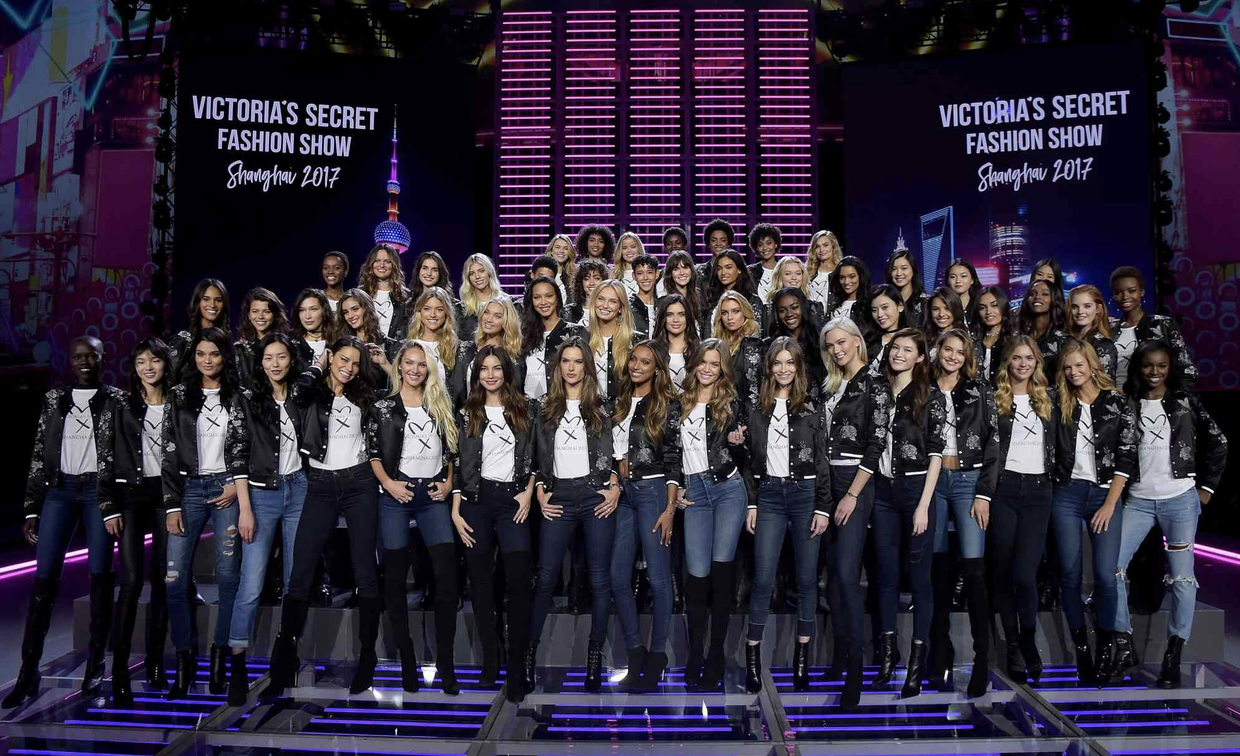
Asian models are not new to the Victoria’s Secret stage though. Chinese supermodel Liu Wen was the first East Asian model to walk the Victoria’s Secret runway in 2009. However, as the company expanded its commercial footprint into Asia, it reached a milestone of four Chinese supermodels in the 2016 Paris show. The brand opened its massive, four-story, 2,500-square-meter Shanghai Flagship Store on Middle Huaihai Road in late February 2017 for a soft opening. It then followed up immediately by opening its second flagship in Chengdu the very next day. That November, the annual show had followed to Shanghai, marking the first time it was held in Asia, where Ming Xi took her viral fall. But being on the runway and being seen are two different things. Only select models are given wings, but as the brand’s most famous icon, the wings signal the star of the show.
First introduced in the 1998 fashion show, the wings were created as a literal, theatrical extension of the brand’s “Angels” lingerie marketing campaigns. Historically, wearing wings was reserved exclusively for contracted supermodels called “Victoria’s Secret Angels” or elite brand ambassadors. Angels starred in high production advertising campaigns, spoke at public events, and most importantly, had the qualification of wearing wings at shows. In recent years, the brand expanded wings to a wider mix of guest models, celebrities, and influencers. So when an Asian model gets some of the biggest wings of the night, it signals who we are finally allowed to see as the main character.
When the Victoria’s Secret Fashion Show returned in 2024, it came with a promise: this time, it would be different. The 2026 edition, which aired on October 18, is the latest test of that change.
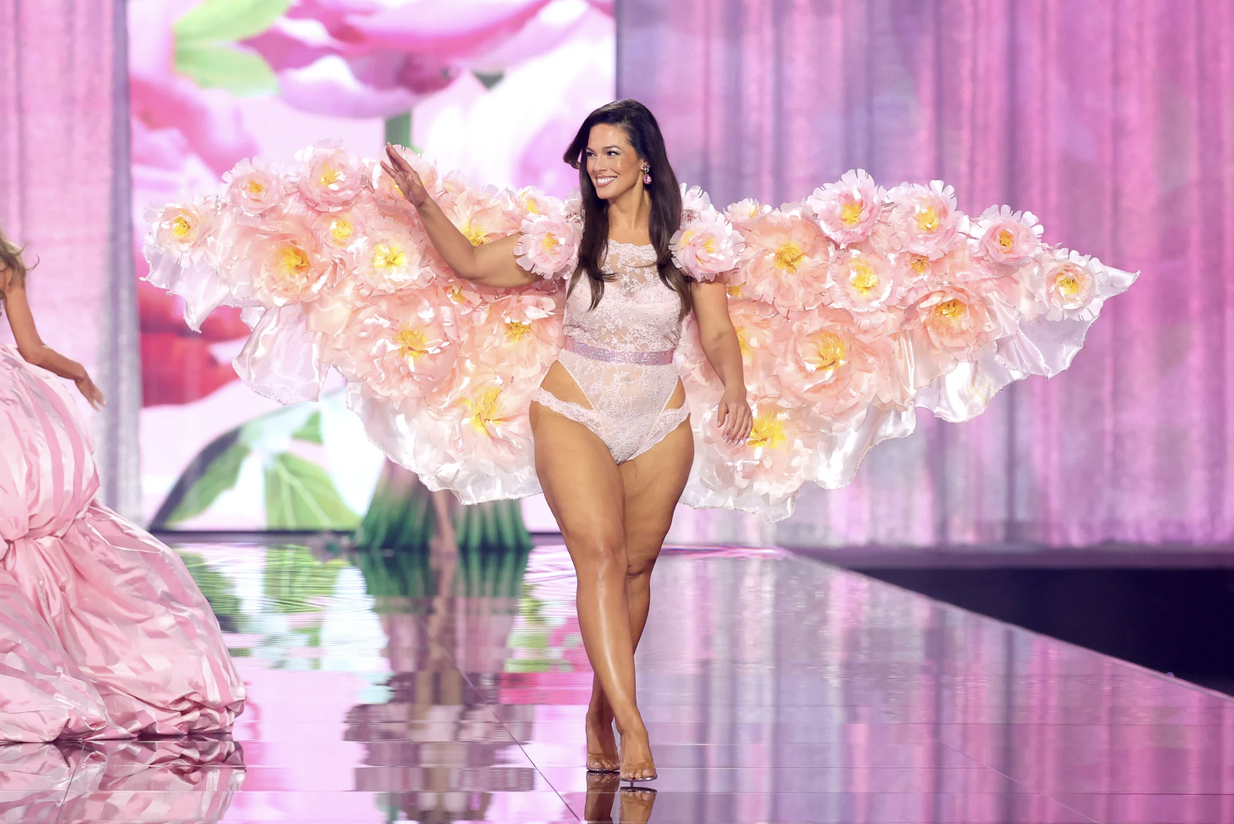
Despite the brand’s efforts to differentiate itself from previous attempts, opinions remain mixed on the most recent Victoria’s Secret Fashion Show. Marie Claire writer Meguire Hennes said she saw her own “body type represented without restraint,” and credited mothers, middle-aged women, and LGBTQ models with major roles in the show. Her evidence is concrete. Barbara Palvin walked weeks after giving birth, 45-year-old Adriana Lima closed the show, and plus-size model Ashley Graham wore one of the largest sets of wings. Prominent curve models like Ashley Graham and Paloma Elsesser as well as trans model Alex Consani also took to the stage. However, Dazed writer Eli Cugini also highlights that plus-size models made up less than 10% of the show, calling the show progressive only by comparison, a low bar in an industry whose standard for models has grown thinner. So both views can be true: the show is a step forward compared with fashion and its own past, but it is still not enough.
Other critics were harsher. Writing for Allure, Danielle Pergament felt strongly about the runway’s casting, which she said mostly fit a similar mold, bluntly declaring that the overall spectacle proved “body positivity was a limited-time offer” and that the era of celebrating diverse anatomy was officially “Gone. Done. Finished.” Instead of the show being a genuine step in the right direction, for her it looked like “the same fantasy, repackaged as progress,” an effort made simply to satisfy demanding audiences in exchange for profit. And then there is the fact that the whole thing is a giant advertisement. The brand sells a limited-edition collection from the show on its own website. Kylie Jenner wore the $50 million Fantasy Bra. An influencer, Quenlin Blackwell, was hired for the PINK halftime show. Although plus-size models walked the stage, the opening and closing spots went to Bella Hadid and Adriana Lima, models who fit the traditional “mold.” These choices signal to consumers that despite any outward changes, the brand’s historic, idealized standard of beauty remains the ultimate aspiration.
Examined through a marketing lens, the 2026 show was less a fashion presentation than a marketing stunt, built to capture attention rather than demonstrate sincerity. By that measure, it worked: much of the conversation became about the bra, the celebrity, and the wings, and not about whose bodies were on the runway. Every moment was designed to be clipped, reposted, and bought.
Is the show finally addressing its inclusivity issue, or is it a dressed-up way of selling its products to us? I think both can be true. The runway is a marketing machine, but the moment I saw online wasn’t made by Victoria’s Secret. It was framed by the people who watched, saved, and shared that clip, tagging their friends and celebrating a face they recognized. The brand provides the stage, but the audience shapes the meaning we take away.
When I look back at little me, I can’t help but smile. I would tell her that the wings have a price tag, and that being invited to look doesn’t mean the picture has changed. But for one night, in a social media feed full of noise, a girl who looked like me got some of the biggest wings in the room, and that was enough to make me feel beautiful. After all, everyone deserves to see themselves in the wings.