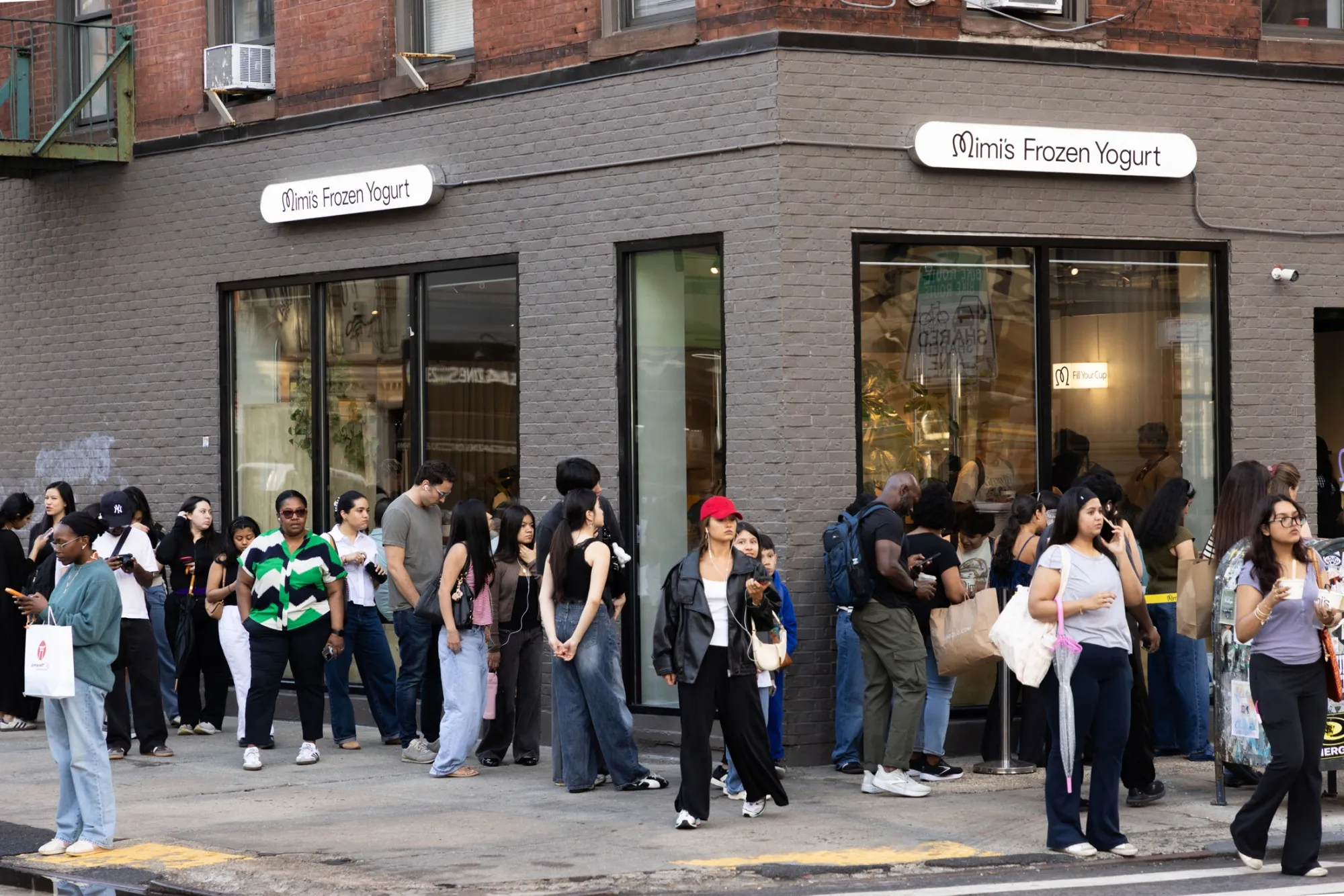
Let me paint you a picture: you’re walking along University Place heading to Union Square. To your right, Hashi Market and NAYA. To your left… the line to vote? No, wait, it's the line for one of Mimi’s Frozen Yogurt's newest locations. Having opened its first location in 2025, Mimi’s has undoubtedly contributed to the froyo renaissance of this past year. Walking past a Myka’s, Birdie’s, or Culture now seems to entail a left-to-right 180 head twist to capture the long lines these places have. As you walk by, out come the bedazzled towers in people’s hands, like something out of a coming-of-age direct-to-video release. It feels almost inescapable — like one of these days, you’ll be the one holding something of your own creation.
The ostensible answer is 2000s nostalgia. The culture that valued low-rise jeans and digital cameras is resurging, making froyo a plausible addition to this cultural revival. Before that nostalgia was born, froyo was marketed as a “healthier” dessert compared to ice cream. Calories were the enemy then, but froyo shops have seemingly dropped that antagonism. Neo-Froyoism seems to possess an energy that transcends its qualities at face value. Something’s conducive to its flourishing at this particular moment.
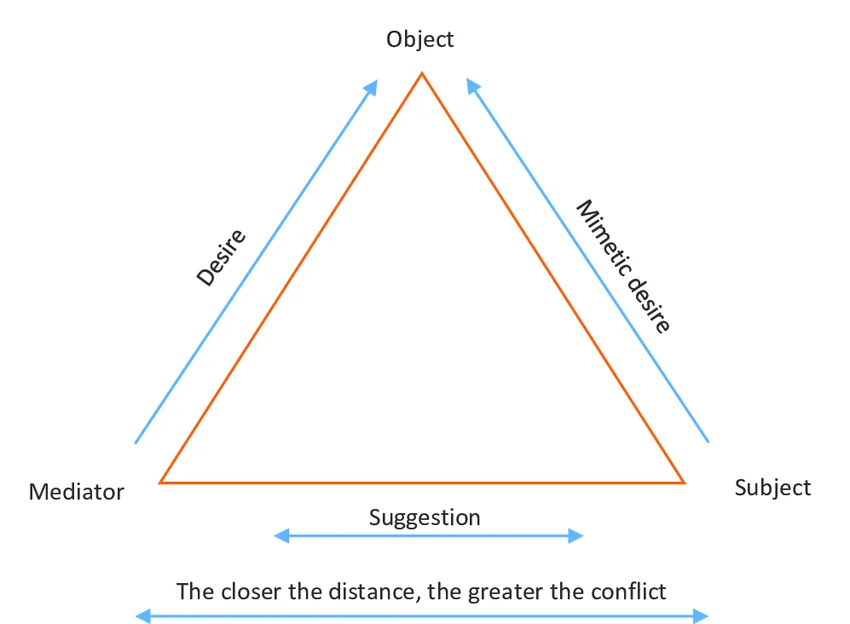
French academic René Girard might have the answer. His book Deceit, Desire, and the Novel introduces mimetic theory. Rather than desiring things spontaneously, he posits a triangular framework in which we borrow desire from others. This imitative structure involves the object of desire obtaining value because someone else already esteems it. That someone else is the model, who teaches you, the subject, what is worth wanting: the object. When that model is far away, like a celebrity, adopting that model is relatively safe, and desire is contained as admiration. Contrast that with proximity, like a peer, and that model becomes competition. Obstacles come into play by generating an aura around the object; if it seems hard to obtain, it seems almost sacred.
Froyo is the object at hand, but who’s the mediator? Three scrolls on TikTok this past spring, give or take, would hail an answer. Influencers were at the forefront of the froyo craze, filming their artisanal creations with gourmet-inflected toppings — Pistachios, strawberries, honey, you name it. The desire arrives pre-validated when coming across a line to one of these shops. These crowds indicate scarcity to us, in turn serving almost as mimetic accelerants. Froyo itself isn’t exactly the Aritzia Superpuff, so imitating it is low-stakes while still being highly photogenic. It’s almost reminiscent of a previous craze Crumbl Cookies had in 2025, which has now shut down 57 stores nationwide entering late 2026. Coincidence, maybe, but the casual and imitative qualities Crumbl had remain visible in present-day froyo culture.
Bearing in mind the kryptonite of 2000s froyo, the sugary and expansive topping bars that added unwanted calories, this switch to the whole and nutrient-dense signals conquest over a previous shortcoming. But froyo isn’t exactly timeless. As a product dispensed by stainless steel and refrigerated, the summertime concern was the undoing of froyo’s purest state. Now, as we transition towards the off-season for cold treats, so may the spotlight shift for TikTok’s trendiest fad. Yet the lines remain long, but potentially more impatient. Time is running out before these machines dispense product as cold as the awaiting cup-holders. The impending off-season will vet its revised strategy, but an aware audience might also induce a popularity wave before they’ve officially missed out on Neo-Froyoism’s peak.
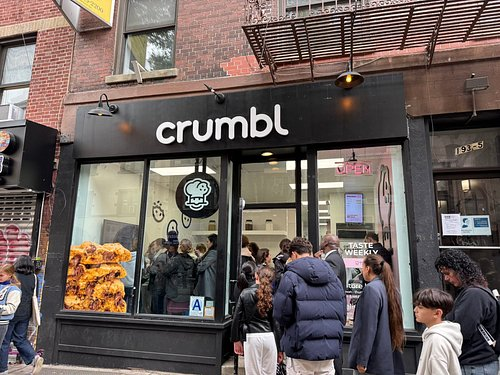
This reveals mimetic theory’s accompaniment: crisis. When the subject internalizes the model through increasing proximity or identical object-reaching attempts, the imitative relationship becomes rivalrous. Escalation in this scenario is pathogenic, with mimetic crises becoming contagious within societies that value the same model. Diplomatic history has shown this escalation producing violence and chaos; in contemporary trends, it leads to collapse and eventual redirection. One way to interpret Crumbl’s collapse is to look at its dissipating attention, which shows consumer fatigue and the sugary cookie's fading novelty. The public's quasi-disinterest, thus, can be interpreted as the continuation of this desire cycle, powered by mimetic theory.
Now, this isn’t to say that we’re all imitating each other when we stop by one of these shops. People truly do enjoy froyo without needing to prove they’ve reached everyone’s object of desire, and froyo skyscrapers are a form of expression in their own right. Girard’s theory, more so, helps contextualize the timing and intensity of Neo-Froyoism. The wrap-around lines do warrant at least a little skepticism, though. With New York's blizzard-ridden winters, one can only wait to see whether froyo endures in its role or becomes scapegoated for the new trend. Maybe then, we’ll walk along an emptier University Place.