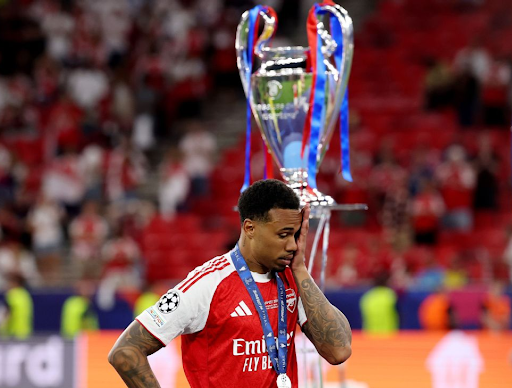
The date is May 30th, 2026. It’s the 2026 Champions League final between Paris Saint-Germain and Arsenal. Six minutes in, Kai Havertz gives Arsenal the lead, and their supporters get a glimpse of the night they have spent a lifetime fantasizing. But Ousmane Dembele’s penalty in the 2nd half equalized the game for PSG, and after 120 minutes, the teams deadlocked at 1-1.
It would take penalties to decide the match.
Four rounds into the shootout, the score stands at 3-3, with only Eberechi Eze and Nuno Mendes missing their attempts. Lucas Beraldo would slot home PSG’s 5th spot-kick, leaving the French club one step closer to victory, and Arsenal one missed kick away from defeat.
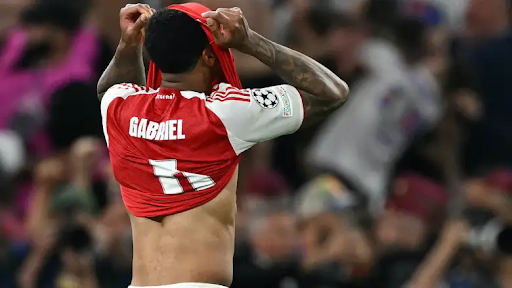
Up steps Gabriel. The stakes are high but the equation is simple: Score, and Arsenal’s dream survives. Miss, and they fall short once again.
After a few deep breaths, the Brazilian defender begins his run up.
He strikes the ball.
And then comes the commentary of Peter Drury, a quote that will forever ring in the echelons of history, a phrase that will live in infamy, and a line that will follow Gabriel for the rest of his career.
“Gabriel fires into the Budapest sky!”
“And Paris Saint-Germain are champions once again!”
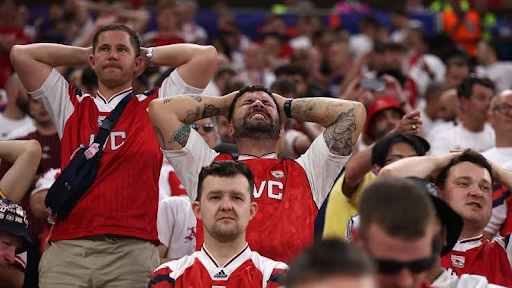
In the stands, the PSG fans ascend into exhilaration and euphoria. Their North London counter-parts stare into the empty chasm of the pitch, once again having their hearts ripped out from their chest. As the PSG players begin to celebrate, Gabriel’s face is swallowed by his shirt, and he collapses onto the floor in agony.
Elsewhere, however, a different celebration erupts. There is the same cheering and joy, but not for the same reason. These people had no investment in the French club; but tonight, they all had partaken in the festivities. They had spent the past three hours watching a team they had little to no connection with, waiting for them to win.
They weren’t celebrating PSG’s victory; they were celebrating Arsenal’s defeat, and the fact that it was Gabriel who missed the final kick made it all the more sweeter.
This is the art of the hate-watch. And oh it is glorious.
I’m part of a Whatsapp group chat called “Zero Ball Knowledge”, consisting of me and a couple of lads from my high school Varsity soccer team. (I’ll be using aliases instead of their real names)
Tonight, the group chat has come alive and exploded into delirium.
Not even a second after Gabriel’s miss, the first message comes out from Scouser Shams: “Arsenal again ole ole”. I follow it up with “The world has healed”. The Tall Bahamian, a Chelsea fan, calls out the sole Arsenal fan in the chat, and that very same person, who told us to “Find love” and that we were “hating for no reason” when Arsenal were up, descends into pure unadulterated anger with some excessively salty profanity-ladened language. The Jamaican Unc, my former coach, tries to diffuse the situation by saying “It’s ok son”, but gasoline continues to be poured onto the flames of wrath.
“Can I get an amen?”
“Champions of Europe, you’ll never sing that.”
“Watching Arsenal is like Netflix, always waiting for the next season.”
“Let it All Work Out"
“Hey, I mean, there’s still always next year.”
The Asian Gunner cries out that “It’s always Arsenal against the world” and “**** you and your amen”, before disappearing into the night, as the rest of us continue to relish in his dismay (all in good faith, of course). And still, every now and then, even though it has been months since the final, we still refer to that glorious moment in the chat, celebrating the “50th day anniversary of Gabriel’s penalty”.
But why do we enjoy hating? Why do we revel in the disappointment of others, to the point where it feels almost as good as our own success?
To be honest, there is no universal reason why we choose to hate-watch.
Perhaps it stems from a sense of belonging. Each of us belongs to a team, a club that you’d root and die for. Supporting a team means wearing their badge on your chest with pride, and with that, you adopt that team as part of your identity. You embrace their traditions, sing their chants, and hail their heroes. But importantly, you inherit their rivals: the “other” that you despise with all your heart. Perhaps there are those that you’d love nothing more than to see their weekends be ruined.
Perhaps it originates from a sense of injustice. They gazumped you for that transfer target your team had spent all summer chasing. They finished above you in the league or took away your club’s chance at some silverware. They steamrolled your team last time, humiliating you and making you question your fandom. They cheated their way to a victory, whether it be through diving, dirty tackles, or just every call going their way. Or maybe, they're just a really good team, with really good players, with a really good manager. Perhaps you just want to see them fall.
Perhaps it serves as a distraction from the limitations of our own teams. Maybe your team isn’t doing too well at the moment. Maybe they’re languishing at the bottom of the league. Maybe their title charge ended before it could get started. Maybe they’ve just been knocked out of the cup. Maybe their record signing has spent more time on the treatment table than on the pitch. Maybe their manager’s responses begin to sound like excuses of a man who has run out of ideas. Maybe you just wanna look elsewhere to find some comfort, and find something to cheer about. Perhaps their defeat won’t fix anything at your club, but at least you won’t be the only one having a miserable weekend.
Perhaps it’s because of their fans. Not necessarily all of them, but just that one guy in particular. That one guy who declares that they’re “ the greatest team the world has ever seen”. That one guy who claims they “ totally deserved that win” despite barely scraping by. That one guy who just refuses to shut up. That one guy who boasts and brags and spews propaganda about his club. That one guy who makes the most insane comparisons and glazes his winger as “world-class”, despite the fact that their “starboy” has less goal contributions than someone who’s been glued to the bench all season. Perhaps you’re just waiting for that perfect moment when his team loses: to laugh at his premature celebrations, to send him the memes, and to quote his own words back to him, just to see the anguished look on his face.
Perhaps it is that one single player. That one player whose antics you find insufferable. That one player who escapes any sort of punishment. That one player whose celebrations you find arrogant. That one player with the most punchable face. That one player you’ve spent months watching him get away with being good at football. Perhaps you’re waiting for that one singular moment in time where they make a crucial mistake on the biggest stage, so you can finally celebrate the downfall you’ve spent all season hoping to witness.
And, in the most ideal scenario, perhaps it’s the combination of all the above.
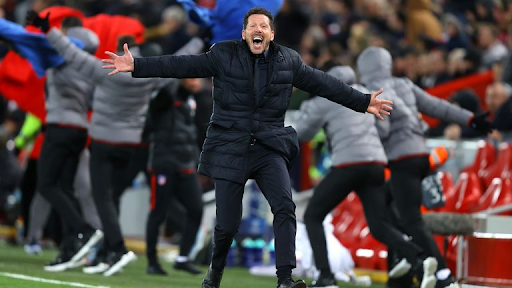
The greatest hate-watches take patience. Sometimes your victim wins. Sometimes they keep on winning. Sometimes they seem unstoppable.
But there is always another match. Another opportunity for them to falter. Another circumstance for the optimism and confidence to come crashing down. Another chance for the glimmer of hope in their eyes to be extinguished. Another occasion for them to take the lead, only to see them crumble in unfathomable fashion. Another opening for them to capitulate when all the odds are in their favor. Another prospect for the anticipation of an inevitable collapse.
You wait through their victories for a night like that. And when it finally arrives, every evening spent watching them win makes their defeat taste a little sweeter. It always pays off in the end, no matter how long it takes.
It’s the hope that kills you. And when it does, it feels amazing.
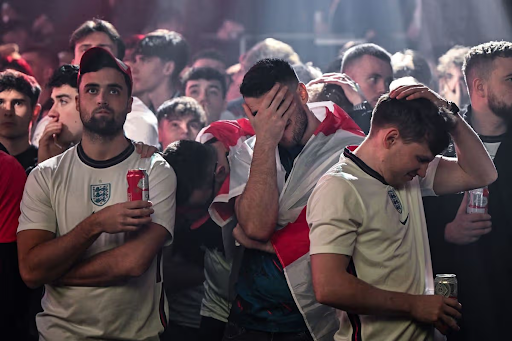
The best part of hate-watching is that it almost never happens alone.
It serves as some sort of cultural phenomenon, uniting people regardless of their fanbase and allowing them to come together and partake in something for the greater good. The very same people who were trading insults last week are now celebrating a common enemy. The group chat that has been dead for a while can be revived in a single instant. Fans set aside their differences to laugh at somebody else.
Tomorrow, you can go back to hating each other. Tonight, you all speak the same language, hating in harmony.
The pleasure does not end at the final whistle; the aftermath of the hate-watch lives on forever. Screenshots get converted into memes that will inhabit the annuals of social media. A confident declaration ends up forever quoted in a group chat. The perfect line of commentary shifts into a ready-to-use piece of slander. A spectacular crashout becomes a shared memory. An image of someone weeping tears of sorrow becomes a generational punching bag.
The hate-watch never really ends, it just reincarnates itself in a different form.
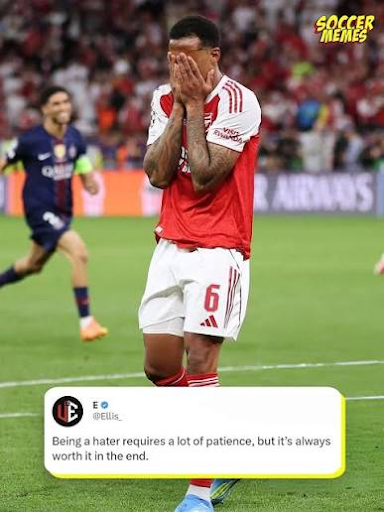
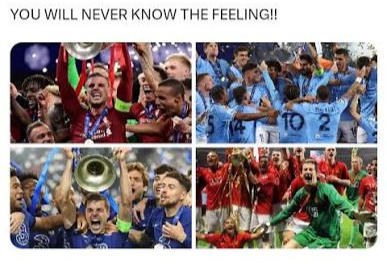
This is what hate-watching means. The truest essence of fandom. The pure and simple act of clearing out your schedule and dedicating the time just to see that special someone fail. A cycle of hate that allows people to celebrate losses as great as wins. Finding joy in someone else’s tears to a supernatural degree.
How glorious it is indeed.
And don’t worry Arsenal fans. There's always next year. Happy 163rd day anniversary of Gabriel’s missed penalty.