
If Forever Had a Deadline, A Review of Eternity (2025)
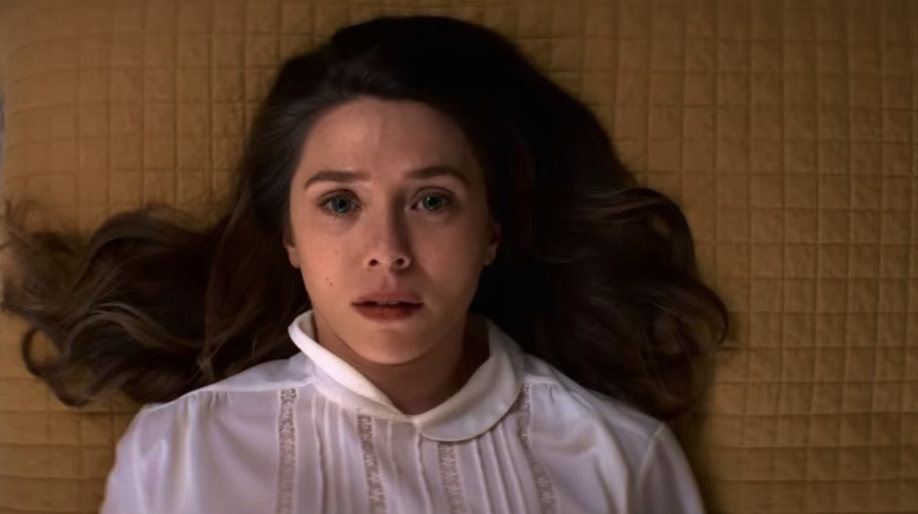
Eternity starts with a premise that sounds like a bad thought spiral you’d have at 2 a.m. After you die, you get one week in an afterlife transit hub, called “The Junction”, to decide where you’ll spend eternity and who you’ll spend it with. According to the film's Wikipedia page, Eternity is a 2025 fantasy rom-com directed by David Freyne, starring Elizabeth Olsen as Joan, Miles Teller as Larry, and Callum Turner as Luke.
In life, Joan loved two men. Luke is her first husband, the one she married young before he left to fight in the Korean War and died. Larry is the man she marries after, the one she raises kids with and grows old beside. When Joan dies and arrives at The Junction, where everyone is frozen at the ages when they were happiest, she finds both men waiting for her. Her task is to pick one of them to spend eternity with. No pressure.
Because her case is so unusual, Joan is given a loophole. She’s allowed to test-drive two eternities, one with each man, before making her final choice. Luke brings her to a mountain world that looks like a screensaver for romantic adventure: crisp air, dramatic views, the fantasy of being permanently young and in love. Larry’s version of forever is more grounded. It’s a sunny, crowded beach that’s a little messy, but deeply warm and familiar.
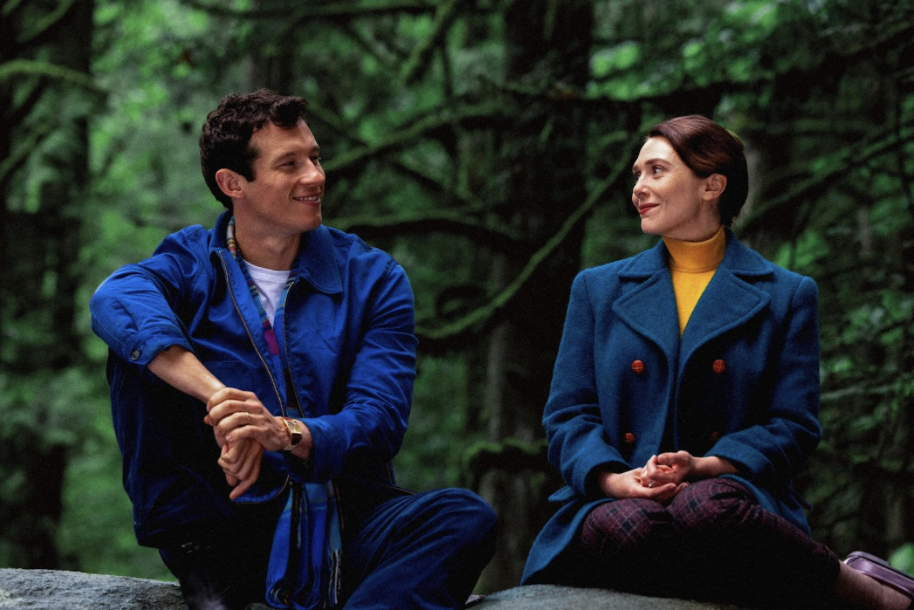
Joan and her first husband, Luke
Luke is framed as a fantasy love. He’s intense, romantic, and he literally spends 67 years waiting for Joan at the Junction, pouring drinks and building his entire afterlife around the idea that she’ll eventually walk through the doors. Because he dies young, their relationship never has to deal with bills, kids, resentment, or the slow drag of time. He represents a version of Joan’s love that stays spotless, preserved in this golden, almost mythic space where nothing ever gets the chance to go wrong.
Larry, by contrast, is a historical love. Their relationship includes all the unsexy chapters: arguments in the kitchen, health scares, money stress, long stretches where love looks more like logistics than fireworks. But he’s also the person who shows up day after day as her real life unfolds. As Joan moves between these two eternities, the question gradually shifts from “Which guy is the right choice?” to “Which version of myself do I actually want to live with forever?” For Joan, with Luke, she’s frozen as the young, desired, uncomplicated version of herself. And with Larry, she gets to be older and more fully herself, shaped by the life she actually lived.
What the film resists is the idea that there’s some objectively correct answer Joan could unlock if she just overthought long enough. Choosing Luke would mean picking the most cinematic edit of her story, the one that looks best in her head. Choosing Larry means choosing the life that actually existed, with all its rough edges and ordinary moments. The movie lands gently but firmly on her decision, and it does so without turning either man into a villain.

Joan and her second husband, Larry
What stayed with me after Eternity wasn’t a “Team Luke VS Team Larry” verdict. It was the way the film reframed what commitment even is. It made me think less about whether I’ve made, or will make, the “perfect” choice, and more about what kind of life I’d actually want to be stuck in forever. The movie quietly suggests that maybe “the one” isn’t a right person, right time scenario. Maybe it’s the person you keep choosing after the shiny parts fade. The person you’re still willing to argue with, forgive, and sit next to on a random Tuesday night.
In a culture that loves options and backup plans, Eternity doesn’t scream “settle down” or scold anyone for wanting more. It just asks a different question: if you stripped away the fantasy and stood in front of the actual life you built, or could build, with someone, would you choose it again?
Joan’s ultimate choice feels small and radical at the same time. Long-term love isn’t about picking perfectly once. It’s about being able to look at an imperfect, real, shared life and say, even with eternity on the table, I’d still pick this person.
(SPOILERS!)
Eternity brings to life, through Larry’s decision, the idea of a love so great that you’d step aside if it meant the person you love could be happier. It suggests that love isn’t a perfect, constant feeling, but a choice that can withstand the test of time. Even though Joan’s frozen stage at The Junction, the age when she was happiest, isn’t from her years with Larry, she comes to realize that happiness isn’t about a single perfect snapshot. It’s about the long stretch of ordinary days she actually lived with him, and that’s the life she ultimately chooses to stand behind.