Right by Your Side, Till 3005
TW: References to Suicide
On December 10th, 2013, NYU Tisch alumnus Donald Glover, known in the music world by his stage name and rap alter ego, Childish Gambino, released his sophomore album, Because the Internet. The album would debut at number seven on the Billboard 200, was nominated for Best Rap Album at the 2015 Grammy Awards, and became globally recognized for its subversive originality within rap.
What many may not know, however, is that in the year leading up to the album, Donald Glover would transform from the person he once was into someone completely new. One simply named, ‘The Boy.’ This cross-media character encapsulated the deeper meaning Glover chased behind the album, one told through three short films, a paired feature-length screenplay, and a live art exhibit. All the while, Donald was often seen sporting a signature fur hat, often in character, or rather, the personification of ‘Childish Gambino’.
However, this article is not about the album itself, despite, in my opinion, being one of his best. This is about Glover’s story before the album, one that includes a suicide attempt, immersing himself in character, and has now decided to retire ‘Childish Gambino’ altogether.
The Beginnings of a ‘Triple Threat’
The Rapper RA on the 7th Floor
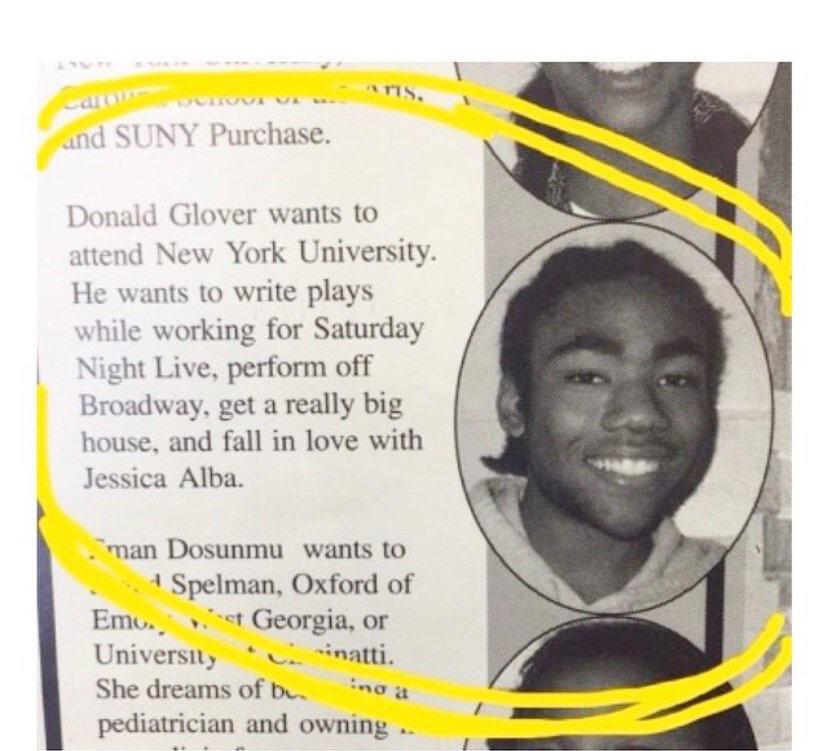
A Young Donald Glover
While a Dramatic Writing major at Tisch NYU (represent), Glover was never one to take it easy. According to a series of 2011 blog posts written by Chaz Kangas, a dorm-mate and college friend of Glover’s, who can be seen freestyling together in a now-viral 2004 video from the basement of NYU's now-closed Goddard Hall, the dorm where Donald was an RA, Glover began promoting the beginnings of his rap career long before his career would truly take off.
“Donald was the RA on the 7th (Writing?). During that first week of college when you meet everyone and you condense yourself into a soundbite, I felt most comfortable with ‘I’m Chaz, I’m a Cinema Studies major and I rap.’ Soon I was noticing more and more ‘Have you met Donald? He’s on the 7th floor and he raps too’ responses.”
Derrick Comedy
‘Derrick Comedy,’ Glover’s first moment of virality, was a sketch comedy group brainchild of three Tisch students: Dominic Dierkes, DC Pierson, and Glover himself, all of whom met while performing with NYU’s Hammerkatz. Despite their work as an improvisational comedy group at the Upright Citizens Brigade Theatre in New York, the group would find its main success in their tightly scripted YouTube sketches. These sketches, first released in April 2006, caught virality early on, eventually becoming one of YouTube’s biggest channels in the early years of the site.
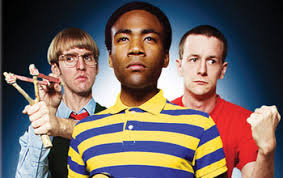
Pierson, Glover, and Dierkes, pictured from left to right, on a promo for Mystery Team
The group would eventually release a feature-length film entitled Mystery Team, which premiered at the Sundance Film Festival in 2009 before a limited theatrical release. Bobby Moynihan, an actor and comedian mainly known for his 9-year stint on SNL, even started his career with Derrick Comedy, appearing in many of their sketches and having a supporting role in the Mystery Team film.
While the group’s last video was released in 2010, the three would remain friends, even continuing to perform live together later on.
30 Rock & Community
During his time at NYU, Glover sent a self-written Simpsons spec script to producer David Miner. Impressed with the work, Miner and Tina Fey hired Glover as a staff writer on 30 Rock, despite being a college student, and even having his RA pager go off on the first day of work. According to a recent GQ interview, during his time in the writer’s room, Glover would suffer from intense imposter syndrome, and eventually learned that he was a ‘diversity hire’ as part of a new NBC diversity initiative that encouraged diverse hiring.
“It definitely didn’t feel like I was supposed to be there. I used to have stress dreams every night where I was doing cartwheels on the top of a New York skyscraper with the other writers watching me.”
Glover would write on the show for 3 years, even winning an Emmy for his work, before quitting. He would go into formal stand-up comedy, leading later to his 2011 Comedy Central special Weirdo. After moving to LA, Glover spent 6 days unemployed before being cast as the fun-loving Troy Barnes on Dan Harmon’s new network show Community.
During the third season of the show, Glover was briefly seen wearing Spider-Man pajamas, a scene that would later spawn the internet viral #donald4spiderman as fans protested for Glover to be cast as Peter Parker in Sony’s then-upcoming Amazing Spider-Man franchise, a role later cast to Andrew Garfield. This moment later influenced comic writer Brian Michael Bendis to create a new superhero, Miles Morales.
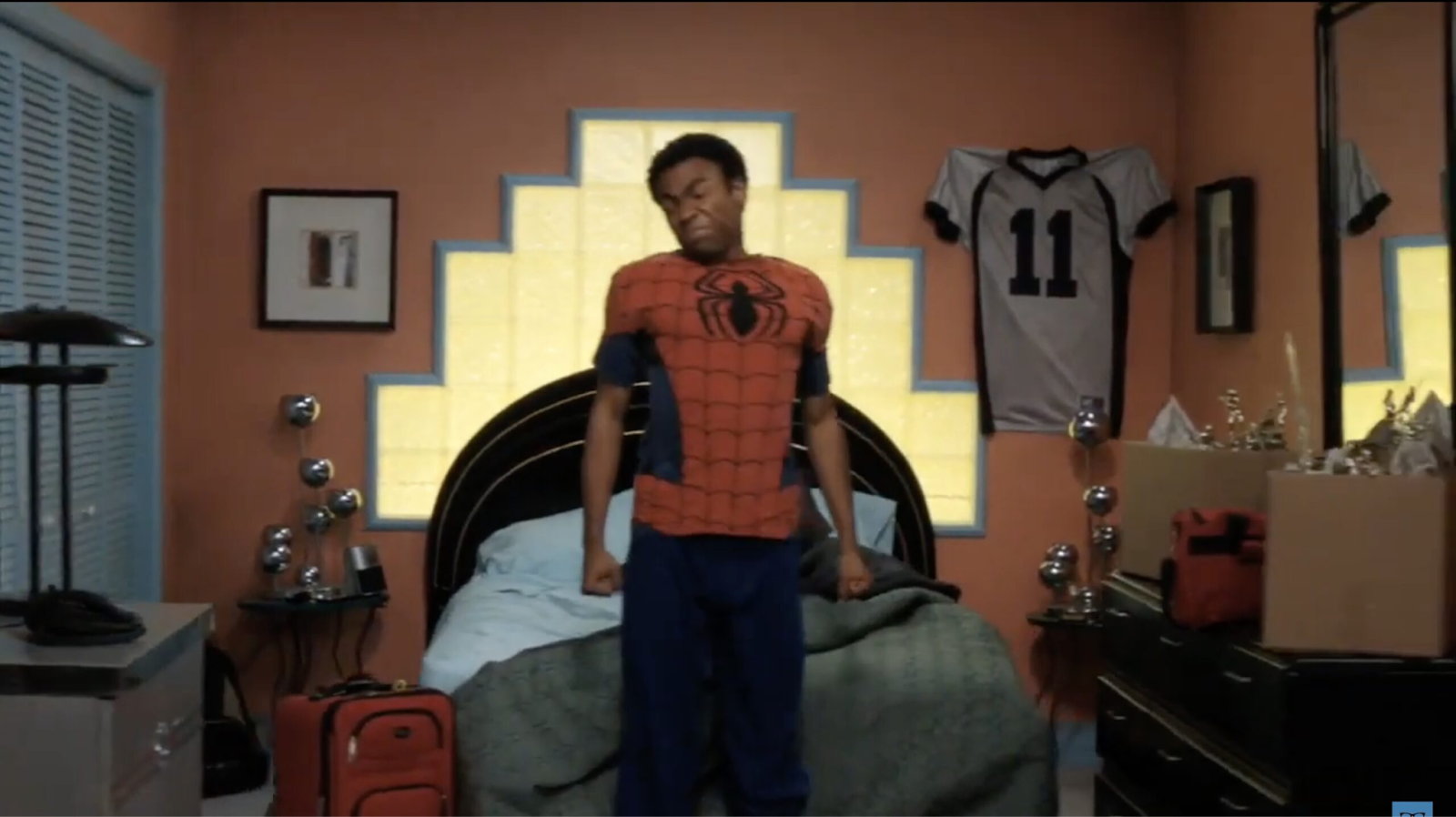
This frame brought us Into the Spider-Verse! Thank you, Community Costume Designer!
Behind the scenes, actress Alison Brie, who played Annie Edison on-screen, would introduce Donald to Ludwig Göransson, the show's composer and later longtime collaborator/producer for Childish Gambino.
“It was almost like a love at first sight moment, where I remember he was in the food trailer and [Alison] was like ‘Donald, you gotta meet Ludwig’... I was like ‘I’m working on this kind of music thing, we should meet up’... It was very organic. I don’t know why that happened.”
After five seasons, Glover would leave the show, which many believed was to focus on his rap career. This was mainly supported by the fact that canonically, Troy leaves to travel the world with Lavar Burton (yes, from Reading Rainbow) on a ship called the ‘Childish Tycoon’, likely a nod to Glover’s stage name.
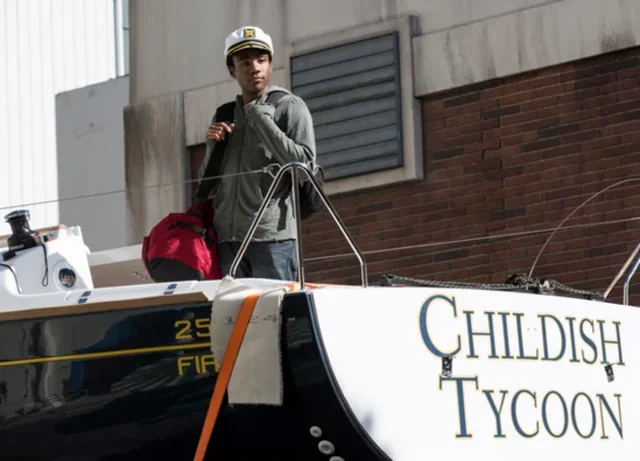
The ‘Childish Tycoon’ #sixseasonsandamovie
‘Childish Gambino’
In his early years, a relatively unknown Glover went by a different stage name, ‘Mc DJ’, under which he would post mainly remixes to songs, such as Chitown, a remix of Sufjan Stevens' ‘Chicago’, along with a few self-produced mixtapes, including the now-disowned The Younger I Get, released in 2005.
Glover would eventually pick up a new stage-name, ‘Childish Gambino’, a name he generated from a Wu-Tang Name Generator while playing around with friends at NYU. Under this new name, Glover would release 5 mixtapes: Sick Boi, Poindexter, I Am Just a Rapper, I Am Just a Rapper 2, and Culdesac. The last of which featured Do Ya Like, a song that became very prevalent in internet culture through a remix with Home’s Resonance, which he performed at his most recent Camp Flog Gnaw set.
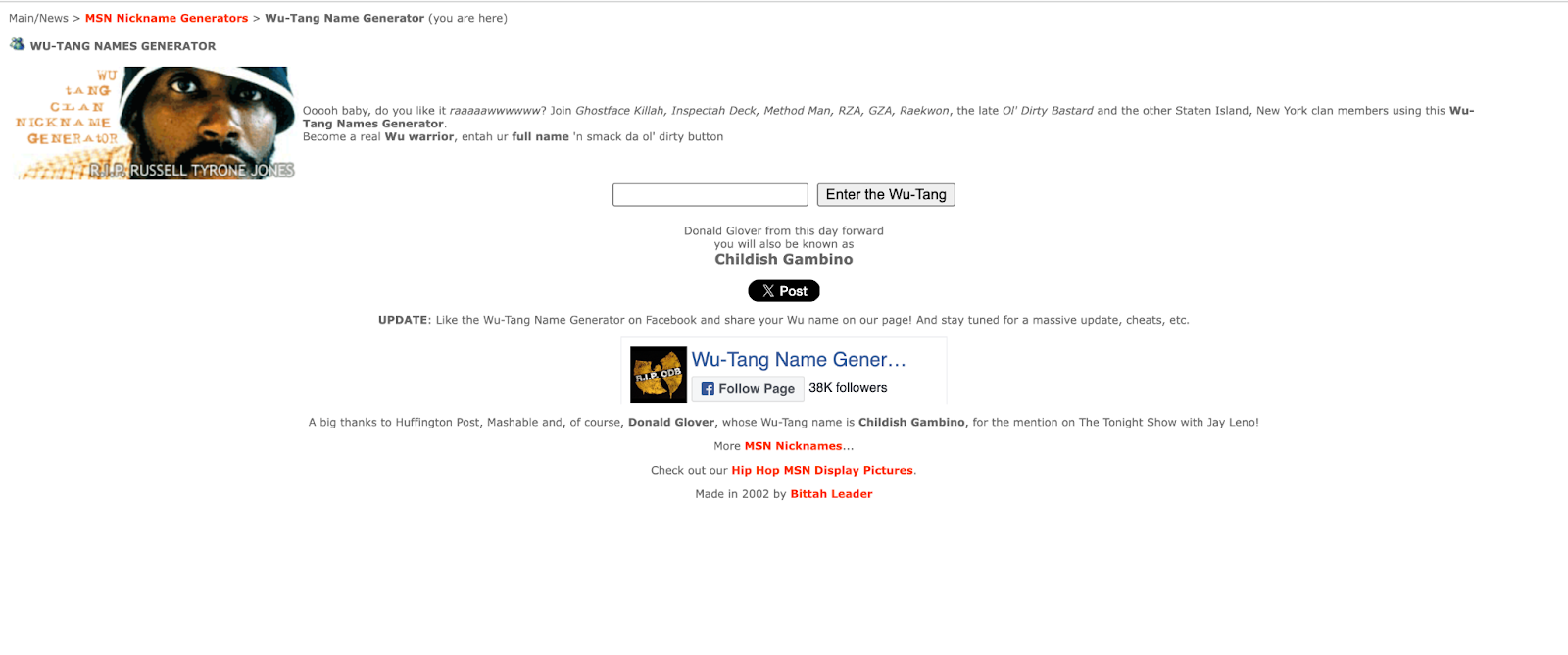
Still works, try for yourself!
On March 8, 2011, Gambino would release his first full-length EP, entitled EP, which was available for free digital download and co-produced with Ludwig, his new work partner (the EP was re-released in 2018 on streaming services for commercial use). The second track off the project, Freaks and Geeks, was released with a music video.
After signing with Glassnote Records, a major record label, Gambino would release his first studio album, Camp, on November 15, 2011. While not a concept album entirely, the album follows a 13-year-old boy in a summer camp. Adverse to his more comedic past work, Camp explores Glover’s personal feelings of insecurity and loneliness, mainly centered around the boy not feeling like he fits in with his peers, reflecting Gambino’s own feelings in the rap scene at the time. The album's two lead singles, Bonfire and Heartbeat, along with a more recent virality of Les, remain today as some of Glover’s most popular songs.
The album’s final track, That Power, ends with a powerful 4-minute monologue about the boy, told in first-person as Glover, on a bus home from camp. While the monologue seems to be written by Gambino himself, it was actually written by Derrick Comedy member D.C. Pierson. The boy explains that after admitting his feelings to a crush, only for the confession to be gossiped about, leading the boy never again to keep anything a secret. The monologue ends with Glover admitting he’s still that boy on the bus, still weak and afraid to speak out:
“I wish I could say this is a story about how I got on the bus a boy and got off a man, more cynical, hardened, and mature, and shit. But that’s not true. The truth is I got on the bus a boy, and I never got off the bus. I still haven’t”
After breaking his foot while on tour for the album, Glover would take a few weeks to work on a new mixtape, Royalty, which he released on July 4th, 2012.
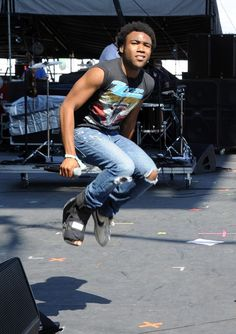
Glover at the 2012 Coachella Festival (note the boot!)
The Disappearance of Donald Glover
Despite his massive success in the public eye, in early 2013, Glover mysteriously disappeared from the internet, wiping all of his social media and stepping back from posting altogether. This action was particularly odd for Glover, as he was known to have formed a devoted following through his constant activity online.
In a Times article written at the time, Glover was quoted as having “maintained a remarkably active Twitter account, frequently updated his own wide-ranging website and was a frequent guest on talk shows and podcasts”. The writer of the article, Eric Dodds, theorized that he may have burnt out from his consistent stay in the spotlight. But unfortunately, it was something much worse.
The Notes
In October 2013, Glover returned to the internet by posting a series of distressing handwritten notes to his Instagram. Written on Residence Inn notepads, the notes described Glover’s deeply personal thoughts, spanning a wide range of topics, such as his success on Community, public perception, and his worries for future success.
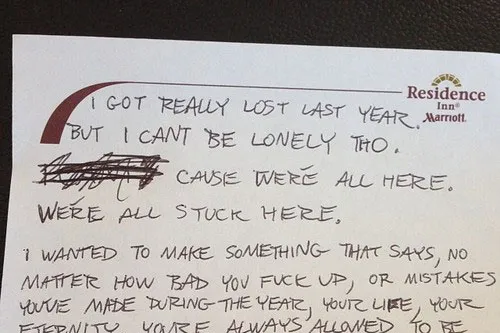
One of the posted notes
Five of the seven posted notes read as follows:
“I’m afraid of the future. I’m afraid my parents won’t live long enough to see my kids. I’m afraid my show will fail. I’m scared my girl will get pregnant at not the exact time we want. I’m scared I’ll never reach my potential. I’m afraid she’s still in love with that dude.”
“I feel like I’m letting everyone down. I’m afraid people hate who I really am. I’m afraid I hate who I really am. [CENSORED]. I’m afraid I’m here for nothing. I feel that this will feel pretentious.”
“I didn’t leave Community to rap. I don’t wanna rap. I wanted to be on my own. I’ve been sick this year. I’ve seen a bunch of people die this year. This is the first time I’ve felt helpless. But I’m not on that. Kept looking for something to be in with. Follow someone’s blueprint. But you have to be on your own.”
“I got really lost last year. But I can’t be lonely tho. [Redacted] cause we’re all here. We’re all stuck here. I wanted to make something that says, no matter how bad you f*** up, or mistake[s] you’ve made during the year, your life, your eternity. You’re always allowed to be better. You’re always allowed to grow up. If you want.”
“I’m afraid this is all an accident. I’m scared ill be Tyrese. I’m afraid Dan Harmon hates me. I’m scared I won’t know anything ever again. I’m scared I never knew anything. I’m afraid I’ll regret this. I’m afraid this doesn’t matter at all.”
In later interviews, Glover revealed that he had experienced severe depression following his tour and a breakup, admitting that he felt lost and disconnected from his own values. In a Vice interview, he described the period bluntly:
“...I was just super depressed. I mean, I tried to kill myself…I didn’t feel like I knew what I was doing. I wasn’t living up to my standard, I was living up to other people’s standards, and I just said ‘I don’t see the point.”
Glover gathered a group of his closest companions and retreated to a Los Angeles mansion owned by basketball player Chris Bosh. This mansion, which Glover called “The Temple,” is where he would begin working on something new.
Because The Internet
Following his drastic return to the public eye, Glover began teasing an upcoming album. A first teaser video, entitled Yaphet Kotto, likely named after the actor, was Glover’s first tease of a new project. A snippet of a song, which shares the same name, plays as a seemingly deceased Glover floats in a pool (which we would later learn is from a paired screenplay, a point I’ll get to later). Both eyes are wide open to the camera, almost as if he sees us. From the beginning, fans understood this project would be unlike anything he’d done prior.
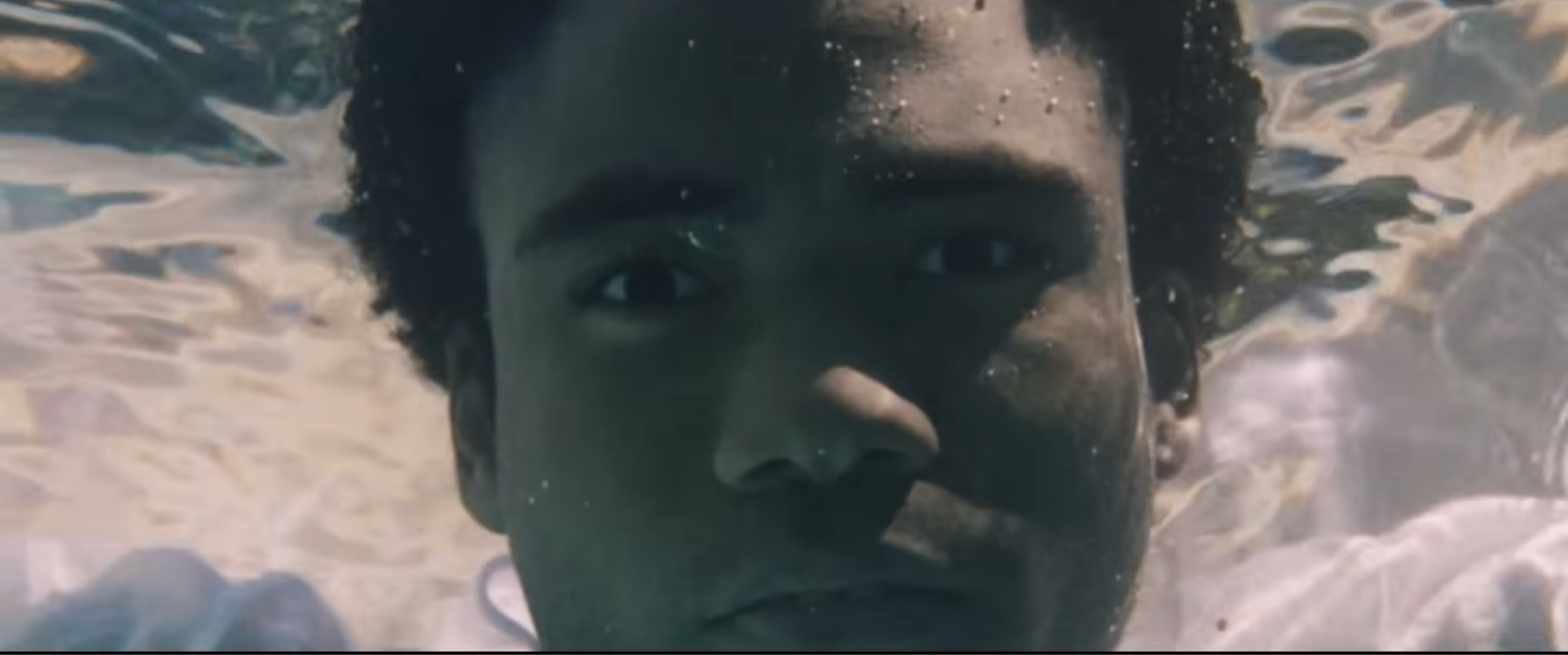
The opening shot of Yaphet Kotto 😳(one of my personal favorites of his unreleased catalogue)
For the album’s rollout, Glover did many in-person pop-ups, including one in Washington Square Park, which was mainly populated by NYU students. Other pop-up locations included the living rooms of mansions around the US, which Gambino would only invite select fans to through a sign-up. In these pop-ups, Glover would play a few songs from the album, speak to fans, and sometimes freestyle over audience-made beats.
In public appearances, Glover’s signature quirky, nerdy sense faded to existential dread. In an interview with Vice, Donald is described as “barefoot, wearing the same fur hat with ear flaps that he’s worn in recent radio interviews, telling me matter-of-factly that he’s going to die”. He is nothing like the person he was just a year prior.
“When Donald arrives, he looks worn out, eyes sunk in as he shuffles across the carpet to shake my hand…He has no reservations, no caveats, nothing he won’t talk about… he answers my questions while either looking at the floor or gazing out of the window that faces a church across the street. He avoids eye contact until he’s ready to thoroughly address me, at which point we lock eyes.”
The Album & Paired Screenplay
Because the Internet consists of 19 songs, separated into 5 acts broken up by Roman numeral scene numbers. These songs are intended to interact and score an accompanying screenplay, also titled Because the Internet.
The 73-page screenplay, released digitally on his website and physically with vinyl sales, which I would recommend listening to the seventh season of Spotify’s Dissect Podcast to fully analyze with specifics, follows a main protagonist only referred to as “The Boy”, played by Glover in all visual works, as a wealthy, aimless young man living online as a troll. But after witnessing a murder, The Boy begins an existential crisis, culminating in a journey to find meaning in his life.
In all public appearances, Glover would wear the same outfit as The Boy, seemingly making himself a part of the story itself, or rather, making himself representative of “The Boy”. Even throughout the album, it can often be hard to tell whether Glover is speaking about himself or speaking about the character. As stated before, Glover’s demeanor changed tremendously throughout the album’s rollout, further representing The Boy’s, and his own, newfound existential beliefs in meaning.
Along with the screenplay, Glover would also release “screenplay visuals” to how the story should look when reading.
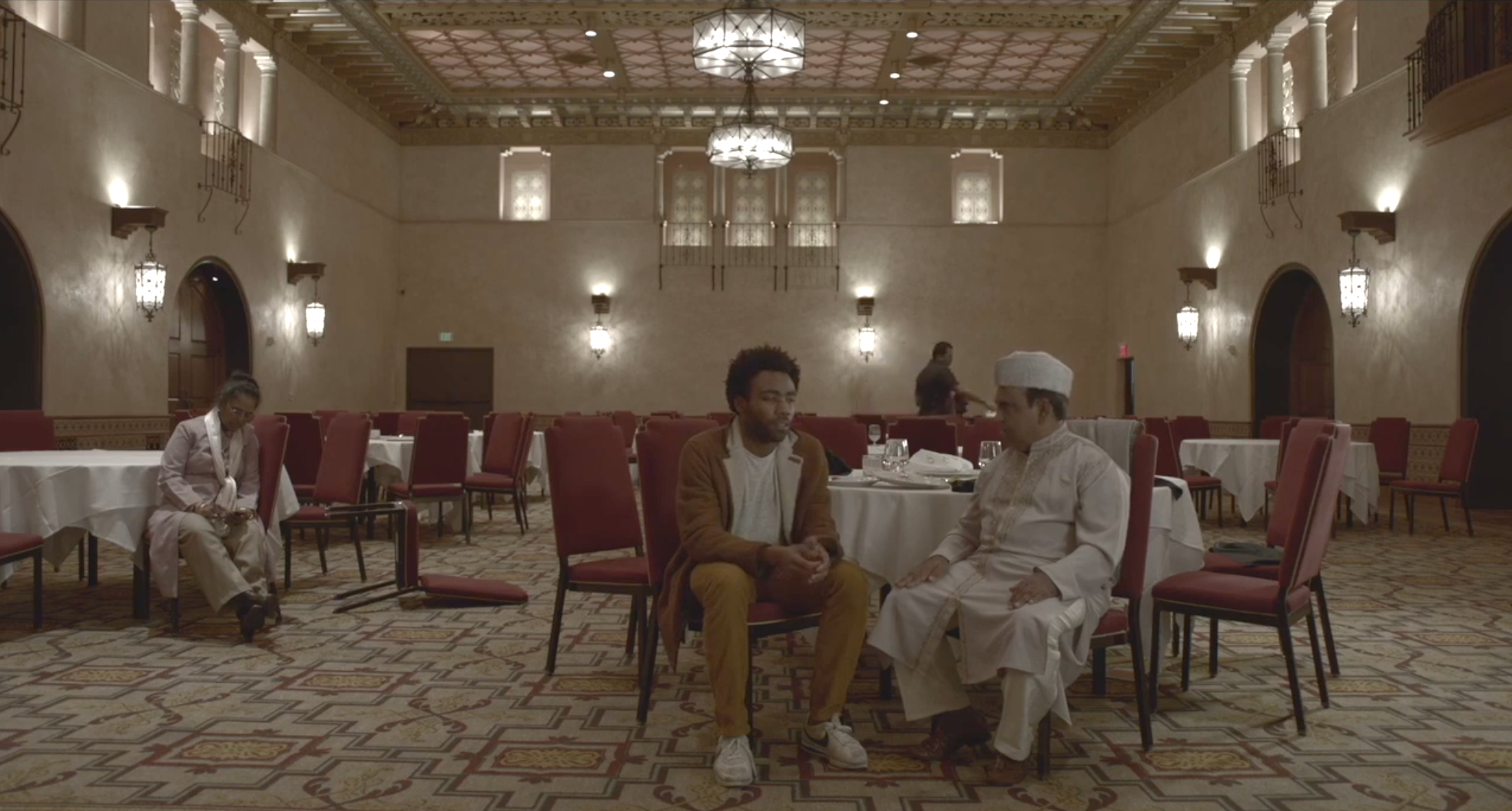
A frame from a screenplay visual
The final track of the album, entitled “Life: The Biggest Troll [Andrew Auernheimer]”, which is named after an infamous internet troll, corresponds to the credits of the screenplay. In the song, similar to That Power, Glover speaks directly to the audience about the ‘character’ of Childish Gambino in relation to himself. By this point, the two feel so similar that he has trouble telling them apart. In Camp, Glover struggles with how others perceive him, yet in Because the Internet, he struggles with how he perceives himself.
Short Films
Clapping for the Wrong Reasons
On Aug 15, 2013, Glover released his short film Clapping for the Wrong Reasons. The short film came out in 2 forms: a 49-second short entitled the “internet version” and the actual short film entitled “director’s cut”. This “internet version” acted as a trailer, purposely shifting the film to seem intense and heavy in tone.
Conversely, the 25-minute “director’s cut” was not that sort of film. The film is directed by now-longtime collaborator of Glover, Hiro Murai, and acts as a prelude to the album, showing audiences an average day in the life of “The Boy”. Seemingly purposefully, there is very little ‘real’ plot in the film, rather showing aimless, mostly directionless fun. Shot in the aforementioned “Temple”, the boy simply wanders around his mansion unsupervised, hangs out with the countless friends living carelessly in the house, and makes music, which is mainly all unproduced snippets from the album, further blurring the line between Glover and The Boy. Little to no characters are named or given any sort of arc whatsoever.
The film shows The Boy’s lack of meaning before the events of the script, living off of his father’s money, who isn’t actually around, and only referenced in recurring phone calls. In a small surrealist sequence, we see The Boy painfully pull a golden tooth out of his bloody nose, but then simply go back to his life before. One main motif throughout the film is a random girl who seems to follow The Boy around, even waking him up in the first scene. He questions others about who she is, but nobody seems to know. When he asks her, she simply walks right past. In a post-credit scene, she again wakes him up, showing a seemingly never-ending cycle of meaninglessness in The Boy’s life.
Chicken and Futility
Written and directed by Gambino himself, on Mar 12, 2014, Glover released another short film, Chicken and Futility, on the Complex YouTube channel. The 4-minute short film shows another small interaction with The Boy, giving audiences a closer look at his existentialist beliefs. The Boy’s bummed out after watching a moth fly into a light after learning that it’s trying to reach the moon but can’t tell the difference, making its very meaning lead to its death. At the end of the film, he gives a recommendation to his friends, but then closes the film with, “We’re never going to do that”.
Similar to Clapping for the Wrong Reasons, not much actually happens in this film. Instead, the film shows how The Boy lives aimlessly, like the moth, looking for his true direction.
Live Art Piece - ‘The Boy’s Room’
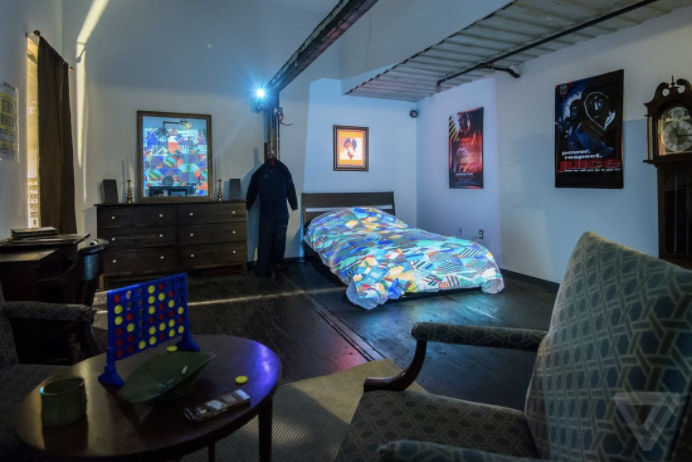
The Boy’s Room
In collaboration with artist Brian Roettinger and Tumblr IRL, Glover created The Boy’s Room at Rough Trade, a record store in New York City. Open from November 25th, 2013, to January 4th, 2014, the installation invited fans into, as the title suggests, The Boy’s room, further breaking the balance between fiction and reality. According to a Vice article written about the exhibit, on December 8th, Glover also performed a free in-store performance for fans.
Roscoe’s Wetsuit
Throughout the screenplay and in much of the rollout marketing, there is a recurring question that comes up again and again: What is Roscoe’s Wetsuit?
The question, which is first brought up on page 8 of the screenplay, is in reference to a tweet that comes across The Boy’s feed: “The Boy drops ‘roscoes wetsuit’ into Google… The answer to ‘what is roscoe’s wetsuit?’ is…’roscoe’s wetsuit’. Hilarious”.
Despite its lack of importance, the question haunts him, taunting him numerous times throughout the rest of the script.
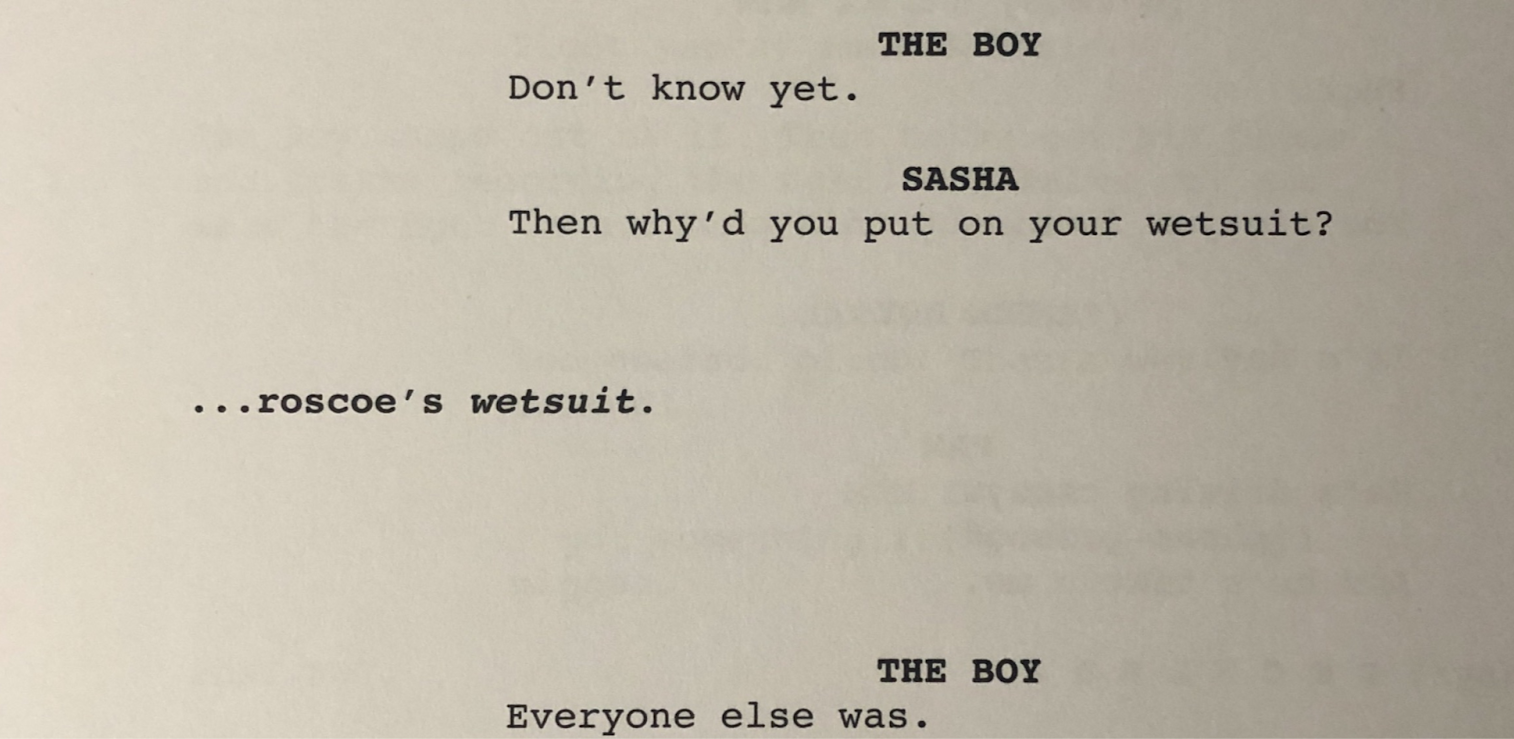
A reference to the wetsuit on page 13
So what is Roscoe’s Wetsuit? What is the great answer to this question that comes up time and time again?
The answer is, it meant nothing. There is no deeper meaning, no secret, no treasure to unlock. Instead, “Roscoe’s Wetsuit” represents how meaningless phrases and ideas can spread rapidly online. There was never anything to “Roscoe’s Wetsuit,” but The Boy spent his time chasing a possible meaning, believing there must be one, because of the internet.
The end of ‘Childish Gambino’
Within the past few years, Glover has, for the most part, retired from ‘Childish Gambino’, deciding to completely leave the name after his latest album, Bando Stone & the New World. While it may seem hard to leave behind, Glover has been very open in seeing his retirement as a fitting end.
“Childish Gambino has nothing to lose. Childish Gambino believes in first and last place. And Donald Glover believes in third place, fourth place, fifth place”
None of his recent albums represents the same existential dread shared in Because the Internet. Instead, they reflect his thoughts on aging, finding love, settling down, and the observations of the world around him. Glover is no longer the 30-year-old rapping about ‘The Boy’. He’s now a father of three young kids, someone who believes in endings, and in passing the torch he held for so long.
Still, I wonder if, now over a decade later, Glover looks back on his younger self’s existential wonder as just some meaningless quest for nothing, similar to The Boy’s quest to find the meaning behind Roscoe’s Wetsuit. Maybe. I don’t know. Does it really matter anyway?