How Celebrities Use Jewelry to Borrow Legacy and Fame
Emerald Fennell’s new adaptation of Wuthering Heights (2026) has stirred up a commotion over the last few months. And the movie's Los Angeles premiere only attracted more attention. Margot Robbie appeared wearing the Cartier Taj Mahal necklace, a historic piece with a storied past.
In 1972, Richard Burton gifted the necklace to Elizabeth Taylor for her 40th birthday, which gave it its Hollywood status. On the red carpet, Robbie told E!News that, “Elizabeth Taylor and Richard Burton would’ve been my Catherine and Heathcliff.” By choosing this necklace, Robbie seemed to draw a parallel between the real-life drama of Taylor and Burton’s romance and the passionate, complicated bond at the heart of Brontë’s story. However, in an interview with Access Hollywood, she misidentified the necklace’s original owner, calling her “the woman buried in the Taj Mahal,” when in fact the necklace originally belonged to Mughal Empress Nur Jahan, whose name is inscribed on the jewel.
Beyond the red-carpet theatrics, the necklace has a rich history. Created for Nur Jahan in the 17th century, it was gifted to her by Emperor Jahangir. The necklace was then passed on to Jahangir’s son, who gifted it to his wife, Mumtaz Mahal, for whom the Taj Mahal was built– giving the necklace its namesake. The necklace was likely stolen from India during Nader Shah’s invasion of Delhi in 1739. When the necklace is touted as “Elizabeth Taylor’s,” its original history becomes a footnote.
At the London premiere of the film, Robbie wore a replica of one of Charlotte Brontë’s bracelets. If a replica was appropriate to honor Brontë, why not wear a recreation of Nur Jahan’s necklace instead of the original? After all, the necklace is a historic artifact with deep cultural significance– and perhaps, as such, it deserves more than being worn as a red carpet accessory. When Elizabeth Taylor received the necklace, it became an emblem of romance, wealth, and celebrity, shifting its identity away from its origins. By wearing the original piece, Robbie is participating in this shift, aligning herself with Hollywood's version of the necklace's story rather than honoring the full history.
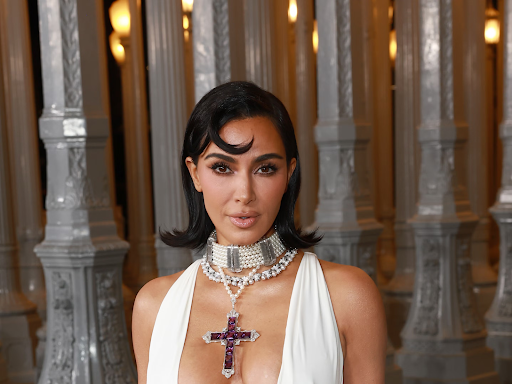
Margot Robbie is not the only celebrity with a fondness for wearing dead people’s possessions. Kim Kardashian is the most notable, owning countless archival pieces. In 2024, she wore the Attallah Cross at a LACMA gala, which had only been worn once in 1987 by Princess Diana. Kardashian reportedly purchased the cross at auction for almost $200,000– well above the estimated value.
Kardashian thrives on spectacle and controversy and uses these iconic items to capture attention and generate discourse. By purchasing and wearing these pieces, she shifts the narrative, making them part of her own story and fame. If you search for photos of the Attallah cross, there are bound to be pictures of Kim Kardashian wearing it.
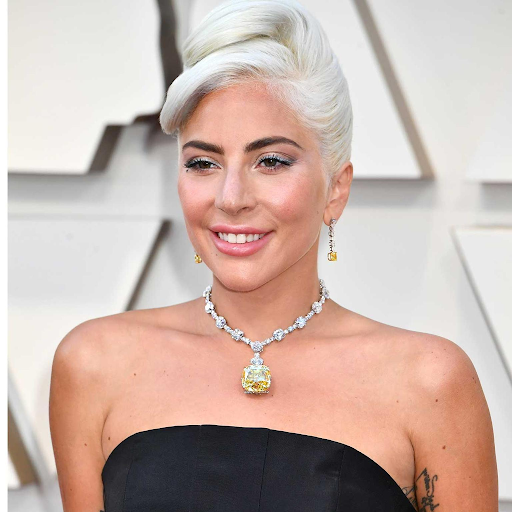
The yellow Tiffany Diamond offers another comparison. Last valued at $30 million, it was first worn publicly by Audrey Hepburn in promotional images for Breakfast at Tiffany’s, cementing its association with old Hollywood glamour. Decades later, Lady Gaga wore it to the 2019 Oscars, and Beyoncé wore it for a Tiffany campaign in 2021. Being granted access to such an expensive piece solidifies the high status of the celebrity. When a celebrity is allowed to wear it, they are not just borrowing a necklace; they are temporarily stepping into a lineage of esteem and power.
Kim Kardashian wearing Princess Diana’s cross, or Beyoncé wearing the Tiffany Diamond, are not neutral fashion choices. They draw power from the reputations already associated with those objects. Similarly, by wearing the Taj Mahal necklace, Margot Robbie steps into Elizabeth Taylor’s legacy. This not only elevates her image but also places Emerald Fennell’s Wuthering Heights adaptation within a lineage of timeless, iconic love stories. The necklace casts the film in a glamorous spotlight by connecting it to a broader cultural narrative. The object grants prestige, and the celebrity grants relevance.
The question, then, is whether the association feels earned or purely promotional. Some red-carpet moments resonate because they connect to a larger message or persona; others only exist to generate buzz. Margot Robbie’s appearance in the Taj Mahal necklace would only be meaningful if its deeper history was acknowledged and respected, rather than reduced to a publicity stunt. Will this moment be remembered, or will it become just another headline?