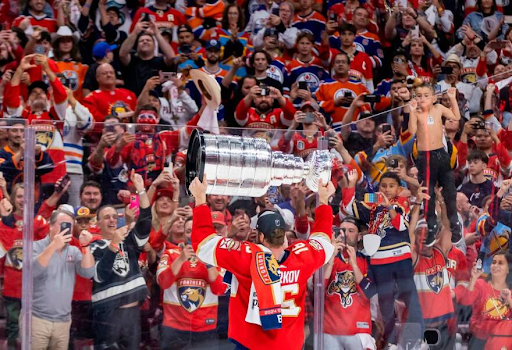
Hockey is Massive — The NHL Just Doesn’t Seem to Know it
If you’ve ever had the honor of stepping inside a hockey rink, you’ll understand what makes the game so special. The deafening roars of the fans as they cheer on their team. The thunderous crunch of a body being decked into the boards. The quick crack you hear from the puck rocketing off a player’s stick.
The swift gust of wind that you feel as the goalie flashes leather. The split second where you hear the sharp, metallic ping of the rubber striking off the post. The blaring eruption of a horn and the rambunctious explosion of the crowd that follows each time a goal is scored.
Hockey isn’t subtle. Nor is it elegant. Nor is it pretty.
It combines skill, speed, and strength all into one sport, creating a high-paced and high-intensity experience to watch. Players skate with surgical precision, weaving through defenders at rapid speed. One moment they’re artists, the next moment they’re wrecking balls, as they crash into each other at speeds of over 30 miles per hour. Amid all the chaos, the flow doesn’t stop; the action just keeps on going, and your heart never stops pounding.
Hockey has birthed fanbases from communities, cities, and even entire regions, all defined by their fervent allegiance to their team. Whether it be the frozen streets of Minnesota, the sunny outskirts of Florida, or the almost religious reverence of the arenas in Montreal, hockey always has an indomitable presence. From Canada and Sweden to South Africa and Hong Kong, the game has become a cultural cornerstone in many nations.
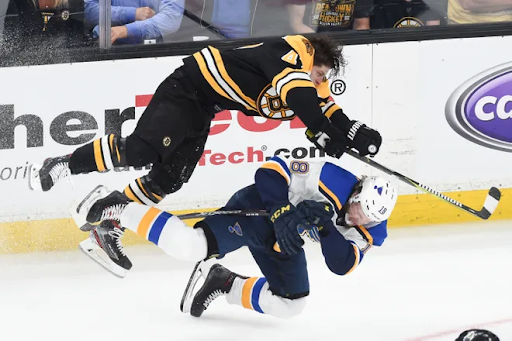
Hockey’s massive. Its fans don’t just watch hockey; they breathe it and they live it.
Yet for most sports fans outside of the hockey community, it doesn’t feel that way. The NHL has consistently been ranked behind the NBA, NFL, and MLB in terms of viewership, revenue, and popularity. Only 17% of adults in the US watch the NHL, a far cry from the percentage that watch the NFL (43%), MLB (29%) and NBA (24%). Even the NHL’s largest event, the Stanley Cup finals, has seen a 40% viewership decrease in the United States, averaging only 2.5 million viewers per game. On the business side, the NHL still remains last amongst the “Big 4” American sports leagues in terms of revenue, as the league only brings in $6.8 million USD, whereas the NFL ($18.7), MLB ($10.9) and NBA ($10.9) all surpass it. Ask any sports fan in the US to name more than 10 NHL players, and most of them will struggle to name even three players. And they’ll most definitely get a name wrong.
But why is that?
There’s a common answer to that question. The NHL fails to market its own greatness. The league fails to advertise its own product and fails to provide sufficient exposure to its players. It has gotten to a point where a good amount of people connected to the NHL believe that poor marketing is holding the league back from reaching its full potential and outreach. Instead of fully embracing the chaos and beauty of hockey, the NHL tries to package it in the most sanitized, corporate, and empty way possible.
Every league is powered by its stars. Take the NBA, for example. Lebron James is possibly the most famous athlete in the world right now, and the main reason is because the NBA markets him as such whilst also benefiting the league in the process. From his nickname “The Chosen One”, to the countless amount of advertisements and movies he appears in, to his outspoken and colorful nature in press conferences and social media, the NBA allows Lebron to express himself whilst providing him the platform to do so, allowing him to become both a recognizable face of the league and a compelling entry point for new fans. Other leagues flaunt and popularize their players, picking up their stories, creating their narratives, and allowing them to showcase their authentic selves.
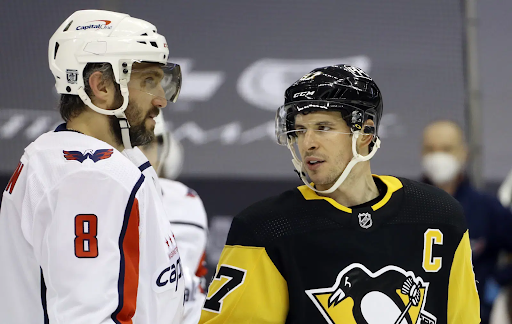
In contrast, the NHL fails to do this. They emphasize an archaic team-first culture, and whilst advertising this isn’t necessarily an issue, fully relying on this method strips players of their individuality and personality. Hockey players are often perceived as robotic and sanitized, as media interviews and press conferences all often sound the same, with players echoing the same old hollow responses that rehash the cliches of the team-first mentality. The players are restricted from being outspoken, critical or charismatic, as league officials police controversial comments through suspensions and fines. As a result, the NHL utterly neuters the personality of the players, making it difficult for fans to feel emotionally connected with them.
Furthermore, fans always need some degree of social dynamism to be entertained and drawn in whether it be tension, fun, or just good vibes. But the NHL continues to shoot itself in the foot when it comes to engaging audiences. There are a countless number of rivalries in the league, whether it be for historical reasons, inner-state locations, or bad blood that has brewed between teams. Yet the NHL fails to capitalize on them, neglecting to highlight them as events filled with emotion and tension.
The league continued to do so during the 2025 Entry Draft, a stage where many prospects achieve their dreams of being drafted to the NHL. In previous years, this event would take place in person, where teams, prospects, and journalists would all get a first hand experience of the event. But in 2025, the draft was decentralized, becoming a fully virtual experience. What resulted was a boring and slow event, and it lost the magic of seeing the young players have their dreams and hard work being realized.
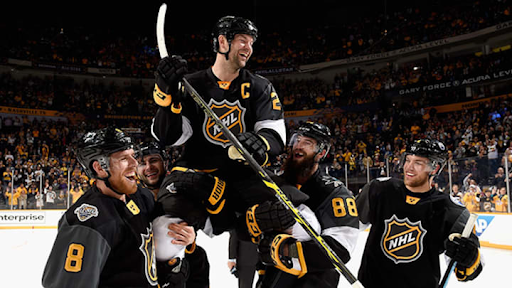
The most glaring example of the NHL’s anti-fun stance was on display during the 2016 All Star selections. For the All Star game, fans could write-in candidates for the game, allowing them to have their favorite superstar become part of the festivities. What resulted was possibly the happiest of accidents, as thousands of fans chose to write-in John Scott, a player with only 5 career goals to his name and was known as an enforcer (a player who is brought in with the main purpose of being a fighter). Fans continued to embrace the movement, and players themselves advocated for Scott’s cause. But instead of giving the fans what they wanted, the NHL went into image control mode, actively preventing people from voting for Scott, and even tried to shame him out of participating. This resulted in an uproar from fans and players, which eventually caused the league to relent and allow Scott to participate. As it turned out, Scott became the star of All Star weekend, scoring two goals, getting into a mock fight, and helping his team win the whole tournament, resulting in him being named All Star MVP. A moment that should have been pure marketing gold became a public relations stumble—all because the league refused to appease its audience and instead appeared embarrassed by them.
TV coverage of the NHL also plays into the struggles of the league’s brand. The NHL only earns 19% of its revenue from national TV, being heavily dependent on ticket sales. Most sports broadcasting channels treat hockey as an afterthought, prioritizing the bigger, more financially attractive leagues, as NHL games get scheduled in time slots where viewership is low. Furthermore, certain channels are sabotaging the exposure of the game. Take ESPN for example, who prioritize broadcasting baseball, basketball and American football over hockey. But more unforgivably, they actively damage the image of the NHL and hockey itself, as they have provided poor support to NHL commentators, missed the trophy raise of the 2024 Stanley Cup Finals, and stated that "no one cares about hockey".
The NHL also shorthands itself by actively attacking hockey content creators that help with marketing the sport. If you go on to Instagram or Youtube, you’ll see a plethora of accounts that actively talk about hockey, whether it be through analyzing the game, providing opinions and predictions, or even creating documentaries and narrative pieces. These influencers are actively helping the NHL with brand exposure and growing the fanbase for the game, and they do not violate any Fair Use Laws. But the NHL doesn’t see it that way; they see them as people merely trying to profit off their product, rather than fans with genuine love and appreciation for the game. The league hits them with threats and copyright claims, actively self sabotaging the sport’s marketing efforts whilst damaging its own image and reputation. Other sports leagues like the NBA do the opposite, as they actively embrace these content creators by integrating them as part of the broadcast or inviting them to be part of live game experiences.
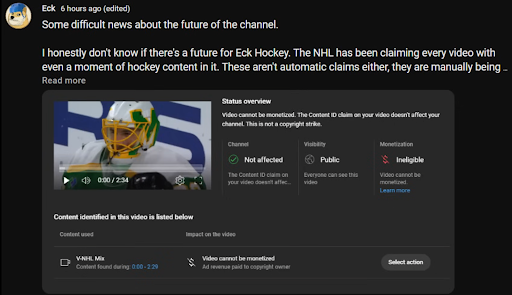
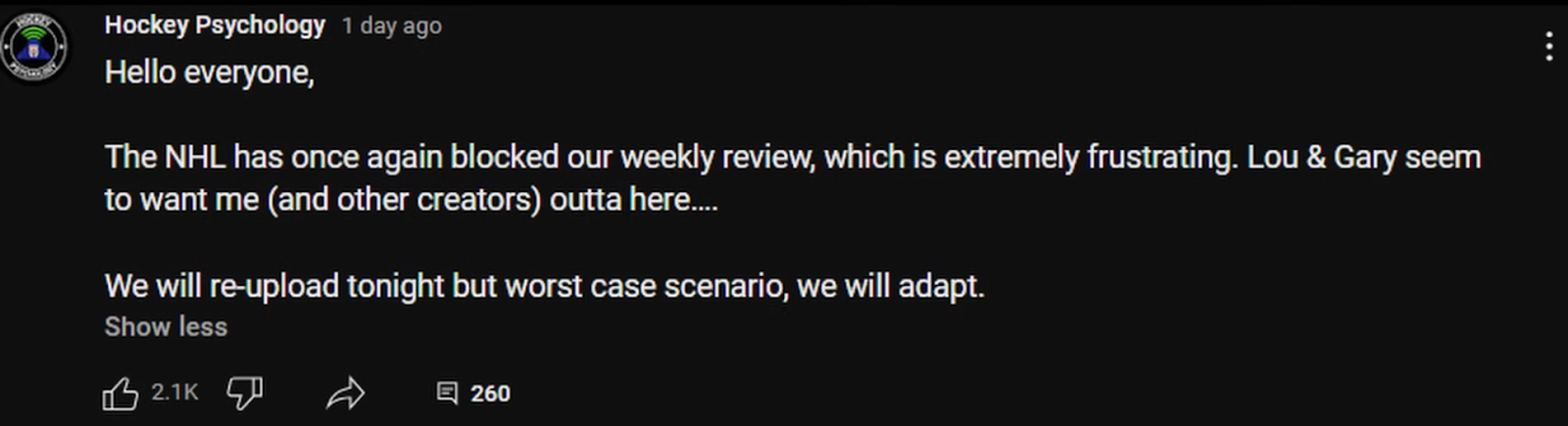
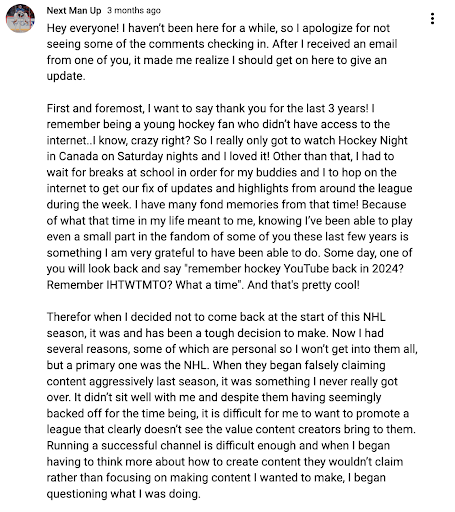
But still, despite the utter incompetence of the NHL and its marketing efforts, hockey has pushed forward and reached new audiences thanks to figures beyond the league organizers and officials.
Ex-players have made massive strides to serve as advocates for the game. Take Spitten' Chiclets for example. The podcast, hosted by former NHL players Ryan Whitney, Keith Yandle, and Paul “BizNasty” Bissonette, offers the listener a glimpse into what the lives of hockey players are like. Together, the hosts interview a wide array of guests, ranging from former stars to current players to college prospects. The conversations are unfiltered, honest, and authentic, allowing players to show their vibrant personalities, open up, and tell stories in ways that press conferences never could. They bring fresh new perspectives that flow and entertain. Success has followed, as Spitten’ Chiclets has been ranking amongst the top sports podcast, amassing over 443K subscribers.

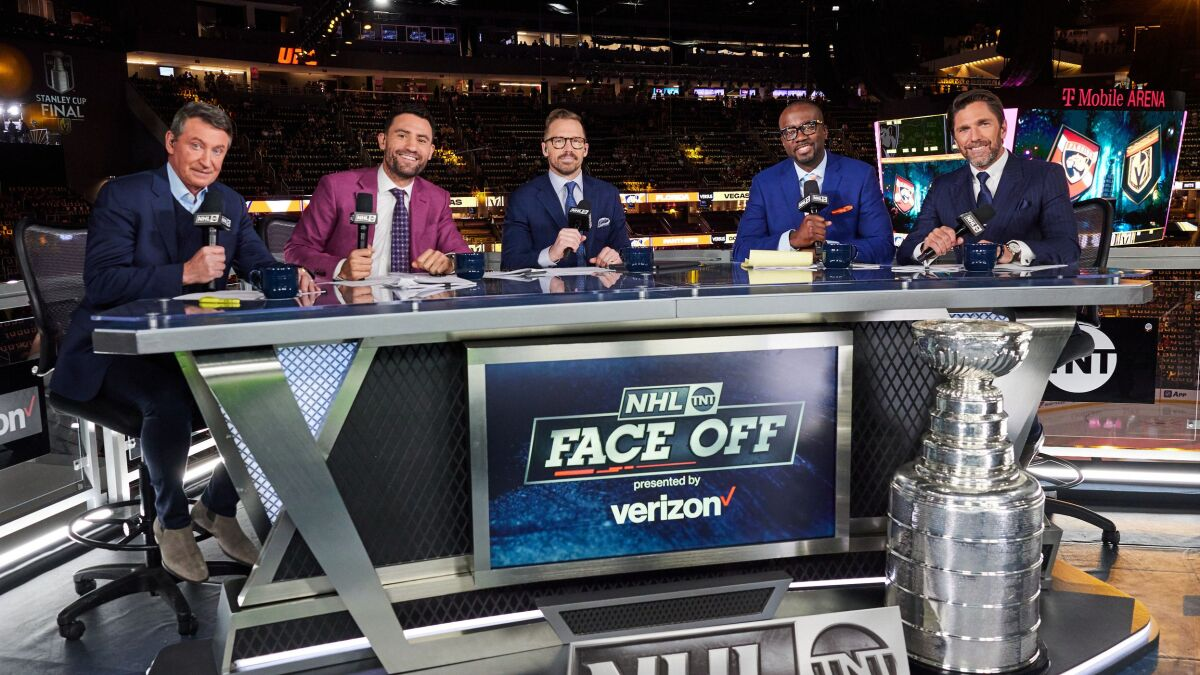
Bissonette’s influence doesn't stop there. In 2021, Bissonette joined NHL on TNT, a new channel that came from TNT acquiring TV rights to broadcast the NHL. But instead of following in the footsteps of ESPN, TNT actively makes steps in bringing in people knowledgeable about hockey. In particular, they have made an effort to bring in ex-players, as in addition to Bissonette, former players such as Anson Carter, Henrik Lundqvist, Brian Boucher, Rick Tocchet, and Wayne Gretzky, as well as many others, were brought onto the show. By bringing in retired professionals, NHL on TNT was able to provide valuable commentary and analysis from people who have lived the game, as well as gaining in-game insights from live ice-level interviews. In addition, they brought the charisma and entertainment that hockey broadcasting has severely been lacking. As a result, viewership has been slowly but surely increasing, making NHL on TNT the go to broadcast for people to watch hockey on.
Despite the NHL’s meddling, hockey content creators also deserve credit for the steps that they have taken to grow the game in many different forms of media. Creators such as Eck, Next Man Up, Mbon Hockey, and Hockey Psychology provide quick yet insightful commentary on the recent happenings of the NHL for casual fans, whilst creators such as Pinholes Graham, Ben Oakley, The Hockey Guy and Rob Talks Hockey provide die hard fans with in-depth documentary style pieces that satisfy any hockey savant’s palette. These content creators, and many others, have helped extend the outreach of the sport, stemming from a genuine passion and love of hockey.
TV shows have also helped develop a fanbase for hockey. Amazon Prime’s docuseries FaceOff: Inside the NHL provides viewers with a look into the lives of hockey players. We see their daily routines, off-ice livelihoods, on-ice experiences, and the burdens that they carry. We get to truly understand their thoughts and feelings, and in a way, we see them as people instead of characters on the screen. On the complete flip side, HBO Max’s Heated Rivalry has driven in new audiences with their fictional take of two hockey players, their secret gay romance, and their struggle with their identities and pride. The show’s compelling storytelling not only showcases the personalities of hockey players, but also serves as a means to promote diversity. As a result, the show has introduced more people to the sport, and those that would have never even cared about the sport have now become avid hockey fans. Let that sink in: an excellent drama that—quite honestly—doesn’t portray the hockey elements realistically has done more to market the sport and celebrate inclusivity than the NHL has.
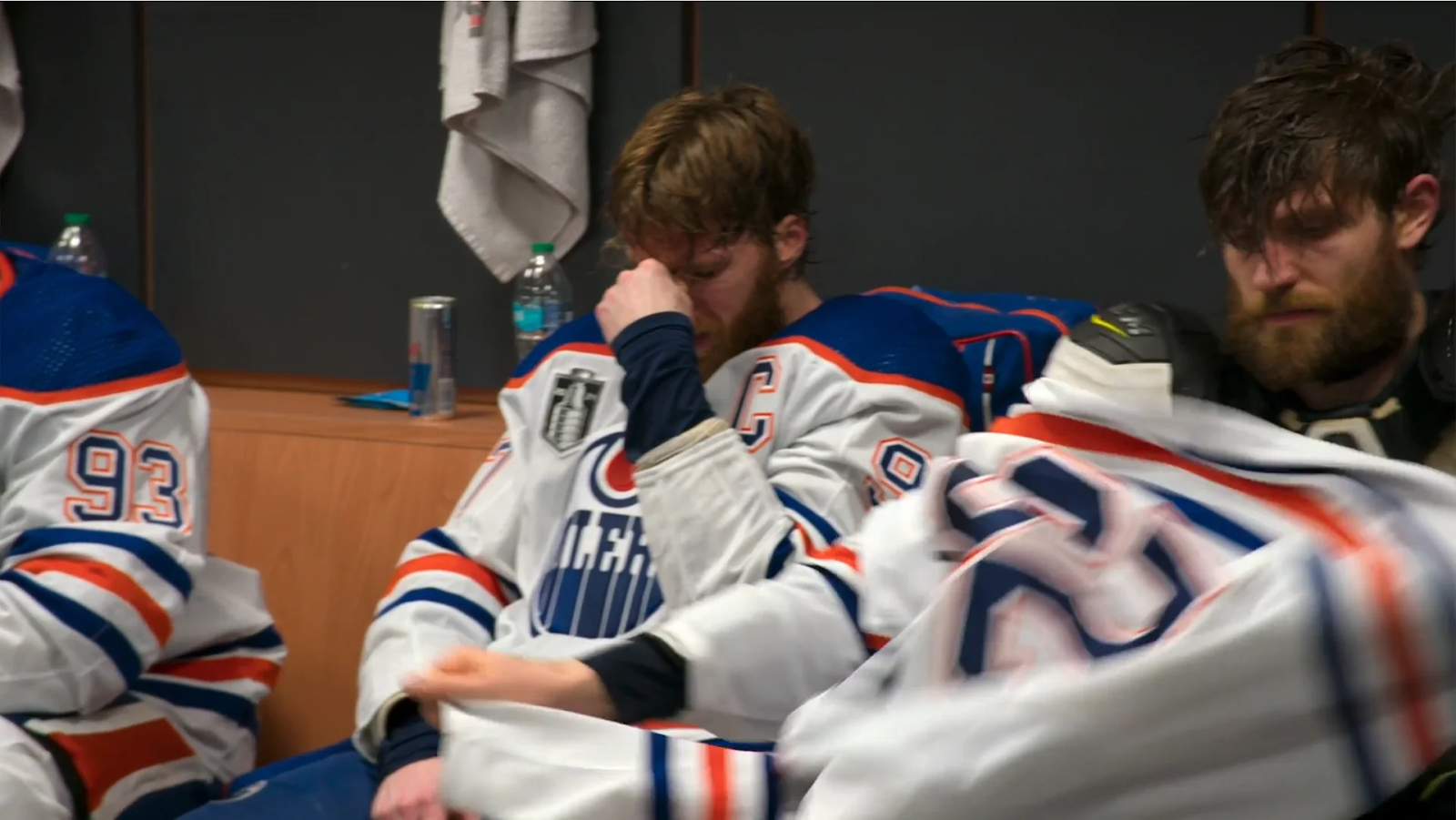
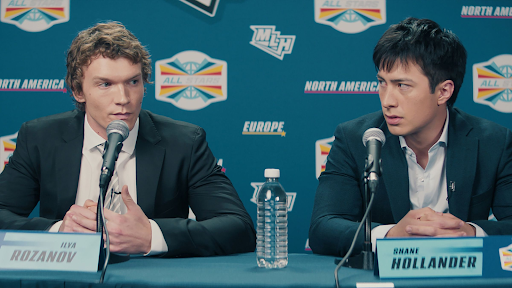
The ambition to take hockey to new heights lives on. Former NHL star P.K. Subban recently went on ESPN’s First Take, where he bravely went against the talking heads of the analysts, and defended hockey and explained its intensity and greatness. Utah Mammoth owner Ryan Smith tries to combat the old school norms of many NHL owners by creating outreach and community events that create an inclusive culture and grow Utah's young hockey fanbase. Former NBA star and NBA on TNT analyst Charles Barkley constantly raves about hockey and advocates for the sport. These figures, and many more, have all given the NHL a chance to grow its audience by serving as supporters and promoters of hockey.
But someone’s effort is missing: the NHL themselves. In order to effectively market the sport of hockey, the NHL has to embrace the modern sports landscape; one that encourages personality, identity, and emotion.
Hockey isn’t subtle. Nor is it elegant. Nor is it pretty.
It is chaotic. It is emotional. It is skillful. It is relentless. It is dynamic. It is exhilarating.
Hockey is massive.
And more people need to know that.
The sooner the NHL realizes that, and starts acting accordingly, the better.