I Love LA: Being Chronically Online Is My Identity.
I think I speak for many of us when I say we’re “chronically online.” We wake up, and the first thing we do is check our phones for any notifications we missed. Some of us connect to our speakers to play music while we get ready. Others can’t live without checking Yik Yak. The point is: Gen Z is visibly glued to their phones, and it’s about time we have some true representation for the nomophobes of the world. I started watching HBO Max’s I Love LA, and I was immediately drawn to how topical it was. Yes, the mention of COVID seems to be a media taboo, and it’s refreshing to see something acknowledge it playfully. However, the real kicker is how the show leverages Gen Z’s online culture, a relatively new phenomenon in on-demand entertainment. It’s a growing one at that, especially as Gen Z continues to transition from audience to entertainer.
Digital stakes emerge as a symptom of this shift, and in I Love LA, they are one of the main wagers: both for reputation and the self. In one episode, rising micro-influencer Talulah Stiel meets and socializes with Quenlin Blackwell at a party she’s hosting. Of course, her manager, Maia Simsbury, has already anticipated the opportunity to interact with someone more famous and sets their objective: social climbing. Almost immediately, this sets the stage for metric-measured identity. Maia claims that someone can’t ask someone with more followers to make a TikTok with them.
Why? It’s an LA rule.
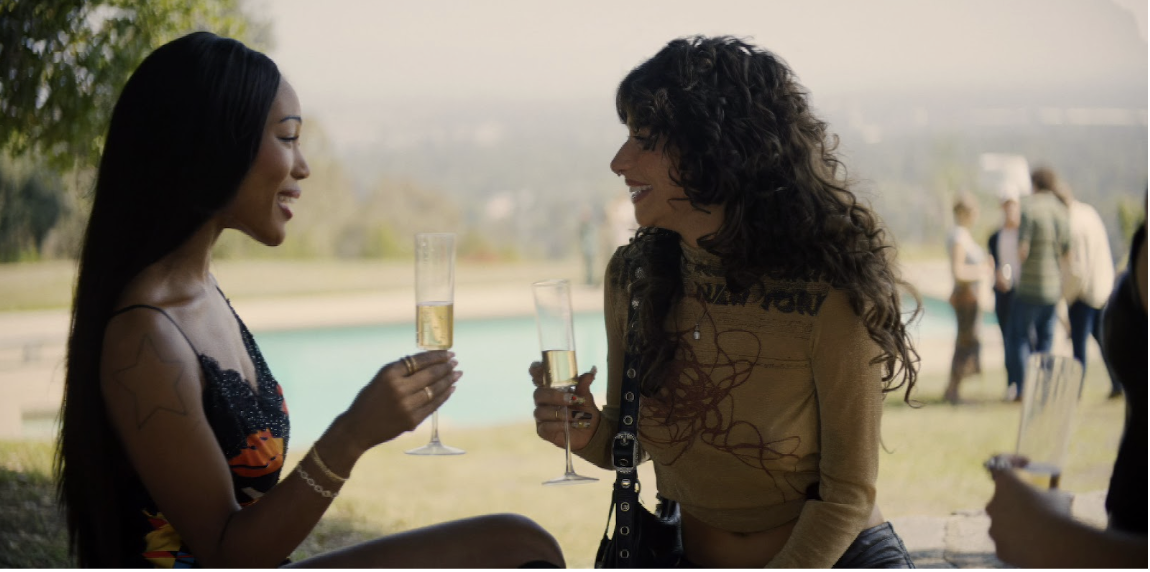
What we start to see is an economy, one based on treating followers and visibility as currency. Team Maia and Talulah are simply trying to “make it,” and they know that if they play their cards right, they can win a TikTok with Quenlin. Much like the real world, their success is measured in follower-dollars they can obtain. Their career ambition is filtered through influencer logic, and this subsequently ingrains social media as something necessary for social survival. This begs the question: Does it even matter if Quenlin and Talulah genuinely get along?
Maia shakes her head to this. Taluluah is still new to the influencer world, so Maia distinguishes between real friends and “internet” friends. As a result, the episode’s Talulah-Quenlin dialogue, though they seem to hit it off, blurs slightly, as if they are only portraying curated versions of themselves. It’s a sort of mind game rooted in the pursuit of online validation and the treatment of online perception as integral to self-worth.
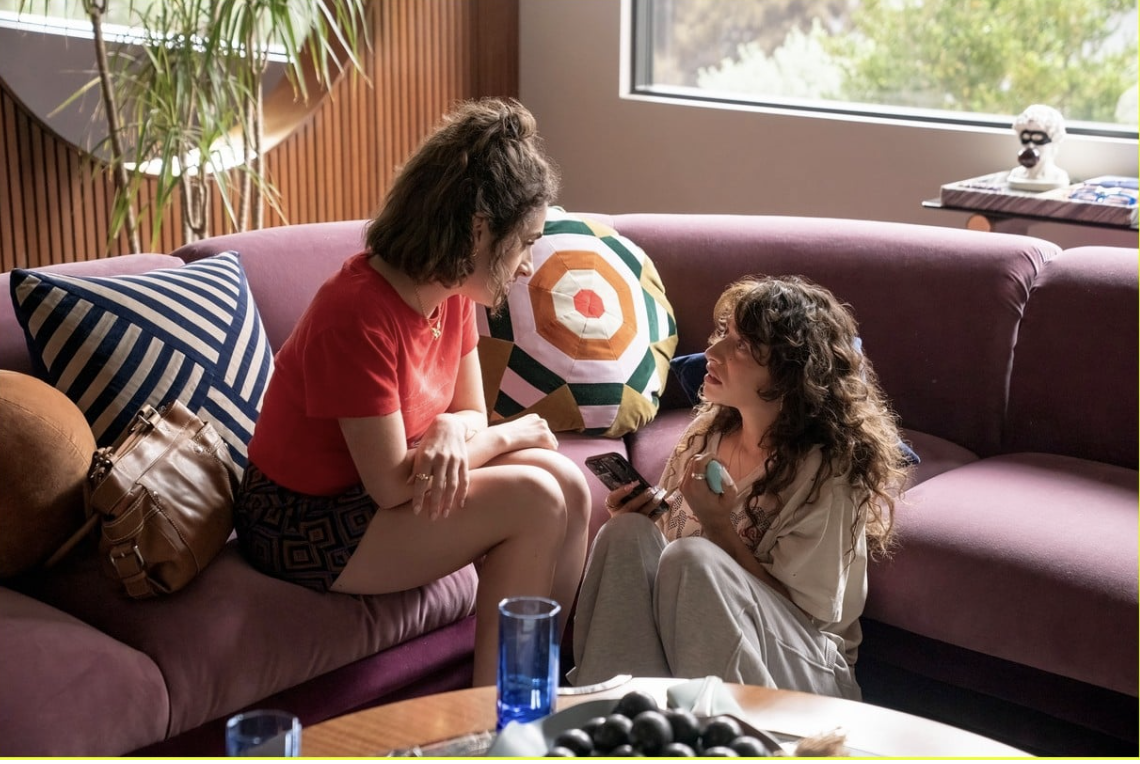
Yes, we all love online validation. But we also love the private dopamine our phones provide, and I Love LA depicts this codependency to a tee. Rather than use it as a tool for comedic exaggeration, the show treats it as background noise. In the show, no one really tells each other to get off their phone. Even when Talulah has to stay offline due to controversy, the internet is handled as something unavoidable, like sugar or carbs. We’re introduced to the idea that technology is infrastructure, and as long as one lives in the influencer microcosm of LA, attempts to treat it as an optional fail.
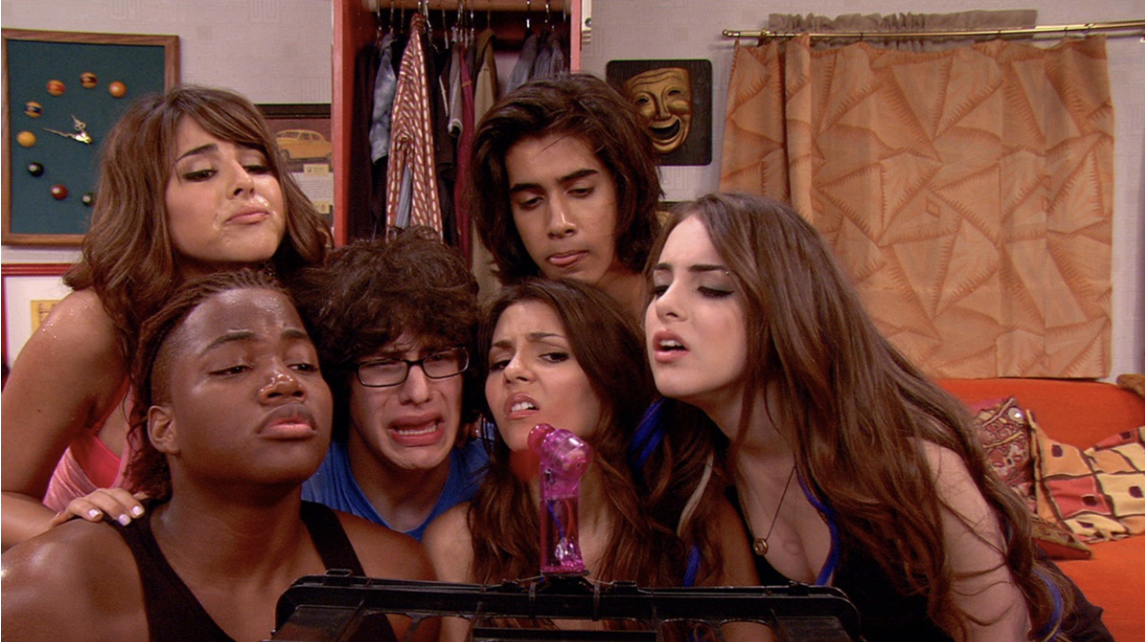
This sharply contrasts with how earlier television treated technology. When we look at a show like Victorious, an early 2010s show, we see a sort of prequel to this phenomenon. While yes, the characters’ vocabulary and storylines were heavily influenced by their early social media shenanigans, they still have lives offline. Think back to “Survival of the Hottest,”when the cast gets stuck in a sweltering van during a heat wave. In their situation, technology doesn’t even seem to be part of the equation, despite each member of the group owning a “Pear Phone.” Offline spaces still exist. In older shows, the role of technology was treated as a novelty. I Love LA begs to differ, as screen time is life. Victorious can function without tech, but it’s impossible to imagine LA without checking the comments of your rival TikToker trying to cancel you.
What does this mean for where we’re headed? Yes, Gen Z is changing Hollywood, but I Love LA signals something deeper. Rather than moderating our digital immersion, Gen Z is embracing and normalizing the chronically online condition. We can see this as a transitional moment in media history, where creators are learning to treat a man-made tool as an increasingly essential part of the human experience. In the 2020s, adulthood is shaped by the free HBO Max your college provides and the Instagram spam page you swear you’re going to post on more often. We should prepare to see this chronic online behavior transform us. It is becoming the default humanity, in media, and in us to become consumed by the digital world.. Our identities are constantly evolving, but with Gen Z stepping into the role of entertainers, we shouldn’t worry about television falling behind. TV is catching up because we are writing it.