Okay, I Want to Talk About Ireland.
Every March 17, seas of green flood city streets, shamrocks adorn lapels, and Irish flags wave proudly in celebration of St. Patrick’s Day. But beyond the parades and pints lies a deeper story — one of famine, forced migration, generational sacrifice, and enduring pride. For many Irish Americans, including myself, Saint Patrick’s Day is not just a celebration. It is a remembrance.
In the mid-19th century, Ireland was devastated by the Great Starving, a catastrophe that reshaped the nation and scattered its people across the globe. Between 1845 and 1852, more than a million people died and another million emigrated, fleeing starvation and hopelessness. Though my grandfather left Ireland generations later, the echoes of that history shaped the Ireland he departed — a country marked by resilience, loss, and an unbreakable cultural spirit.

After years of laborious work and countless sacrifices in America, my immigrant grandfather once reflected with a sense of pride, “At last, I finally own some land,” referring to the acquisition of his future resting place: his grave. It was a remark layered with humor, humility, and profound truth. Owning land in America symbolized stability, something generations before him in Ireland could scarcely dream of.
When he left Ireland, he and my grandmother departed with dreams of opportunity in a land where the streets were said to be paved with gold. They would never see their families again. Before embarking on the long voyage, his family held a modest but glorious going-away party. As the oldest son, he was entrusted with his father’s most valuable possession: a pocket watch.
With a gentle hug, his father said, “Take this watch, so you will always have a piece of your family and Ireland with you wherever you may go.”
That watch still sits proudly displayed in a glass case in my home. Whenever I gaze at the simple antique timepiece, I am reminded that heritage is not abstract — it is carried, protected, and passed down. It is sacrifice measured not in minutes, but in generations.
Like so many immigrants before and after him, my grandfather endured difficult jobs and low wages. Yet his spirit remained high, sustained by the belief that his children — and someday his grandchildren — would live with greater opportunity. His story reflects the broader immigrant narrative: courage stitched together with uncertainty, faith sustained by love of family, and pride in where one comes from even while building something entirely new.
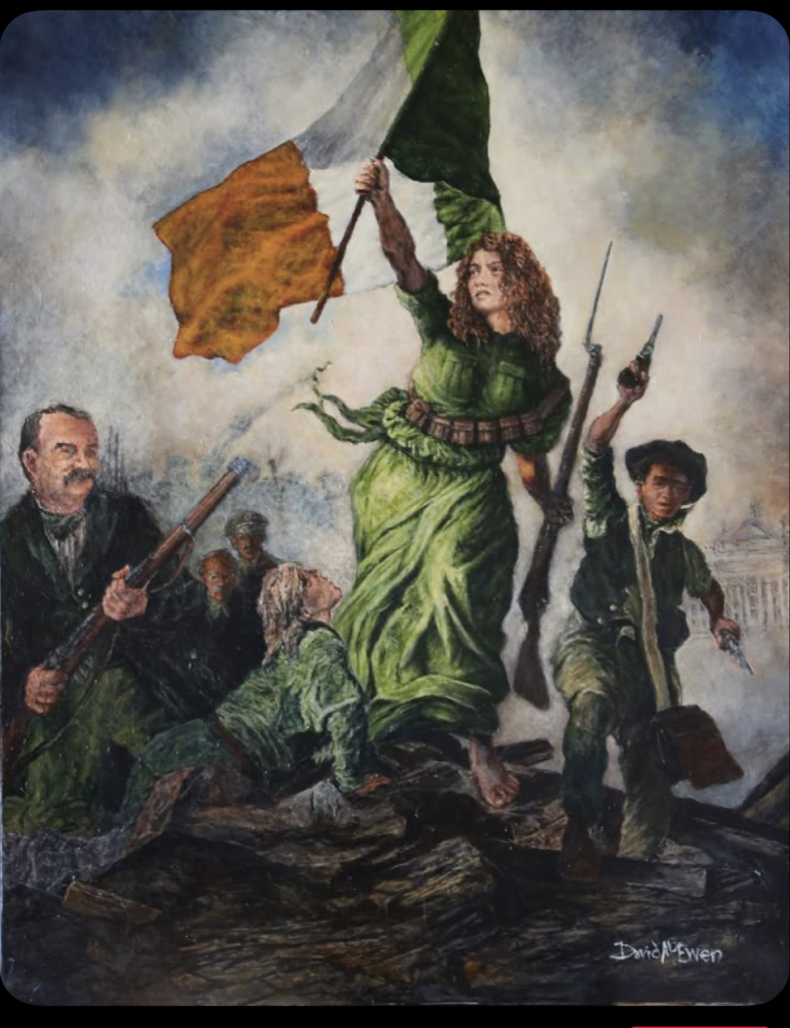
Irish heritage is not only defined by hardship. It is also defined by story.
My grandfather filled my childhood with vivid tales of Irish folklore — fairies dancing in hidden groves, banshees whispering warnings, and the mysterious Will-o’-the-Wisps flickering across the countryside. Through him, Ireland became more than a distant homeland; it became imagination, music, and memory. His love of Irish folk songs and spontaneous singing shaped my own passion for music and performance. Storytelling, after all, is its own form of resistance — a way to preserve identity across oceans.
Growing up with those stories taught me that heritage isn’t just history; it’s something people carry with them wherever they go.
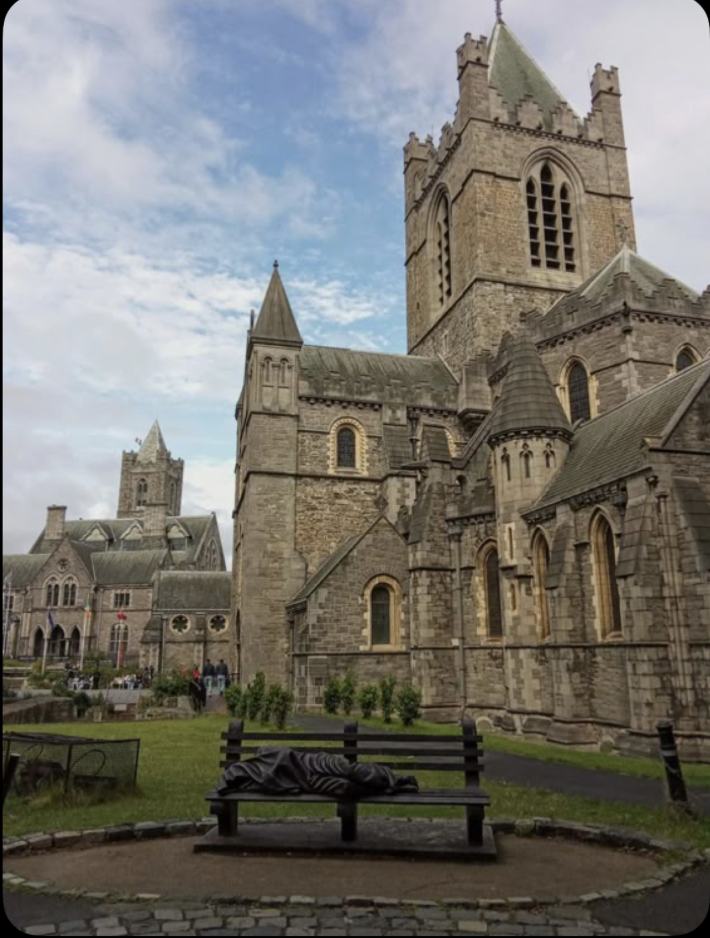
At NYU, where students represent nearly every corner of the globe, Saint Patrick’s Day feels especially meaningful. Our campus is built on stories like my grandfather’s — stories of migration, reinvention, and resilience. In honoring Ireland this March, we also honor the immigrant journeys that built so much of the America we know today.
This fall, I will continue that story full circle by studying abroad at Trinity College Dublin — returning not as someone fleeing hardship, but as someone privileged to reconnect with the homeland my grandparents left behind. It feels less like travel and more like pilgrimage.
Saint Patrick’s Day reminds us that heritage is not frozen in the past. It lives in music rehearsals, family dinners, shared laughter, and even in a pocket watch ticking steadily behind glass. It lives in resilience — the kind forged in famine and strengthened in foreign lands.
So this March 17, as we celebrate Ireland’s rich culture, let’s also honor the sacrifices that carried it across the Atlantic. Behind every parade is a passage, behind every tradition a story, and behind every story — a family who dared to hope.
Sláinte!