Like
Scroll
Like
Scroll
Like
Repost
Scroll
In the modern age of technology and social media, the line between expressing and performing emotion has become increasingly blurred. Social media platforms, specifically designed to be engaging and visually appealing, have turned mental health from a topic to be normalized into a commodity to be sold and bought into. These platforms initially took on the mission to destigmatize mental illnesses like depression and anxiety through open conversations, but instead, they have resulted in a mass romanticization of the same illnesses. These deeply complex illnesses are compressed and put through a filter, turning them into aesthetics for people to identify with.
It’s no secret that just as we shape our social media algorithms, they shape us and our lives as well. Users choose to interact with videos that reflect their lives, emotions, and even mental health struggles. The algorithm takes note of the consistent interaction, feeding similar videos back to the user. This can be a great thing– perfectly composing your For You page to align with your interests- but when liking one relatable, vulnerable, or maybe even depressing TikTok leads to a page full of them, it causes a problem. Looking to the internet in times of sadness is a common thing in this generation; the internet is full of other users– other people with the same problems. It’s easy to relate to and find solace in the posts other users are creating, not to mention the comment sections full of other people relating as well. However, staying in the rabbit hole of these posts won’t do any good when it comes to moving forward.
Relatable and slightly depressing videos have become a genre in themselves on TikTok. These videos, most well-known as “core” videos, usually feature a sad song, a depressing quote in a pretty font, and a beautiful video or aesthetic photos in the background. Sometimes, the video doesn’t even have a quote, but the algorithm is so strategically wired that it reaches the target audience without a single word. That’s why these videos are so dangerous: they trap you in a cycle without you even noticing. The fact that the video conveys themes of loneliness, sadness, etc. is thinly veiled by the pretty images and nice music. It entraps viewers in continuous interaction and even a personal connection to the content, despite the fact that it brings about negative emotions.
The romanticization of mental illness lies in the visual economy of social media, and it is not a new thing starting with TikTok; in fact, it dates all the way back to the prime years of sites like Tumblr. “Sad girl”, “hikikomori” (social withdrawal and physical isolation), “losercore”, and the “manic pixie dream girl” are just a few of the aesthetics that revolve around or involve the idea of mental illness. TikTok currently stores a plethora of these aesthetics and will routinely put them into the algorithms of people who are already interacting with content relating to the subject. And even though social media is usually where the aestheticization begins, it doesn’t end there. These aesthetics flow through TV shows, movies, and music. Sooner or later, everything being consumed is a repackaging of these aesthetics.
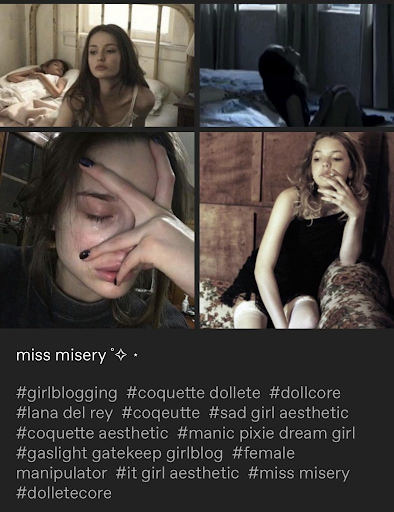
Just like how we shape our algorithms, our algorithms shape us. The media we consume changes us too. By creating aesthetics surrounding mental illness, people identify with them like any other aesthetic. When something is so ingrained as a part of one’s identity, it’s easy to forget that improvement, or “getting better,” is the goal. Not only do the negative emotions feel like a part of an identity, but it’s also comfortable. The familiar routine of doomscrolling, interacting with the aesthetically pleasing videos, and relating to them is comforting, making it even harder to put in the effort to change. Getting better feels like losing a crucial, identifying part of oneself rather than moving forward.
I know firsthand how comforting social media can be in times of need. It’s a lot easier to be sad when it’s seen as beautiful or a part of your identity, but that also makes it a lot harder to get out of the sadness. However, just as the algorithm can shape us negatively, it can also shape us positively. For example, interacting with positive, uplifting content rather than the aestheticized, sad, lonely content gives you a new page full of motivational content. Change can be difficult, and mental health struggles are far more nuanced than videos on an app, but it is important to take note of the things we consume and just how they are affecting our minds and our lifestyles.