Breaking the Mold (and the Bank)
Art is continuously evolving. Independent of the medium—canvas, sculpture, music, or film—it perpetually avails itself of humanity's newest creative tools to take on new forms.
Video games are no exception to this rule. The history and continued evolution of gaming is inextricably linked with that of computer technology, and in a much more direct way than other forms of media. From hash functions to 3D graphics to networking and everything in between, video games have constantly integrated new technologies to elevate their capabilities ever since the very first games were born out of the bulky mainframe computers of the 1960s.
Or, at least, elevate them for the most part. Sometimes you get asinine fads like NFT/cryptocurrency games that we can all pretend were a collective hallucination.
My childhood (the late 2000s through the 2010s) saw a whole host of big swings in the gaming industry. Some of them proved transformative: 720p and 1080p graphics, mobile and touchscreen gaming, cloud streaming, crossplay, just to name a few. But some of them also ended up being total head-scratchers: motion controls on literally anything except the Wii, web browsers and media hubs on consoles, the Kinect, the MMOification of the entire market, always-on infrastructure, the terrible sepia aesthetic from early HD games, the Kinect again, and probably a handful I've wiped from memory.
So not every new idea translates well to gaming. But while some of them were completely DOA, there have been a handful that had promise and might have turned out to be pretty neat under different circumstances. And one in particular piques my curiosity.
Unsurprisingly to anyone that has read a word I've written on this site, video games were my favorite pastime as a child. But not unlike many other elementary schoolers, my parents weren't fans of me spending hours in front of the TV on a regular basis. Chief among my screen-free hobbies back then was playing with LEGOs. And my affinity for the little brick-built universes would eventually loop back into my taste in gaming. The LEGO video games, chef d'oeuvre of the British developer TT Games, were some of the most formative titles I was raised on. The series comprised puzzle-platformer titles across LEGO-ified renditions of several popular franchises, from LEGO Star Wars and LEGO DC Comics to LEGO Pixar and LEGO Jurassic World.
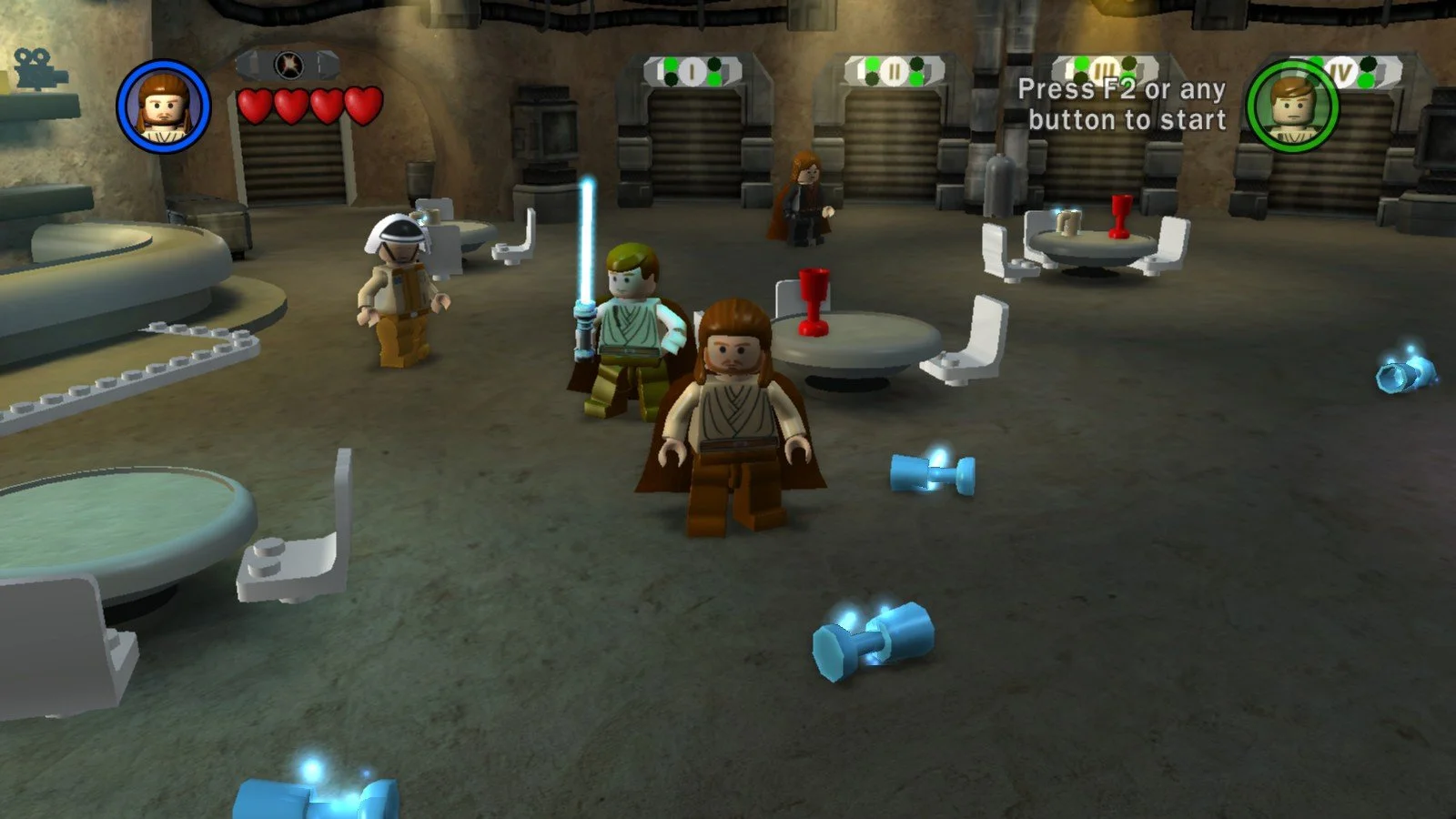
IYKYK.
But while these titles were incredibly charming, fun, and accessible, TT Games wasn't exactly pushing the envelope of video game innovation. Each game had players explore a set of levels (and an open world in the series’ later installments) while solving puzzles and defeating enemies. Throughout the levels and open world, players build and destroy LEGO objects to help them progress. Each game has unique gimmicks that suit its particular IP—LEGO Star Wars games are designed around using Force powers or lightsabers, whereas the LEGO Jurassic World game centers characters who can dig up dinosaur bones or hack computer terminals—but they all have the same underlying puzzle-platform skeleton. In that sense, the LEGO games were mostly a refinement of a classic video game formula rather than the exploration of a new one.
All that changed with the launch of LEGO Dimensions.
LEGO Dimensions released in 2015 as the third major entrant in the toys-to-life (TTL) space. TTL games—characterized by the use of physical toys to interact with the video game in some form—were one of the most furious sensations of the early 2010s. The concept had been around in some rudimentary form since before the 90s, but it never really caught wind until Activision's Skylanders franchise burst onto the scene in 2011 with its NFC toys (NFC, or near-field communication, is the same tap technology that powers Apple Pay). Skylanders games shipped with a "portal," on which you could place the Skylanders action figures, sold separately. The action figure would then "come to life" inside the video game, allowing you to use that figure as a playable character.
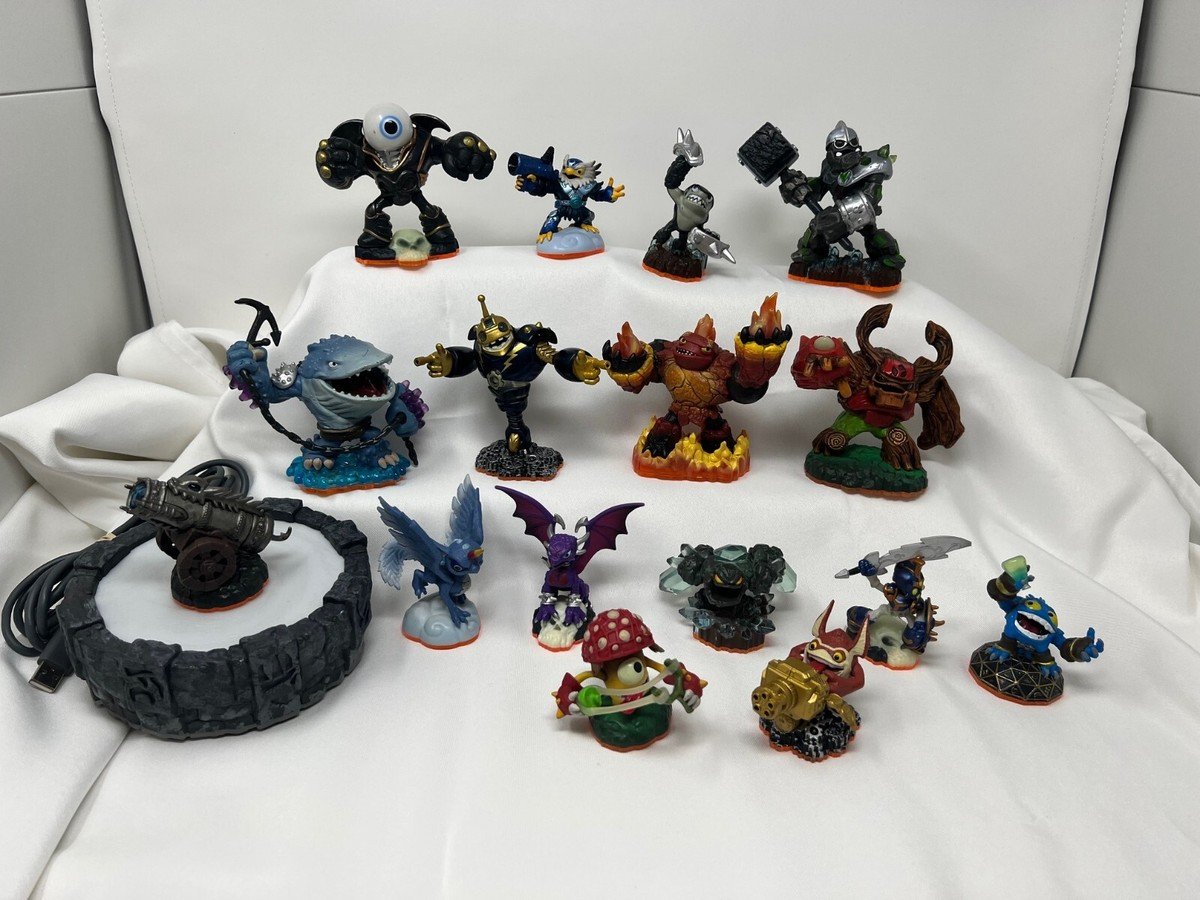
The Skylanders portal and toys
Skylanders' actual gameplay itself wasn't necessarily a groundbreaking feat in game design. It was a beat-em-up platformer that was simplistic, albeit effective. But the marriage of toys and video games was a novel idea that kids at the time couldn't get enough of. Between the sales of the action figures and the games themselves, Skylanders was one of the most lucrative franchises of the era, making more than $3 billion and selling over 250 million toys throughout its run between 2011-2016. And it did that without having an established brand or popular characters to rely on. Naturally, other publishers who did own such characters looked at Skylanders with dollar signs in their eyes and realized that they could literally sleepwalk to the bank by taking that concept and applying it to their fan-favorite properties. And so, in 2013, we saw the first of three releases in the Disney Infinity series. I was never a fan—while the figures were okay, the gameplay was uninspiring at best—but the TTL concept was evidently beginning to flesh out and become more of a market in its own right, rather than the defining feature of just one franchise.
Two years later, we got our hands on LEGO Dimensions. Right off the bat, it felt like the LEGO brand was a slam dunk choice for a toys-to-life game. It's the most popular toy brand of all time, worth over five times as much as Bandai Namco in second place. Warner Bros. (the publisher of the LEGO video games) owns a goldmine of media properties they could include, and the LEGO game series already had a successful formula for Dimensions to build around (no pun intended). But most importantly, the ethos of a toys-to-life game just made sense with LEGO products. Kids everywhere had grown up mixing and matching LEGO builds and minifigures from across the Danish giant's catalog. That model of play translated perfectly to a TTL game, where you could have crossovers with all sorts of franchises.
And boy, did WB go all-out with the crossover. Not only did they pull from their entire catalog of IPs, they managed to license some wildly unexpected franchises, including a few that have never even had LEGO sets. Dimensions featured DC Comics, Lord of the Rings, The LEGO Movie, The Wizard of Oz, The Simpsons, Ninjago, Doctor Who, Back to the Future, Portal, Ghostbusters, Scooby-Doo, Jurassic Park, Legends of Chima, Adventure Time, Mission: Impossible, Harry Potter, Fantastic Beasts, Sonic the Hedgehog, E.T., Knight Rider... I've listed 20 and there's still a bunch left.
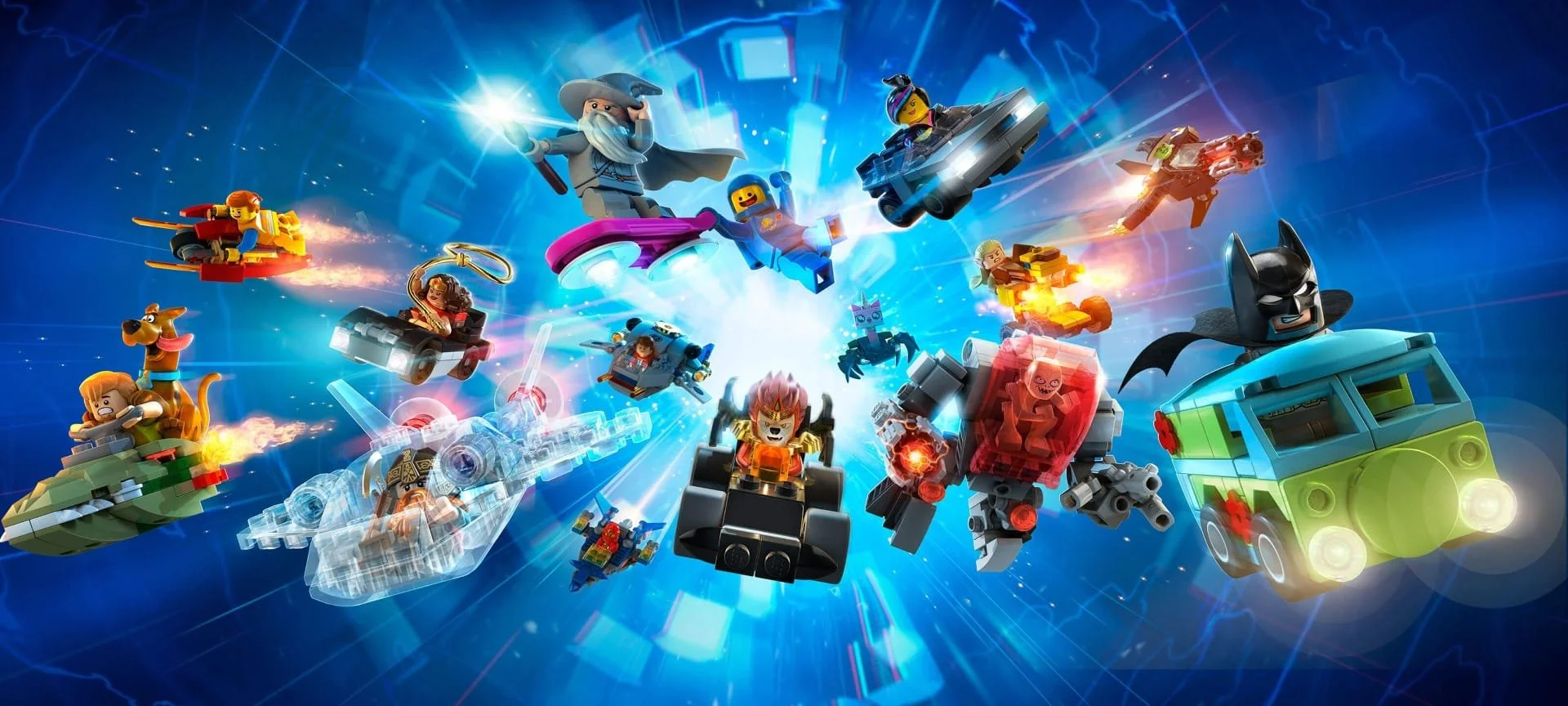
Batman in the Scooby-Doo van and Gandalf on Marty McFly’s hoverboard is exactly the kind of hilarity WB wanted you to imagine
LEGO Dimensions had a business model similar to its competitors. Alongside the game itself, its "starter pack" included the Toy Pad (the equivalent of the Skylanders portal), three LEGO minifigures (Batman, Gandalf, and Wyldstyle) and one vehicle (the Batmobile). That would get you through the game's ~15-hour campaign, but you could expand the experience by buying one of 60+ expansion packs that LEGO released in waves throughout Dimensions' lifespan. There were Fun Packs, which included one minifigure and gadget/vehicle; Team Packs, which included two minifigures and gadgets/vehicles; Level Packs, which included one minifigure, one gadget, one vehicle, and unlocked an exclusive level; and Story Packs, which included one minifigure, one vehicle, a new design for the Toy Pad, and unlocked an entirely new campaign. Every minifigure also unlocked an open world area based on the franchise they belong to.
David Wooten argues that LEGO video games generally form a kind of cross-promotional triangle with the franchises they adapt and LEGO itself. Kids unfamiliar with the original Hollywood properties that the games portray can use the games as an entryway into those franchises (this is how my childhood interest in DC and Star Wars was born!), while older audiences experience familiar stories told through a unique and interactive lens. In both cases, the LEGO brand is front-and-center to the experience, as the games nudge players to buy LEGO products based on the content they interact with in game.
This is a symbiotic relationship that is explicitly surfaced in LEGO Dimensions, given its unique nature as a TTL game. Here, the physical LEGO products are no longer passively advertised; they are necessary and active gameplay elements that mediate how the player interacts with the game.
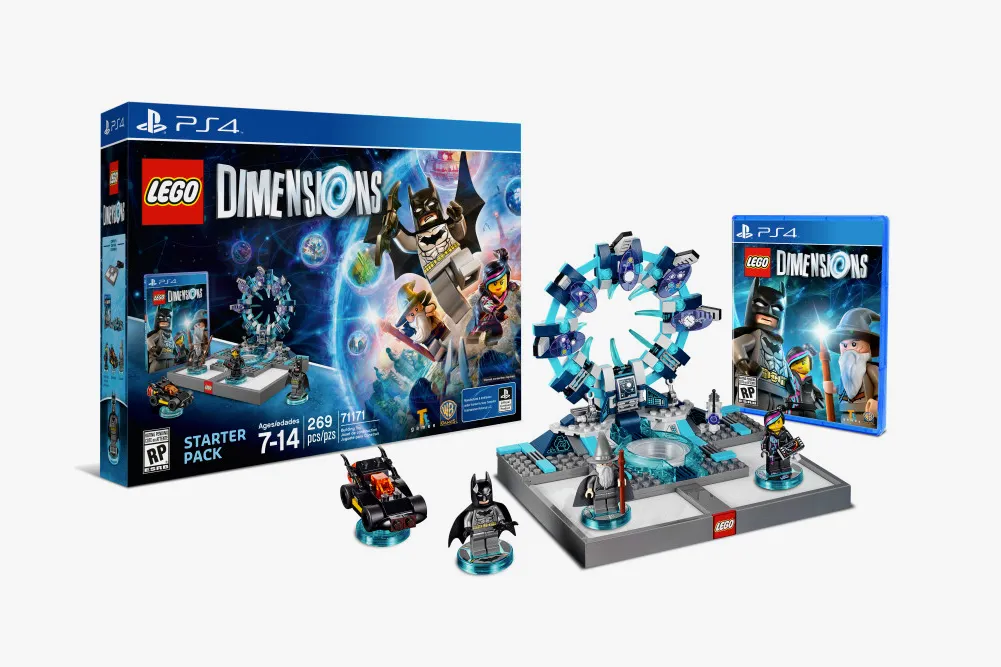
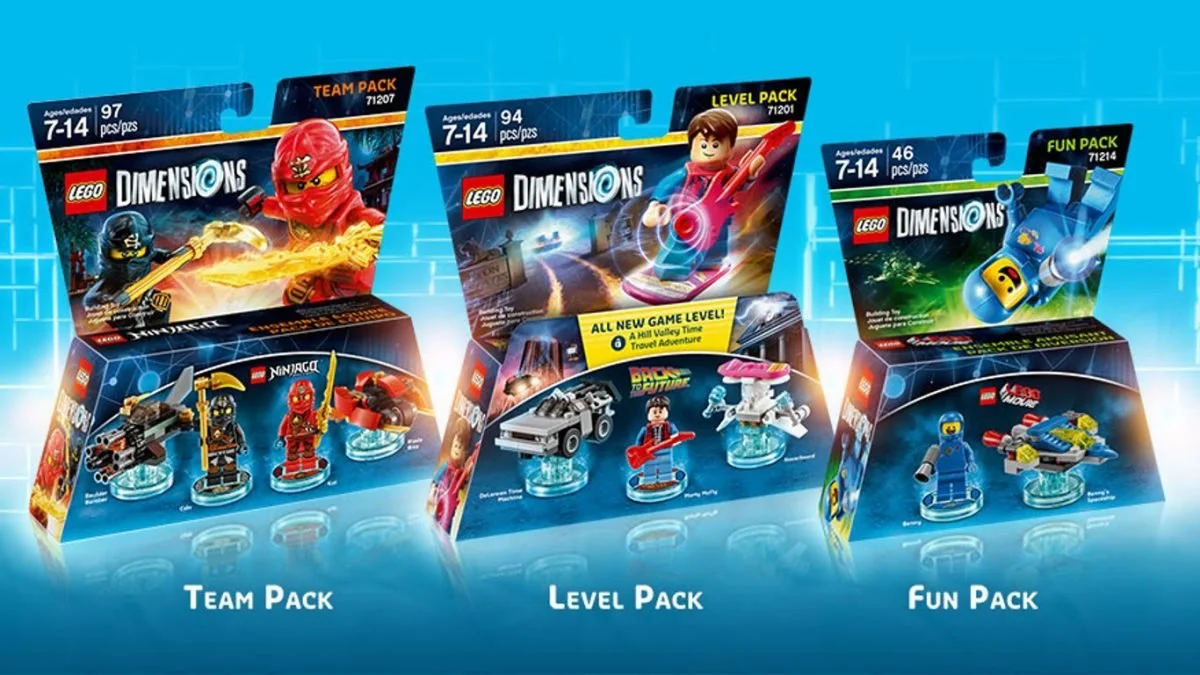
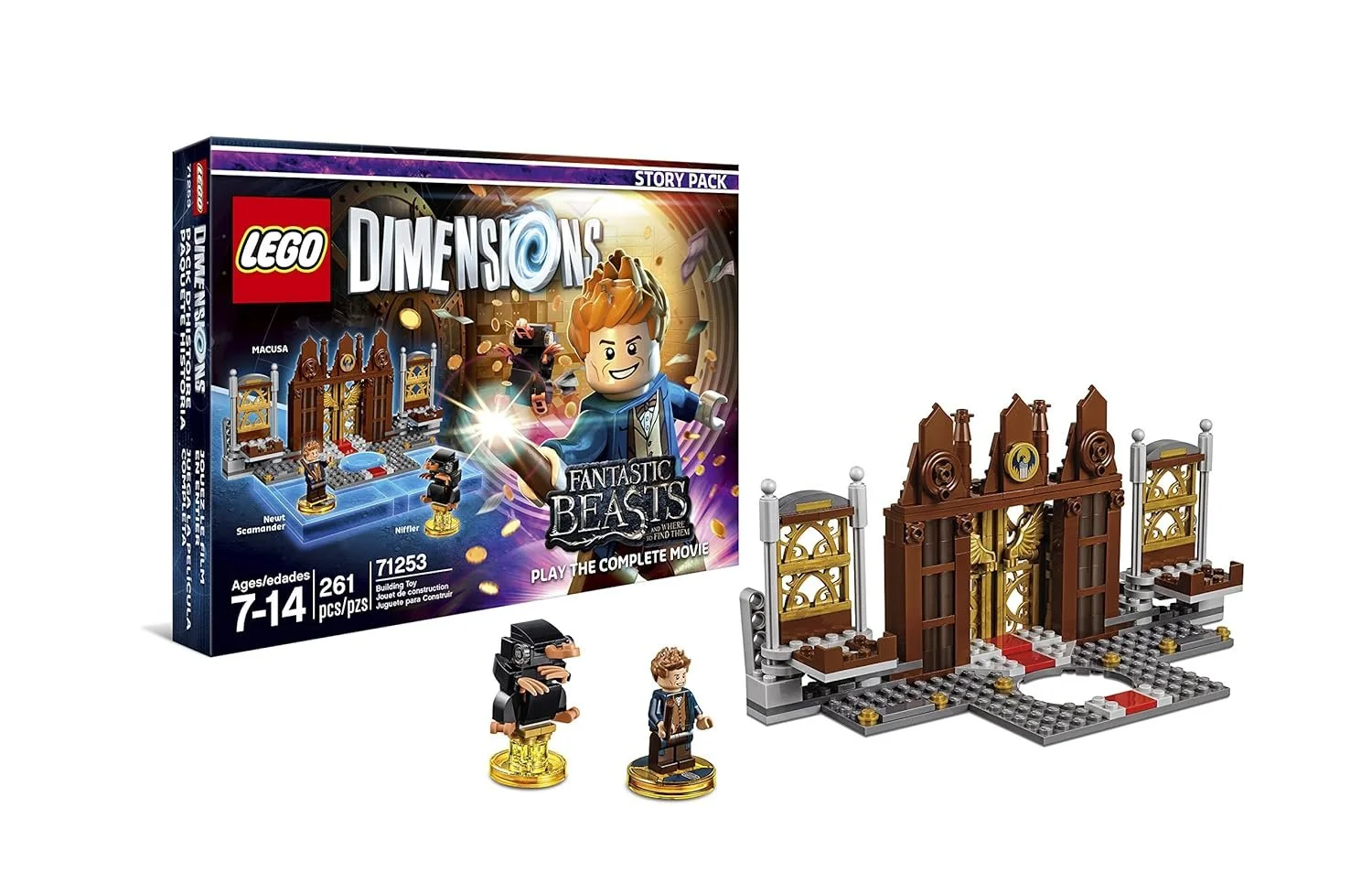
There was no shortage of sets that you could use to expand your Starter Pack.
One of LEGO Dimensions' strengths was that it fully leaned into the wacky crossover concept; its campaign was an original story where the three protagonists—themselves from three wildly different franchises—went on an adventure spanning a wide variety of LEGO worlds. You could go from one level based on Back to the Future to another level based on Scooby-Doo all while playing as Batman. Contrast that with Disney Infinity, which also featured a range of different properties under the Disney umbrella, including Marvel, Star Wars, Wreck-it-Ralph and Pirates of the Caribbean. Not only were its campaigns self-contained stories told entirely within one universe, they were also compatible only with characters from that particular franchise (you couldn't use Mr. Incredible in a Monsters Inc. level, for example), which felt like massive wasted potential.
Dimensions' gameplay, however, was where the title really stood out. It retained the same core puzzle-platforming foundation that was characteristic of previous LEGO video games, but its integration of toys-to-life mechanics was both novel compared to its LEGO predecessors and leaps and bounds above what Skylanders, Disney Infinity, and other TTL titles were doing.
In other TTL titles, the figures were essentially just tokens. You'd place them on the portal, the game would scan them in, and that's it. From that point forward, everything happened on-screen. The portal could disappear and nothing about the moment-to-moment gameplay would change. Even Skylanders: Swap Force—widely considered the best Skylanders game for its unique customization gimmick that allowed you to mix and match toys' top and bottom halves to make new characters—didn't use the figures or portal as an active gameplay element. These games would work just fine with a digital character select menu; the physical toys felt additive rather than foundational. In Dimensions, however, the Toy Pad was an integral part of the experience. It worked somewhat like a board game surface; the game often asked players to move specific figures around the three distinct zones of the Toy Pad to solve puzzles. In that sense, it expanded the play space to include the physical tabletop in addition to the digital world, and was the only TTL game that fully demonstrated a need for the toys. Skylanders and Disney Infinity toys offered collectibility for users and monetization for the publishers, which was neat, but Dimensions literally would not work as a digital-only game.
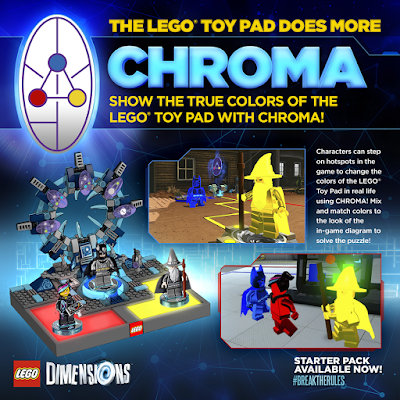
“Chroma” was one of five puzzle gimmicks that integrated the Toy Pad
Of course, LEGO Dimensions' gameplay wasn't universally praised. Its underdeveloped combat was a common point of criticism compared to the cool Pokémon-esque, element-vs.-element combat of Skylanders. And for some, the very thing that made Dimensions unique could be a drawback. Players argued that constantly having to reach for toys could break immersion, and that the hands-off portals of Skylanders and Disney Infinity actually made it easier to "stay in the game." The fact that you could set up your portal and forget about it could actually be an advantage at times. With Dimensions, you had to sit close to your console or TV, which could get uncomfortable or physically fatiguing depending on how your furniture was set up.
For all its ambition, LEGO Dimensions (and its toys-to-life contemporaries) had one glaring Achilles’ heel that no amount of ingenuity could save it from: cost. Even the reviews that praised it most fervently were wary of this.
The starter pack cost $100, and every individual expansion would run you between $15 (for a Fun Pack) and $50 (for a Story Pack). The starting pack only came with three characters, so you were very limited in what areas you could explore with the abilities available to them. If you bought just the bare minimum required to complete every bonus level, side quest, etc., you’d be looking at a ~$700 price tag. And if you wanted to collect every last pack in the game, it went well into the four digits. Compared to other games in the LEGO series, which generally had around ⅔ the amount of content and around 100 characters each for just $60, it was simply a terrible value proposition. Sure, every pack included high-quality LEGO minifigures and builds, but the lack of play value outside the Dimensions ecosystem made it hard to justify buying them unless you were a dedicated collector.
This low demand was critically unsustainable on LEGO’s end. LEGO products have extremely high manufacturing costs, even more so when making custom molds for characters like Sonic the Hedgehog or the Powerpuff Girls, who didn’t already exist as LEGO minifigures. Believe it or not, Dimensions packs already retailed at low profit margins in order to remain competitive with other TTL products, and anytime poor sales necessitated retail discounts, those profit margins were eliminated entirely. Eventually, it became too much of a money sink, and LEGO and TT Games pulled the plug on LEGO Dimensions in 2017, after just 1.5 years of their planned 3-year lifespan.
Nearly a decade after its shutdown, LEGO Dimensions is at risk of becoming lost media. Although the starter pack continues to be a hot commodity on the aftermarket, the expansions are much harder to find. Furthermore, the game never got a digital release, making it incompatible with the disc-less consoles of today. However, a small but dedicated fanbase is working on developing emulators for the Toy Pad that allow the game to be played on PCs. While they’re clunky and take away from the physical toys-to-life magic, they could be crucial in preserving the game as a media artifact.
Looking back, I can’t help but wonder if things could have worked out differently for LEGO Dimensions. Call it rose-tinted glasses, but I still believe it was miles clear of its competitors, both in terms of scope and the unique mechanics of its physical–digital integration. Objectively speaking, however, Dimensions walked onto a sinking ship. Skylanders had already been around for four years, Infinity for two, and some amount of fatigue was beginning to set in as the original “wow” factor of toys-to-life dissolved.
There’s no denying that LEGO and TT Games bit off more than they could chew. Dimensions had to be a smash hit to make business sense, and from a purely gameplay perspective, it easily could have been. But the market just wasn’t there, not at that price. That’s the kicker with video games—creative as a product may be, the bottom line is that it has to sell. So as a commercial product, LEGO Dimensions undeniably failed. But it was also perhaps the most robust proof of concept for what TTL could have been. It was the only title to meaningfully interrogate why physical toys were necessary at all, having built mechanics that could not exist without them.
That toys-to-life’s most ambitious experiment proved unsustainable says less about its design and more about the narrow economic viability the genre as a whole had condemned itself to from the jump.
To see more of what I’ve been playing, check out my Backloggd account.